

Have You Ever Wondered Which Automated Trading Platforms Truly Stand Out in 2026?
With trading becoming increasingly data-driven, automated trading platforms have gained tremendous popularity in 2026. Dozens of brokers now promise advanced algorithms, faster execution, and smarter risk management — but how do you know which ones actually deliver?
The truth is, not all automated trading platforms are created equal. Some are designed for beginners who want simple “set and forget” strategies, while others cater to professionals using AI-driven bots, deep analytics, and high-frequency execution. Choosing the right one depends on your strategy, level of control, and technical expertise.
Whether you trade forex, stocks, indices, or cryptocurrencies, the right automated trading platform can dramatically improve your performance. From backtesting and real-time execution to emotion-free trading, automation allows you to trade smarter — not harder.
In this article, we’ve rounded up the 10 best automated trading platforms in 2026, featuring regulated environments, customizable bots, and reliable performance. Let’s explore which platforms are leading the way this year — and what makes them stand out.
What Is an Automated Trading Platform?
An automated trading platform is a software system that uses algorithms or trading bots to execute trades on your behalf — based on predefined strategies, indicators, or market conditions.
Instead of manually placing buy or sell orders, you create (or select) a set of trading rules, and the system executes trades automatically when those conditions are met. These platforms help eliminate emotional decision-making and allow traders to take advantage of market movements 24/7.
Common Features of Automated Trading Platforms:
- Algorithmic execution: Enables traders to automate trades based on coded logic or predefined parameters. This feature eliminates emotional decision-making, ensuring consistency and accuracy in every trade. Traders can program strategies to respond instantly to market movements, optimizing execution speed and reducing manual intervention.
- Backtesting: Allows users to test their trading strategies using historical market data before deploying them in live conditions. This helps identify strengths, weaknesses, and potential profitability, ensuring that strategies are refined and data-driven. Backtesting reduces the risk of costly errors and improves overall trading confidence.
- Risk management tools: Include automated features like stop-loss, take-profit, and position sizing to protect capital. These tools ensure disciplined trading by limiting potential losses and locking in profits when targets are met. Effective risk management is vital for maintaining long-term trading sustainability.
- Cloud or VPS support: Ensures bots run continuously without downtime, even when a trader’s device is offline. Cloud and VPS environments offer high-speed connectivity and reliability, crucial for time-sensitive trades.
- API connectivity: Provides seamless integration with popular platforms like MetaTrader, Binance, and cTrader. APIs allow traders to connect their algorithms, access real-time market data, and execute trades automatically with precision and flexibility.
In essence, automated trading platforms empower traders to make consistent, data-driven decisions without constant screen monitoring.
How Does Automated Trading Work?
Automated trading relies on algorithms — computer programs that analyze market data, identify opportunities, and place trades automatically.
Here’s how it typically works:
- The trader sets rules or selects a trading bot strategy to define how trades should be executed. These rules can include entry points, exit targets, and position sizes.
- The system continuously monitors live market data to identify conditions that match the predefined strategy.
- When a condition is met, the algorithm automatically executes buy or sell orders within milliseconds, ensuring precision and speed.
- The algorithm then manages open positions using built-in risk controls such as stop-loss and take-profit levels, adjusting dynamically to protect capital and maximize returns. This process ensures emotion-free, disciplined, and efficient trading.
For example, an automated strategy might buy EUR/USD when the RSI drops below 30 and sell when it rises above 70. The system performs these actions without delay, emotion, or fatigue.
Automation is especially valuable in volatile markets, where timing and precision are critical. It ensures that trades are executed consistently — even when you’re not watching the charts.
Key Features to Look for in an Automated Trading Platform
When choosing an automated trading platform, focus on performance, reliability, and customization. Below are the essential factors every trader should consider.
Regulation and Security
Choose platforms regulated by trusted authorities like the FCA (UK), ASIC (Australia), or CySEC (Cyprus). Regulation ensures compliance, protects your funds, and maintains data security.
Strategy Builder and Customization
A great automated platform should allow you to create, edit, and test strategies without needing to code — or, for advanced users, offer programming flexibility via APIs or scripting languages.
Backtesting and Optimization
Reliable backtesting lets you simulate strategies on historical data. Platforms with detailed analytics and optimization tools help refine your approach for better live performance.
Execution Speed and Reliability
Automation demands precision. The best platforms offer low-latency order execution and reliable uptime to ensure your strategies run seamlessly.
Integration with Brokers and Exchanges
Ensure the platform supports multiple brokers or exchanges. Compatibility with MetaTrader 4/5, Binance, and Interactive Brokers can expand your trading options.
Risk Management Features
Built-in stop-loss, take-profit, and position sizing ensure that automation doesn’t compromise safety. Good platforms also offer portfolio-level risk control.
Support and Community
Strong community forums, technical support, and developer documentation are invaluable — especially when customizing or troubleshooting trading bots.
Best Automated Trading Platforms 2026
Here’s the list of the Top Automated Trading Platforms in 2025 and 2026:
- XM
- MetaTrader 5 (MT5)
- cTrader
- TradeStation
- NinjaTrader
- Pionex
- Interactive Brokers (IBKR)
- Binance Auto-Trading
- ZuluTrade
- QuantConnec
1. XM
Overview:
XM is one of the most reputable automated trading platforms globally, trusted by users across 190+ countries. With competitive spreads, fast execution, and access to a wide range of trading instruments — including forex, metals, indices, energies, and crypto — XM provides a flexible and user-friendly environment for Crypto traders of all levels. The platform also offers multilingual customer support and frequent promotions, making it especially attractive for traders looking for both value and reliability.
Beyond its trading features, XM is also known for operating one of the strongest affiliate and IB programs in the industry. Partners benefit from transparent reporting tools, exclusive promotions, and dedicated account managers. XM’s credibility and performance have been recognized with multiple awards, such as Best IB/Affiliate Programme in LATAM 2025, Best automated Trading Platform 2026, and Best Partnership Program in MENA 2024.
Earning Opportunities for Partners
- Revenue Share: Up to $80 on FX, $75 on crypto Broker, and $80 on metals
- CPA Model: Earn up to $1,000 per referred client
- Flexible commission structures: CPA, CPL, and Hybrid available
- Sub-Affiliate Commissions: Master IBs receive 10% of sub-affiliate earnings
- Unlimited payouts: No commission cap with daily automated withdrawals (minimum $5)
For traders seeking a feature-rich CFD trading platform — and for partners looking for strong earning potential — XM blends performance, transparency, and global reach.
2. cTrader
Overview:
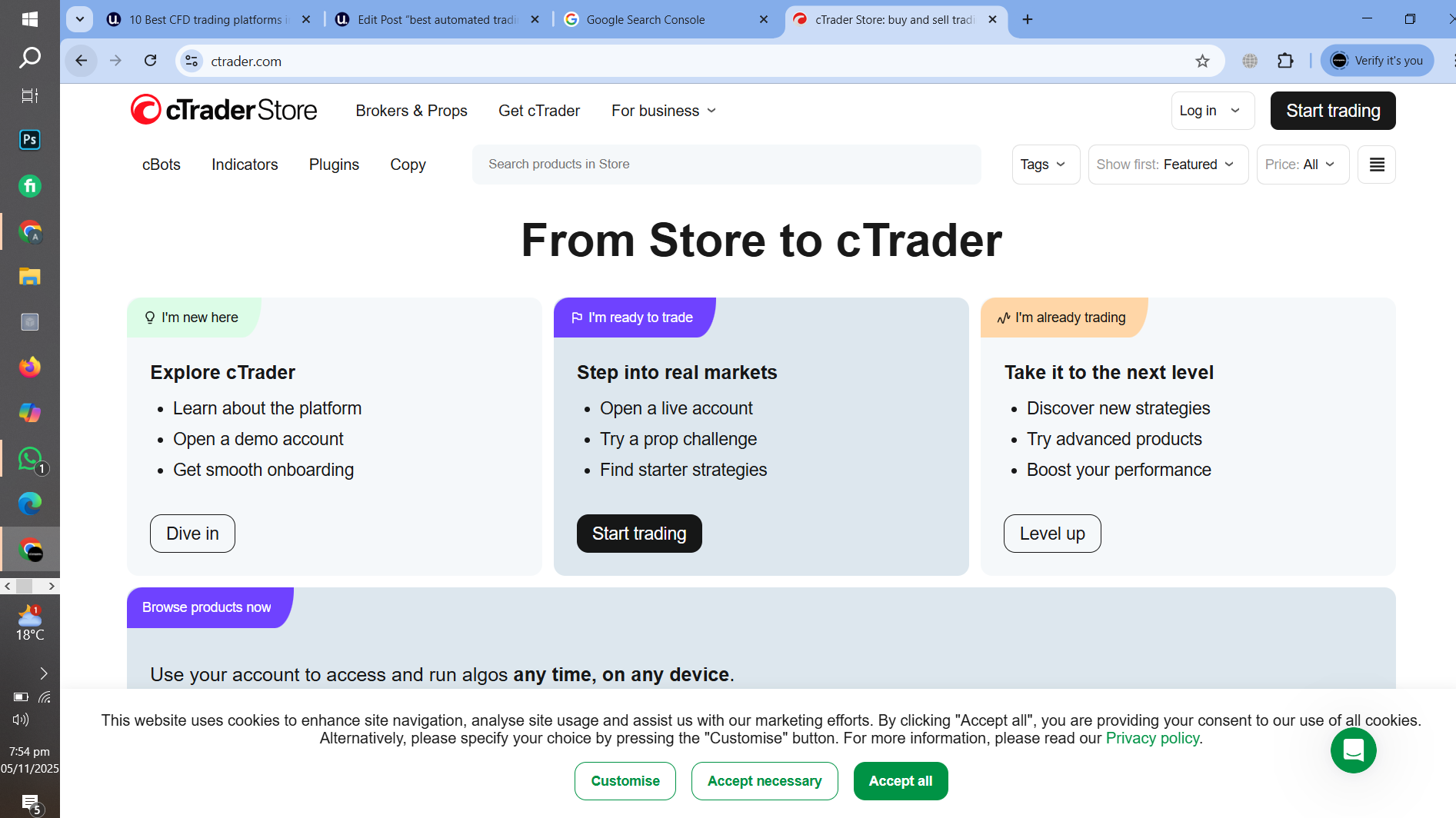
cTrader is a professional-grade trading platform that offers both manual and automated trading capabilities. Its built-in cAlgo module allows users to create automated bots using C#, making it an excellent choice for traders who prefer coding precision. Known for its transparency, cTrader provides ultra-fast execution, detailed analytics, and institutional-grade trading tools.
Key Features:
- cAlgo framework enables the development of custom trading robots and indicators
- Depth of Market (DoM) functionality provides precise real-time price visibility
- Advanced charting tools with multiple layouts and technical indicators enhance analysis
- One-click order execution and detachable charts streamline trading efficiency
- Cloud-based strategy storage and synchronization ensure seamless access across all devices
Why It Stands Out:
cTrader stands out for its intuitive and modern interface, making trading smooth and efficient.
It offers lightning-fast execution with minimal latency, perfect for active traders.
Developers benefit from its open API and advanced cAlgo integration for custom strategies.
The platform provides real-time market depth and transparent pricing for better decision-making.
Ideal for professionals, cTrader combines control, flexibility, and precision in one seamless environment.
3. MetaTrader 5 (MT5)
Overview:
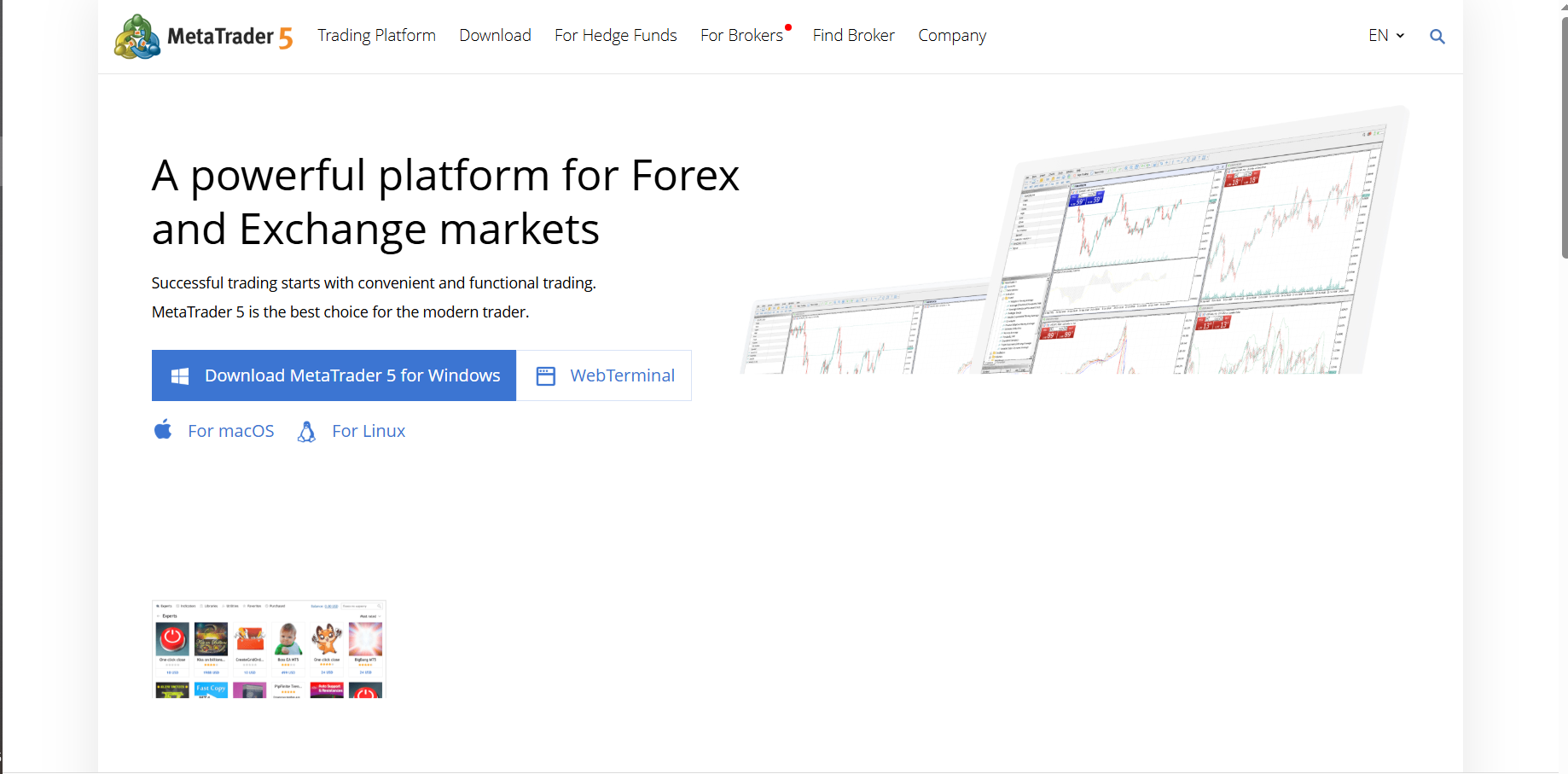
MetaTrader 5 remains the most popular and versatile automated trading platform globally. It builds upon the success of its predecessor, MT4, offering enhanced analytical tools, more timeframes, and support for multiple asset classes such as forex, stocks, commodities, and futures. MT5 supports Expert Advisors (EAs), enabling traders to automate strategies with precision.
Key Features:
- Supports Expert Advisors (EAs) and custom indicators for automated trading
- Multi-threaded strategy tester enables advanced and precise backtesting
- Includes 80+ built-in technical indicators and drawing tools for analysis
- Features an economic calendar and market depth (Level II quotes)
- Compatible with multiple brokers and account types for flexibility
- Available on desktop, web, and mobile devices for seamless access
Why It Stands Out:
MT5’s flexibility, reliability, and user-friendly interface make it a favorite among traders of all levels. Whether you’re a beginner using pre-built robots or a professional coding your own strategies, MT5 provides everything needed for efficient and consistent algorithmic trading.
4. TradeStation
Overview:
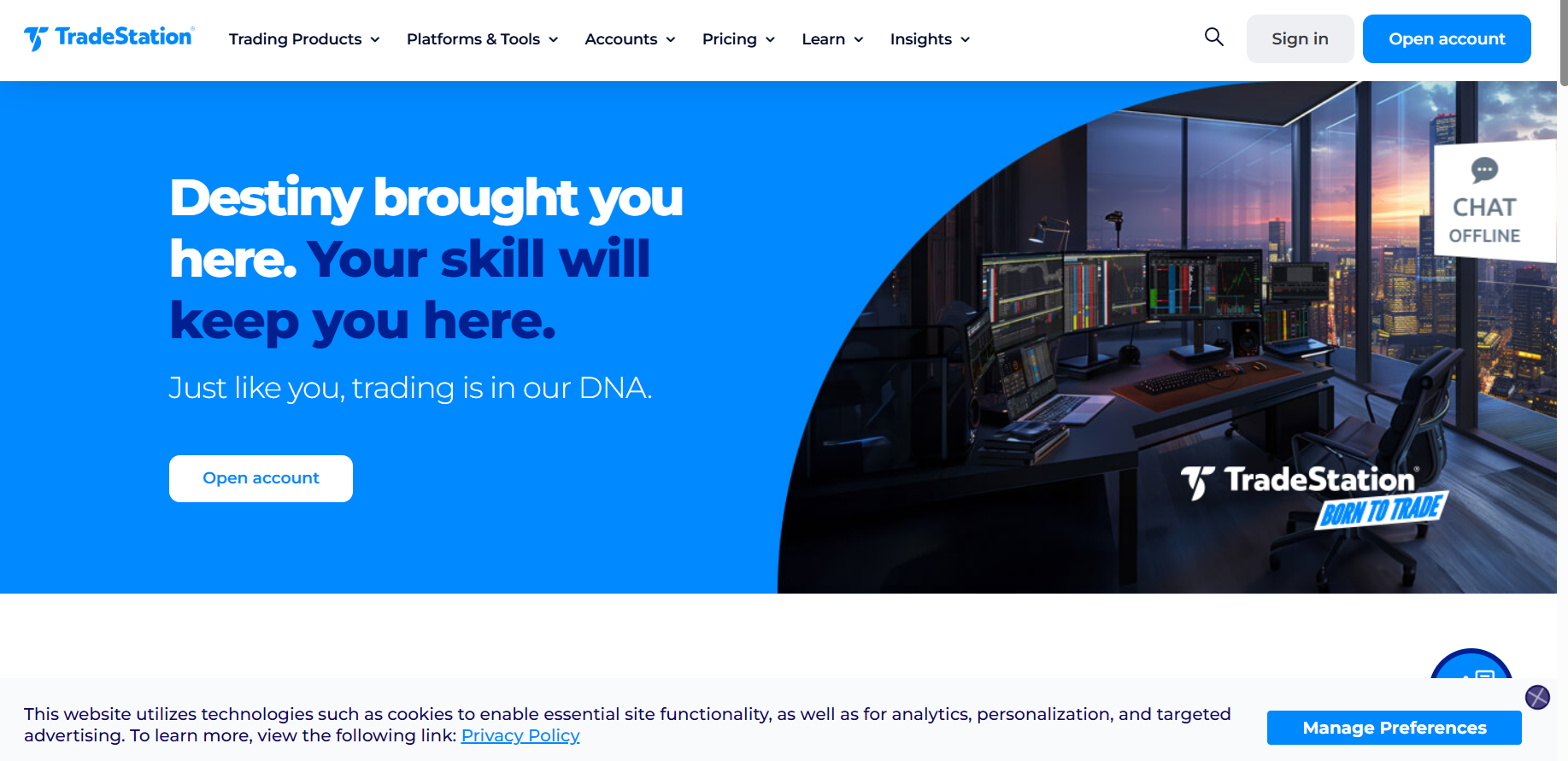
TradeStation is a powerhouse for serious traders and institutions seeking professional-grade tools. Its EasyLanguage programming system enables users to design, test, and automate trading strategies without needing advanced coding skills. The platform’s robust analytical engine and extensive market access make it a go-to for algorithmic trading.
Key Features:
- Proprietary EasyLanguage coding system for building and automating strategies
- Comprehensive backtesting and optimization tools to refine performance
- Direct market access to stocks, futures, and options for diverse trading
- Customizable charting with over 90 technical indicators and drawing tools
- Regulated by FINRA and the SEC, ensuring safety and transparency
Why It Stands Out:
TradeStation excels in speed, reliability, and professional-grade performance.
It offers advanced charting, strategy testing, and automation tools for all experience levels.
Both institutional and individual traders benefit from its customizable interface and analytics.
The platform operates in a secure, fully regulated environment, ensuring trader confidence.
With robust automation and flexible features, TradeStation remains a top choice for serious traders.
5. NinjaTrader
Overview:
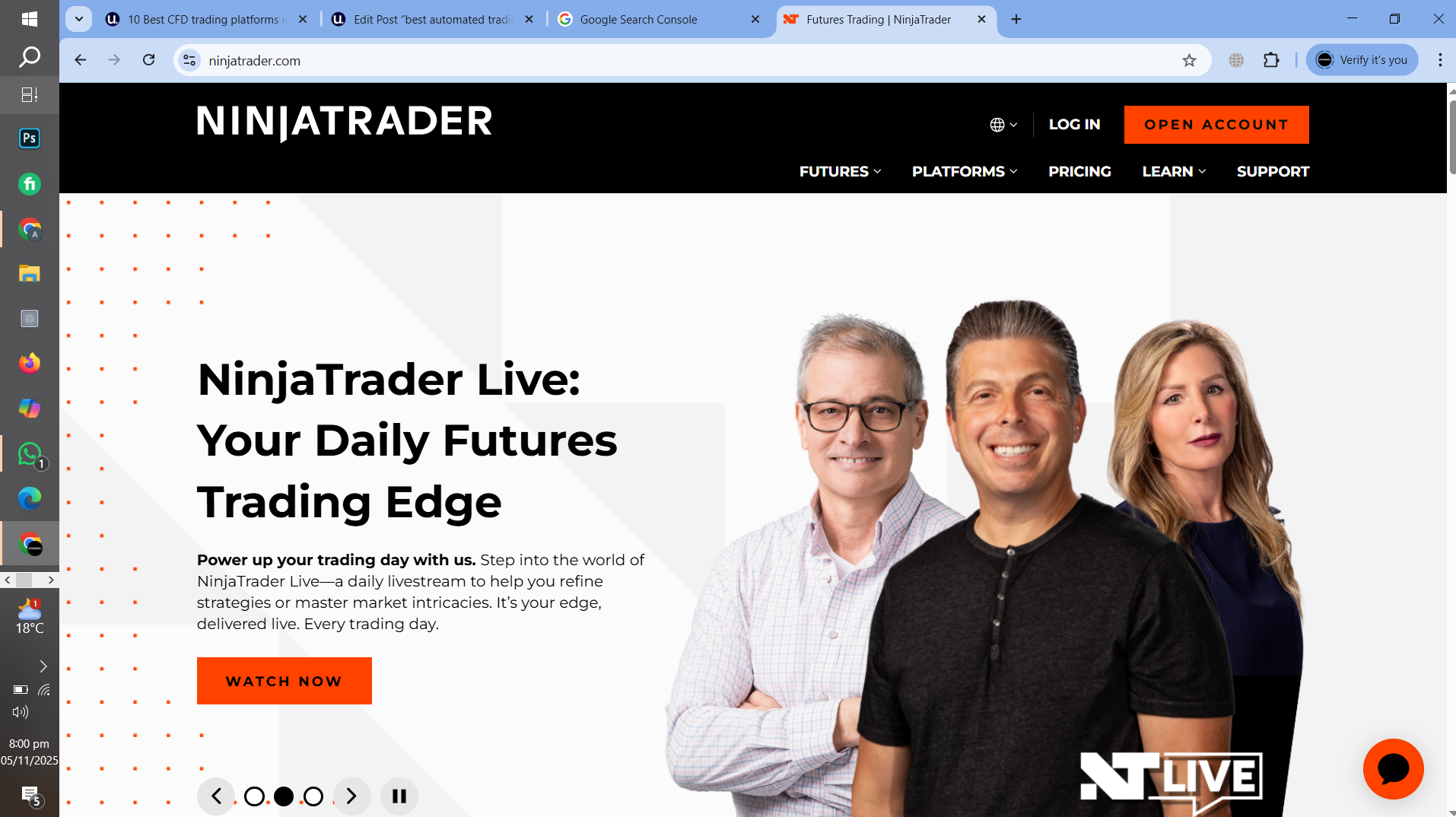
NinjaTrader is a sophisticated platform designed for active traders who depend on automation, analytics, and backtesting. It’s widely popular among futures and forex traders for its precision and performance. The platform offers a complete set of professional tools for strategy development and testing. Built on C#, NinjaTrader empowers users to create and deploy powerful automated trading systems with ease.
Key Features:
-
Visual Strategy Builder allows non-coders to create automated strategies easily
-
Advanced charting and order flow analysis for detailed market insights
-
Backtesting and trade simulation tools to test and refine performance
-
Integration with multiple brokers and data feeds for trading flexibility
-
Extensive library of third-party add-ons enhances customization and functionality
NinjaTrader combines power, flexibility, and precision in one platform.
It offers advanced charting and analytical tools tailored for serious traders.
Developers can build, test, and refine custom strategies with ease.
Real-time data and smooth execution ensure reliable performance during live trading.
Ideal for futures and forex traders, NinjaTrader delivers professional-grade automation and control.
6. Pionex
Overview:
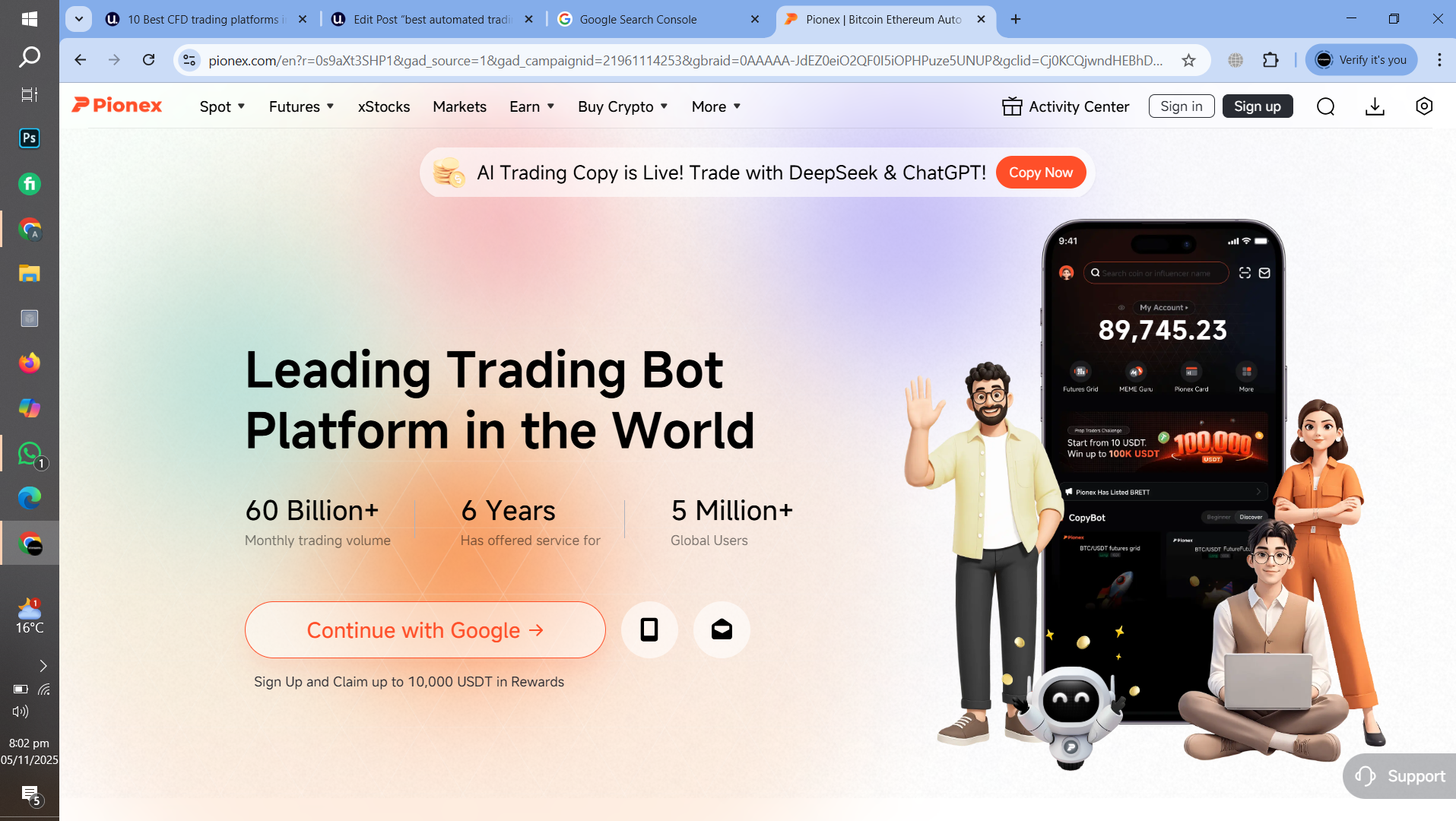
Pionex specializes in automated cryptocurrency trading with a simple and intuitive interface. It’s ideal for both beginners and experienced crypto investors seeking hands-free trading. The platform features over 16 built-in bots, including Grid, DCA, and Arbitrage options. With no coding or setup required, Pionex makes crypto automation accessible and efficient for everyone.
Key Features:
- 16+ built-in automated crypto trading bots for effortless strategy execution with ultra-low fees (0.05%) to maximize profits
- 24/7 cloud-based bot operation ensures uninterrupted performance and reliability
- Licensed and regulated in the U.S. and Singapore, offering secure and compliant trading
- Compatible with major coins and stablecoins, providing wide market access
- User-friendly interface with smart strategy customization, perfect for both beginners and pros
Why It Stands Out:
Pionex makes crypto automation simple, efficient, and highly cost-effective. It’s ideal for traders who want to stay active in the market 24/7 without manual effort. The platform’s built-in bots handle trading strategies automatically with precision. For those seeking passive income and smarter trading, Pionex offers a seamless and reliable solution.
7. Interactive Brokers (IBKR)

Overview:
Interactive Brokers is a globally trusted platform known for its reliability and institutional-grade technology. It offers advanced automation tools through Trader Workstation (TWS) and robust API integration. Professional and institutional traders benefit from deep liquidity and precise execution. With access to over 150 global markets, it ensures unmatched trading diversity. IBKR stands out as a top choice for serious investors seeking control and global reach.
Key Features:
-
16+ built-in automated crypto trading bots for seamless strategy execution with ultra-low fees (0.05%) to maximize profits
-
24/7 cloud-based bot operation ensures continuous performance and reliability
-
Licensed and regulated in the U.S. and Singapore for secure, compliant trading
-
Compatible with major coins and stablecoins, offering broad market coverage
-
User-friendly interface and smart strategy customization, ideal for both beginners and professionals
Why It Stands Out:
IBKR stands out for its unmatched scale, reliability, and advanced automation features. It offers institutional-grade tools tailored for professional and active traders. With access to global markets across multiple asset classes, it ensures broad trading opportunities. Ideal for serious investors, IBKR combines precision, speed, and world-class execution.
8. Binance Auto-Trading
Overview:
Binance is the world’s largest cryptocurrency exchange, known for its scale and advanced automation. It supports API-based trading and third-party bot integrations for maximum flexibility. Traders can access pre-built strategies for spot, futures, and margin markets. With deep liquidity and fast execution, Binance makes automated trading seamless and efficient.
Key Features:
- API-based auto-trading enables full customization and advanced strategy integration
- Supports multiple trading pairs and derivatives, offering broad market access
- Built-in grid and futures bots simplify automated trading setup
- High uptime and deep liquidity ensure fast and reliable order execution
- Marketplace for third-party strategies and signals expands automation possibilities
Why It Stands Out:
Binance combines power, flexibility, and ease of use in one robust platform. It’s perfect for crypto traders seeking advanced automation and strategy customization. With access to deep global liquidity, trades execute quickly and efficiently. Binance remains a top choice for users who value innovation, performance, and global reach.
9. ZuluTrade
Overview:
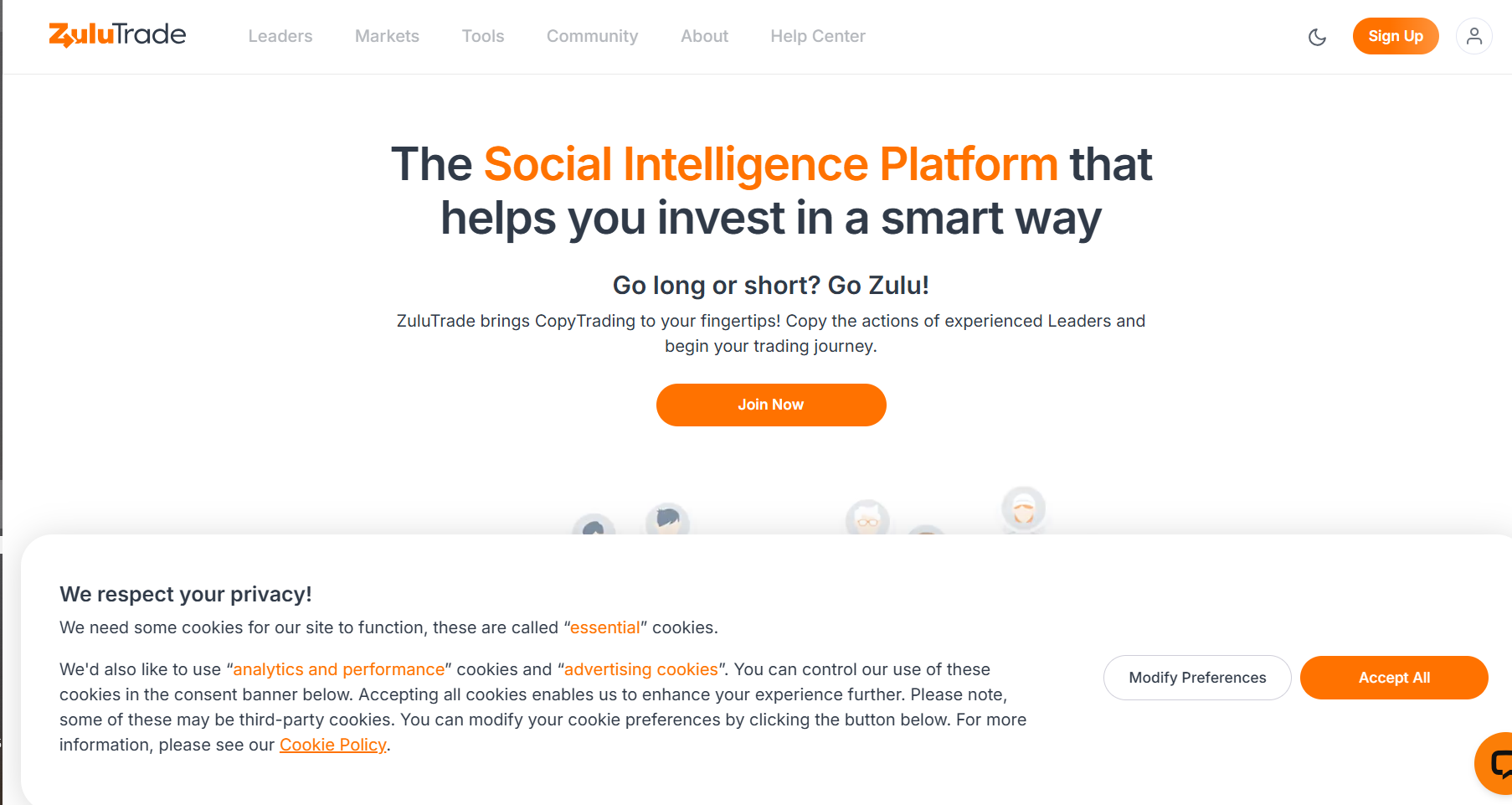
ZuluTrade is a pioneer in copy and social trading, bridging the gap between traders and investors. It enables users to follow professional traders and automatically execute their strategies across connected brokers. ZuluTrade focuses heavily on transparency and risk control, ensuring safe and efficient automated trading.
Key Features:
-
- Copy trading with verified performance data ensures transparency and trust
- Built-in ranking and filtering system helps identify top-performing traders easily
- Integration with leading global brokers for seamless trading connectivity
- Customizable risk management and portfolio settings enhance control and safety
- Supports forex, indices, and commodities, offering diversified trading opportunities
Why It Stands Out:
ZuluTrade empowers investors with automation that mirrors the strategies of top-performing traders. It’s ideal for users who prefer a social and community-driven trading experience. The platform simplifies copy trading across multiple brokers and asset classes. With transparency and performance insights, ZuluTrade makes smart investing accessible to everyone.
10. QuantConnect
Overview:
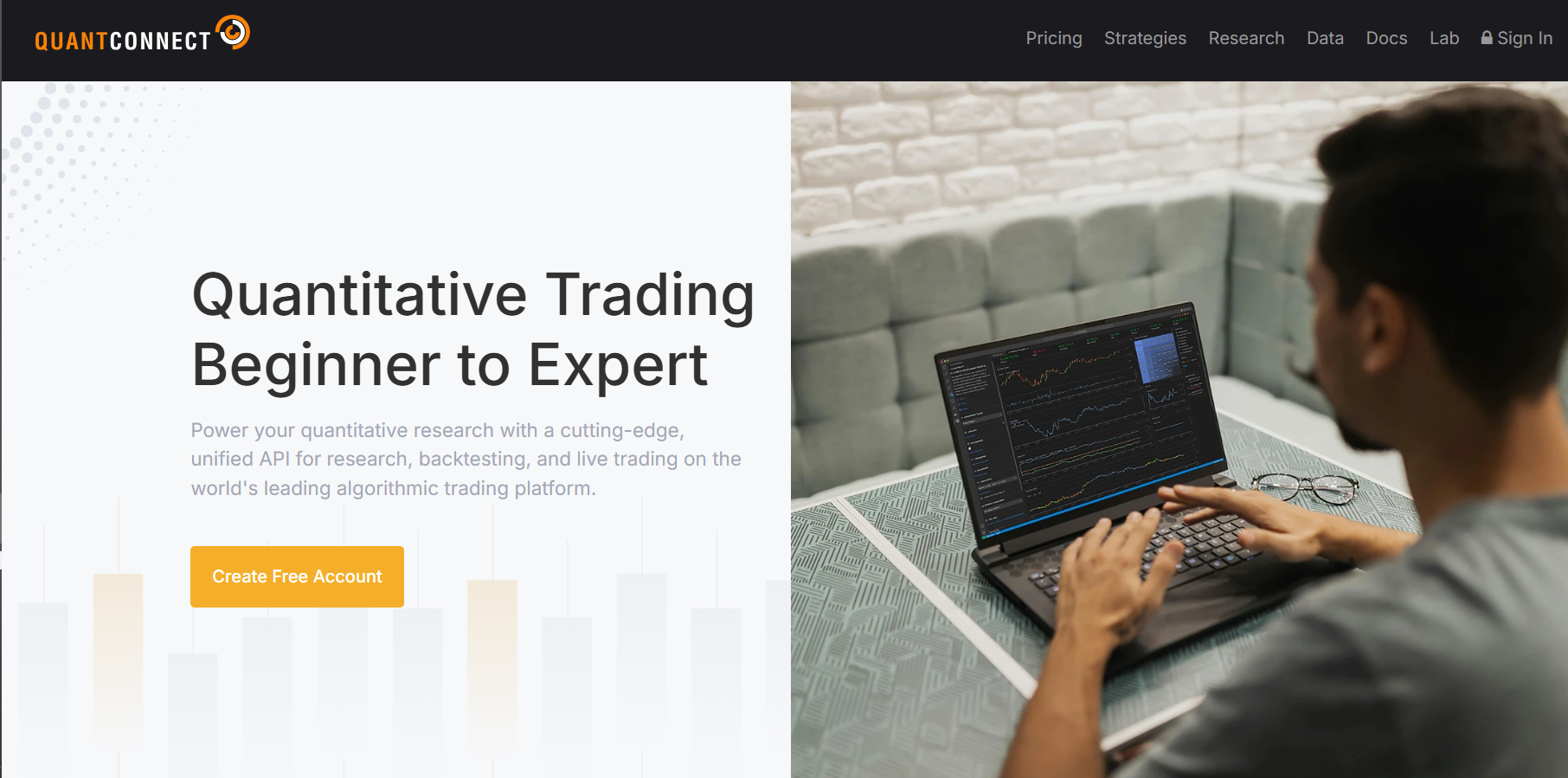
QuantConnect is an advanced, open-source algorithmic trading platform designed for data scientists, developers, and professionals. It supports multi-asset strategies using Python or C# and integrates directly with leading brokers such as Interactive Brokers and OANDA.
Key Features:
-
-
Supports quantitative models in Python and C#, ideal for data-driven traders
-
Access to 15+ years of historical market data for accurate strategy development
-
Cloud-based backtesting and live trading enable seamless performance testing
-
Integration with multiple brokers ensures flexibility across asset classes
-
Research environment powered by Lean Engine technology enhances algorithmic precision
-
Why It Stands Out:
QuantConnect delivers institutional-grade automation designed for technically advanced traders. It’s ideal for those who want to create sophisticated, data-driven trading models. The platform integrates AI and machine learning to optimize strategy performance. With powerful research tools and multi-asset support, QuantConnect redefines algorithmic trading precision.
Conclusion
Automated trading is transforming the way investors and traders interact with global financial markets. As we move into 2026, automation continues to push the boundaries of efficiency, precision, and accessibility. Whether you’re a seasoned professional managing complex strategies or a beginner exploring algorithmic trading for the first time, the evolution of trading technology opens countless opportunities to trade smarter and faster.
Leading platforms such as MetaTrader 5, cTrader, and NinjaTrader remain top choices for professional traders seeking full analytical control, robust charting tools, and advanced scripting capabilities. These platforms allow users to create custom indicators, test strategies using historical data, and execute trades with minimal latency — essential features for those who depend on precision and performance. On the other hand, user-friendly platforms like ZuluTrade, Pionex, and TradeStation are making automation more accessible to everyday traders by offering pre-built strategies, copy-trading systems, and automated bots that can operate effectively without requiring coding expertise.
When choosing the best automated trading platform, it’s crucial to consider your experience level, trading goals, and preferred asset class. A forex trader may prefer MetaTrader 5 for its deep liquidity access and expert advisor system, while a crypto trader might lean towards Pionex for its grid bots and built-in arbitrage tools. Meanwhile, equity traders may find NinjaTrader or Interactive Brokers ideal for stock and futures automation. The right platform should also offer regulatory compliance, strong security measures, and risk management tools to ensure that your capital remains protected.
Despite the promise of automation, traders should remember that these systems are not foolproof. Markets can behave unpredictably, and even the best algorithms can underperform without proper oversight. Automation should complement, not replace, a well-thought-out trading strategy. Consistency, discipline, and regular performance reviews remain vital to achieving long-term success.
Ultimately, automated trading platforms in 2026 represent a powerful blend of technology and strategy. By combining advanced data analytics, AI-driven insights, and high-speed execution, traders can reduce emotional bias, improve timing, and maintain better control over their portfolios. The future of trading belongs to those who can harness automation effectively — using it not as a shortcut, but as a smart tool for making informed, data-driven decisions in an ever-evolving financial landscape.
In essence, with the right platform and a disciplined approach, automation can be the key to unlocking consistent performance and achieving greater success in the dynamic world of modern trading.
Frequently Asked Questions (FAQs)
What is an automated trading platform?
An automated trading platform uses algorithms to execute trades based on predefined rules without manual intervention.
Can I use automated trading without coding knowledge?
Yes. Platforms like eToro, Pionex, and TradeStation offer no-code or low-code automation options.
Are automated trading platforms safe?
Safety depends on regulation, broker reliability, and your chosen strategy. Always use licensed platforms and test strategies with demo accounts.
Can I trade cryptocurrencies automatically?
Yes. Platforms like Pionex and 3Commas specialize in automated crypto trading.
What is backtesting?
Backtesting allows traders to test their automated strategies using historical data to evaluate potential performance before live trading.