

In 2026, moving money is no longer just a back-office task — it’s a critical part of how businesses grow, compete, and stay profitable. Yet many companies still struggle with slow transfers, unpredictable fees, poor exchange rates, and payment systems that don’t talk to their accounting tools. Chasing delayed payments, juggling multiple currencies, and reconciling transactions across platforms can drain time, cash flow, and focus — especially when dealing with international clients, suppliers, or online platforms.
That’s why choosing the right payment solution matters more than ever. The best platforms today go far beyond simple transfers: they offer faster settlements, clearer pricing, multi-currency control, automation, and real-time visibility over every transaction. In this guide, we break down the 10 best payment solutions in 2026 — tools designed to eliminate friction, reduce costs, and give you full control over how money moves in and out of your business, no matter where you operate.
What Are Payment Solutions?
Payment solutions are financial platforms that enable businesses to send, receive, hold, and manage money across domestic and international markets with speed, transparency, and control. They are designed to support commercial transactions that involve larger payment values, frequent transfers, and more complex financial workflows than standard consumer payments.
Modern payment solutions go beyond simple money transfers. They typically include features such as multi-currency management, foreign exchange handling, compliance checks, and integration with accounting or enterprise systems, allowing businesses to manage finances efficiently within a single ecosystem.
In everyday operations, these platforms support tasks such as paying overseas suppliers, receiving earnings in different currencies, settling invoices across regions, and timing currency conversions to secure more favorable exchange rates. Their core advantage lies in consolidating all payment flows into one centralized platform, reducing operational friction while improving visibility and financial control.
How to Choose the Right Payment Solution
Choosing the right payment solution starts with understanding how your business moves money, where inefficiencies exist, and what currently slows operations—especially when dealing with international transactions. The right platform should simplify financial workflows, reduce costs, and scale as your business grows.
Here are the key factors to consider when selecting a payment solution in 2026:
Speed and Settlement
Fast settlement is essential for keeping operations running smoothly. Delays in international payments can disrupt supply chains, delay production, or slow inventory replenishment.
Traditional bank transfers often take several working days to process. Modern payment platforms, by contrast, can complete many transactions on the same day, and in some cases within hours, improving cash flow and reliability.
Multi-Currency Capability
A strong payment solution should allow you to hold, receive, and send funds in multiple currencies without requiring immediate conversion. This is especially important for businesses that sell internationally, source from overseas suppliers, or receive earnings in foreign currencies.
Look for platforms that offer multi-currency balances, flexible conversion timing, and the ability to pay partners in their local currency to reduce unnecessary foreign exchange costs.
Pricing Transparency
Unclear fees, hidden exchange rate markups, and intermediary bank charges can gradually erode profit margins, especially for businesses handling frequent or high-value international payments. Many traditional providers advertise low transfer fees while quietly embedding costs into unfavorable exchange rates or routing payments through multiple intermediaries, each adding their own charge.
The right payment solution offers clear, upfront pricing by displaying the exact exchange rate, conversion margin, and transaction fee before a payment is confirmed. This transparency allows finance teams to accurately forecast expenses, compare providers with confidence, and make informed decisions about when and how to convert currencies.
Integrations and Automation
Your payment system should integrate seamlessly with accounting and financial management platforms such as NetSuite, Xero, or QuickBooks to ensure a smooth flow of financial data across your business. When payments, invoices, and currency conversions are automatically reflected in your accounting software, it eliminates the need for duplicate data entry and reduces dependency on spreadsheets or manual tracking.
Automation features like batch payments, automatic reconciliation, and synchronized ledgers significantly reduce the operational burden on finance teams. Instead of processing transactions one by one or manually matching payments to invoices, teams can execute large payment runs in minutes and rely on the system to reconcile entries correctly. This not only lowers the risk of costly errors but also frees up valuable time, allowing finance professionals to focus on strategic planning, forecasting, and financial analysis rather than routine administrative tasks.
Regulation and Security
Handling large or frequent payments requires a high level of security. Choose providers that operate under recognized financial regulations and maintain strong compliance standards.
Secure infrastructure, encryption, fraud prevention tools, and adherence to modern payment regulations are essential for protecting funds and sensitive data.
User Experience and Support
Ease of use plays a critical role in daily operations, especially when payments are handled frequently and across multiple currencies. A clean, intuitive dashboard allows teams to view balances, track transactions, and manage payments without unnecessary complexity. Straightforward onboarding ensures businesses can get up and running quickly, while clear workflows reduce the learning curve for finance teams and prevent operational bottlenecks.
Reliable customer support becomes even more important when dealing with urgent issues, time-sensitive transfers, or high-value transactions. Access to responsive, knowledgeable support teams can help resolve problems quickly, avoid costly delays, and provide guidance as payment operations scale.
Key Factors to Consider When Choosing the Best Payment Solutions in 2026
| Factor | What to Check | Why It Matters |
|---|---|---|
| Payment Speed & Settlement | Processing time, same-day or instant settlement options | Faster settlements improve cash flow and prevent operational delays |
| Supported Currencies | Number of currencies supported, local receiving accounts | Enables smooth international transactions without forced conversions |
| Pricing Transparency | FX margins, transaction fees, hidden or intermediary charges | Clear pricing protects margins and improves cost forecasting |
| Payment Methods | Bank transfers, cards, wallets, local payment rails | Wider method support increases flexibility for paying and receiving funds |
| Global Coverage | Countries supported for sending and receiving payments | Ensures scalability as the business expands into new markets |
| Integrations & Automation | Accounting, ERP, invoicing, API access | Automation reduces manual work and reconciliation errors |
| Security & Compliance | Regulatory licensing, encryption, fraud protection | Protects funds, data, and business reputation |
| Multi-Currency Management | Ability to hold balances and convert at chosen times | Helps optimize FX rates and manage currency exposure |
| User Experience | Dashboard clarity, onboarding process, ease of use | A smooth interface saves time and reduces operational friction |
| Customer Support | Availability, response time, expertise | Reliable support is critical for resolving payment issues quickly |
10 Best Payment Solutions for 2026
Here are the list of 10 Best Payment Solutions for 2026:
- WorldFirst World Account
- Wise Business
- Revolut Business
- PayPal Business
- Stripe
- Airwallex
- Payoneer
- GoCardless
- Tipalti
- TransferMate
1. WorldFirst World Account
Overview:
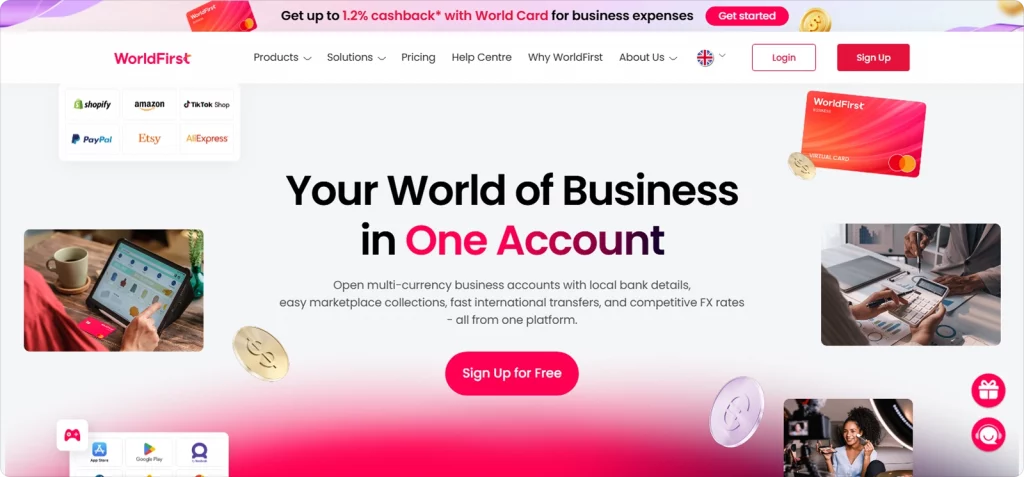
The World Account by WorldFirst, part of Ant Group, is a multi-currency account built specifically for businesses trading internationally. It allows companies to hold, send, and receive money in multiple currencies from a single, centralized dashboard, removing the need to manage multiple bank accounts across countries. Designed with cross-border commerce in mind, it simplifies global transactions while offering competitive exchange rates and transparent fees.
One of its standout capabilities is the ability to open local receiving accounts in major currencies such as GBP, USD, and EUR without setting up a local entity. This makes it especially valuable for businesses working with overseas clients, suppliers, or online marketplaces. By combining local collection, international payments, and FX tools in one platform, WorldFirst provides a streamlined solution for managing global cash flow efficiently.
Key Features:
- 20+ local currency accounts: Open free local accounts to receive payments in major currencies like USD, EUR, and HKD.
- Global payments: Send funds to 210+ countries in 100+ currencies, often same-day in USD/EUR, at competitive FX rates.
- Marketplace collections: Receive payments from 130+ marketplaces and platforms (Amazon, Etsy, TikTok Shop, etc.) directly to your local accounts.
- World Card: Virtual Mastercard for expenses, with up to 1.2% cashback on business spending.
- FX tools: Spot and forward contracts to lock in exchange rates up to 24 months.
- No monthly fee: No setup or monthly account fees; standard fees apply per transfer.
Best For:
Companies trading internationally or selling on multiple marketplaces that need a unified multi-currency account.
Why It Stands Out:
WorldFirst combines inbound and outbound global payments in one account. The combination of local receiving accounts, international payouts, and FX tools offers flexibility unmatched by many traditional banks or single-currency platforms.
2. Wise Business Account
Overview:
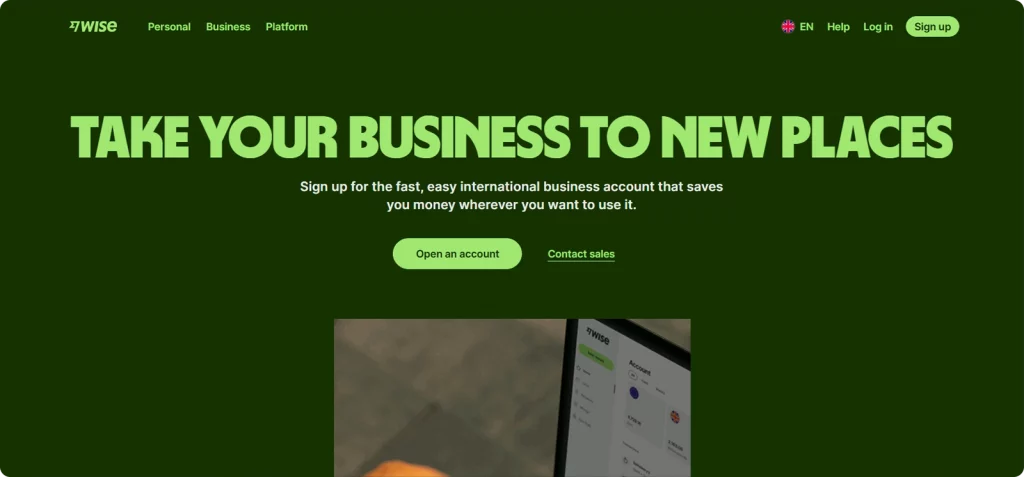
Wise Business is a multi-currency account designed to make international payments simpler, faster, and more affordable. Known for using the real mid-market exchange rate, Wise removes hidden FX markups and replaces them with clearly stated, low fees. Businesses can hold balances in dozens of currencies and convert between them instantly, making it a practical choice for companies operating across borders.
The platform also provides local bank details in key currencies, allowing businesses to receive payments as if they were local. This reduces friction for international clients and helps speed up settlements. With its emphasis on transparency, ease of use, and predictable pricing, Wise Business is particularly appealing to companies that value cost efficiency and straightforward financial operations.
Key Features:
- Multi-currency balances: Hold and convert funds in 40+ currencies.
- Local account details: Receive payments via IBANs or local bank details in USD, EUR, GBP, AUD, and more.
- Low fees: Transfers to 80+ countries with small percentage fees (~0.4–1.0%) plus a fixed charge (~£0.20).
- Batch payments: Upload and pay up to 1,000 invoices in a single batch.
- Debit card: Optional multi-currency debit card for business spending.
Best For:
Startups and SMEs with frequent cross-border transactions who prioritize cost-effectiveness and simplicity over complex treasury operations.
Why It Stands Out:
Wise’s transparent pricing and mid-market FX rates make it ideal for businesses that want to manage multiple currencies efficiently without hidden fees.
3. Revolut Business
Overview
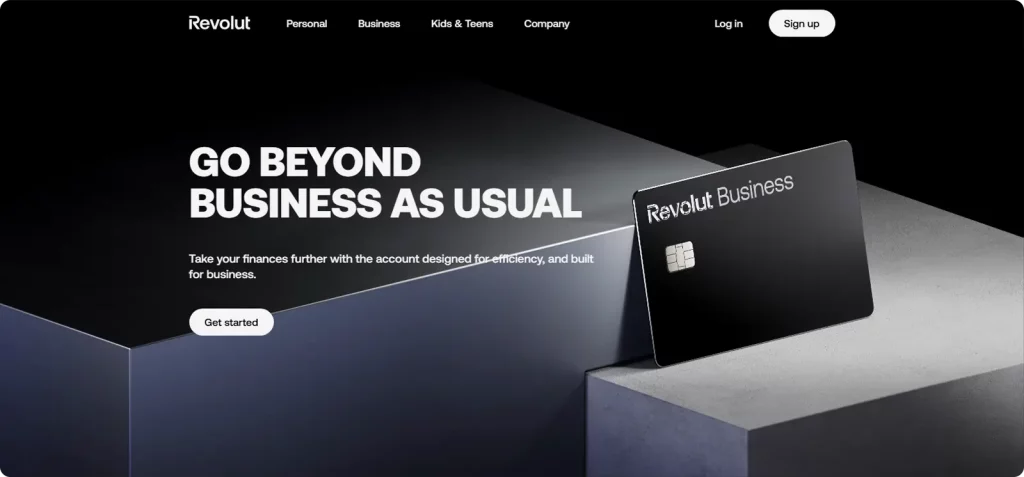
Revolut Business is a digital-first financial platform offering multi-currency accounts, business cards, and integrated financial tools within a single app-based ecosystem. Built for modern companies, it focuses on speed, automation, and real-time control over spending and payments. Businesses can manage multiple currencies, issue cards to team members, and track expenses seamlessly.
What sets Revolut Business apart is its strong emphasis on usability and integrations. With connections to accounting software and customizable spend controls, it helps businesses reduce manual work while maintaining visibility over cash flow. Its tiered pricing plans make it flexible for companies at different stages, from freelancers to growing teams with international payment needs.
Key Features
- Currency wallets: Hold and exchange 30+ currencies at interbank rates during market hours.
- Business cards: Issue physical or virtual corporate cards for global spending with low or no fees (depending on plan).
- Integrations: Connect seamlessly to accounting software like Xero and QuickBooks, as well as e-commerce platforms.
- FX and crypto: Access competitive exchange rates and even cryptocurrency trading.
- Spend control: Set limits and controls on cards, and manage employee expenses from the dashboard.
Best For
Tech-savvy small businesses seeking a modern fintech alternative with built-in expense management. Ideal for teams needing corporate cards and businesses with moderate foreign exchange volume.
Why It Stands Out
Revolut Business combines multi-currency management, expense control, and fintech features in one platform, making it suitable for businesses looking for simplicity, flexibility, and modern tools.
4. PayPal Business
Overview
PayPal Business is a widely recognized payment solution that enables businesses to send invoices, accept payments, and move money internationally with minimal setup. Its global reach and brand trust make it a familiar option for clients and suppliers alike, helping businesses receive payments quickly without lengthy onboarding processes.
The platform supports multiple currencies and integrates easily with e-commerce platforms and online marketplaces. While its fees can be higher than some alternatives, PayPal’s convenience, speed, and widespread acceptance make it a reliable choice for businesses that prioritize accessibility and fast payment collection over advanced treasury features.
Key Features
- Global reach: Operates in 200+ markets and accepts 25 currencies; widely recognized by clients and suppliers.
- Invoicing: Generate and send professional invoices with instant payment options.
- Integrations: Works with e-commerce platforms like Shopify and eBay, as well as various marketplaces.
- Mass payouts: Send payments to hundreds of recipients in a single batch via Mass Pay.
- Buy Now Pay Later (BNPL): Supports partial payments through PayPal Pay in 3.
Best For
Businesses needing quick, easy payments with low transaction volumes. Ideal for receiving funds from marketplaces or paying suppliers who prefer PayPal.
Why It Stands Out
PayPal Business offers immediate, globally recognized payment capabilities, making it a simple and reliable choice for businesses of all sizes.
5. Stripe
Overview
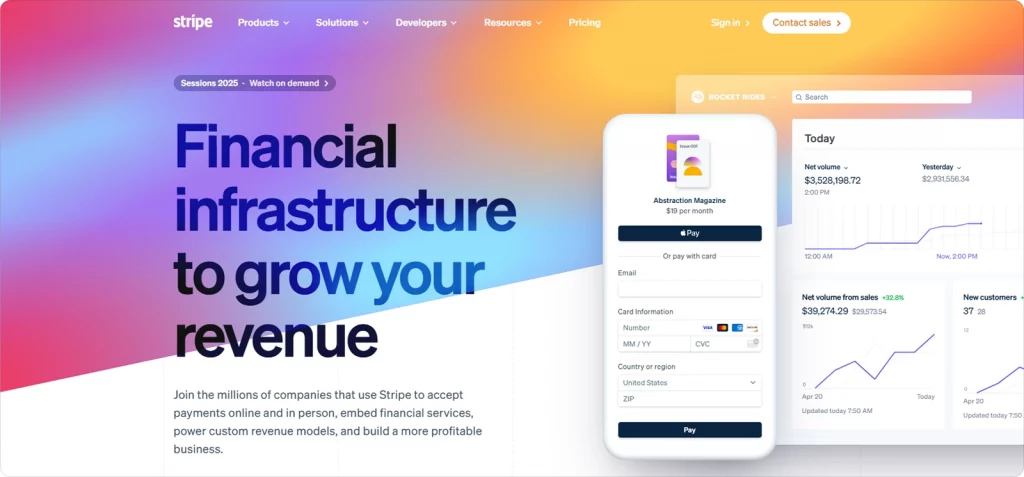
Stripe is a powerful payment processing platform designed for online and digital-first businesses. It enables companies to accept card payments, digital wallets, and local payment methods from customers around the world. With a strong focus on flexibility and scalability, Stripe is widely used by startups, SaaS companies, and online marketplaces.
Beyond payment acceptance, Stripe offers invoicing, subscription billing, and marketplace payout capabilities. Its developer-friendly APIs allow deep customization and integration into existing systems, making it ideal for businesses that want full control over their payment infrastructure. Combined with robust security and fraud prevention, Stripe serves as a comprehensive solution for global online transactions.
Key Features
- Payment acceptance: Accept all major credit/debit cards and local payment methods in 135+ currencies.
- Invoicing and billing: Send hosted invoices or manage subscription billing seamlessly.
- Global payouts: Pay sellers, contractors, or vendors in 130+ countries.
- Advanced API: Custom integrations, developer support, and pre-built plugins for platforms like WooCommerce and Shopify.
- Security and fraud prevention: Built-in PCI compliance and sophisticated fraud detection (Radar).
Best For
Online businesses that need to accept digital payments worldwide. Also ideal for platforms and marketplaces requiring embedded payments.
Why It Stands Out
Stripe combines flexible global payment acceptance, advanced APIs, and robust security, making it suitable for businesses of all sizes that operate internationally.
6. Airwallex

Overview
Airwallex is a global financial platform designed for businesses with complex international payment needs. It provides multi-currency accounts, international transfers, and corporate cards, all supported by infrastructure-level technology. The platform is built to handle high-volume transactions efficiently while keeping FX costs competitive.
A major strength of Airwallex is its API-driven approach, which allows businesses to embed payment and payout functionality directly into their own systems. This makes it particularly attractive to fast-growing companies and enterprises that require automation and scalability. By combining global accounts, FX services, and payment tools, Airwallex offers a unified solution for managing international operations.
Key Features
- Global accounts: Local receiving accounts in 11+ currencies, including GBP, USD, EUR, AUD, and HKD.
- Global transfers: Send funds to 150+ countries at interbank exchange rates.
- Corporate cards: Virtual and physical cards for expense management with zero FX fees.
- Payout solutions: API-driven payouts to 200+ countries and payment gateway services.
Best For
Growth-stage companies and enterprises with high-volume FX needs that require a unified platform with API integration. Ideal for businesses managing multiple international supplier payments.
Why It Stands Out
Airwallex provides end-to-end payment solutions, combining multi-currency accounts, global transfers, and corporate card management into a single platform for international business.
7. Payoneer
Overview
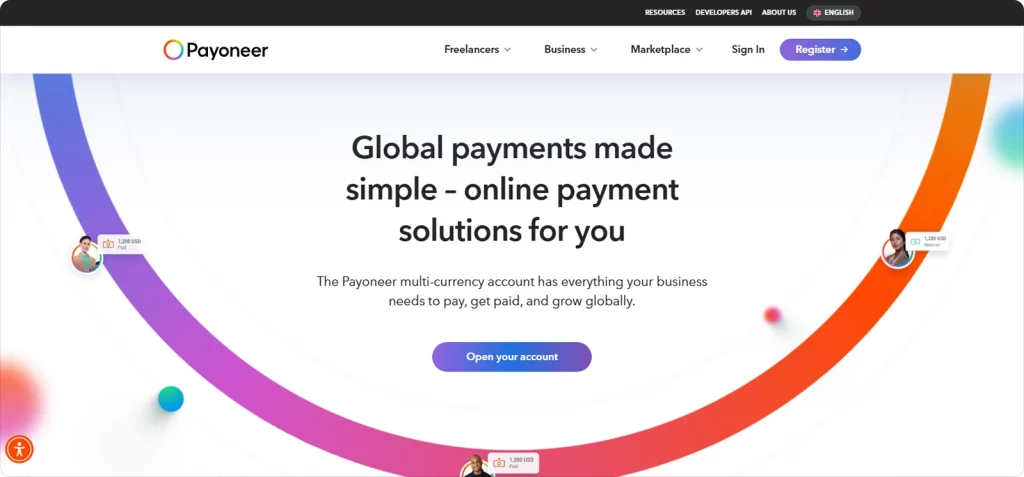
Payoneer is a global payment platform best known for helping businesses receive funds from international clients and online marketplaces. It provides local receiving accounts in major regions, enabling companies to collect payments in foreign currencies without opening overseas bank accounts. This reduces delays and simplifies international collections.
In addition to receiving payments, Payoneer supports mass payouts and currency conversion, making it suitable for businesses paying contractors or partners worldwide. Its focus on marketplace and platform payments makes it a popular choice for companies operating in global digital ecosystems where cross-border transactions are routine.
Key Features
- Receive payments: Local accounts in USD, EUR, GBP, and more for seamless international collections.
- Mass payouts: Pay multiple recipients in 150+ countries via bank transfer.
- Business debit card: Optional Mastercard linked to your account balance for easy spending.
- Low minimums: Accounts require minimal balance to operate.
- Currency conversion: Convert between balances at competitive rates (~2% above mid-market).
Best For
Businesses selling on global platforms, freelancers, and companies paying international contractors. Also ideal for companies regularly receiving USD, EUR, or AUD without local entities abroad.
Why It Stands Out
Payoneer simplifies cross-border payments and collections with local receiving accounts, mass payouts, and convenient debit card access, making it ideal for international operations.
8. GoCardless
Overview
GoCardless is a payment solution focused on automated bank-to-bank collections rather than one-off transfers. It enables businesses to collect payments directly from customers’ bank accounts through direct debit systems across multiple countries. This approach reduces failed payments and improves cash flow predictability.
The platform is particularly effective for recurring billing and invoice-based payments. With integrations into accounting and billing software, GoCardless automates much of the payment collection process, helping businesses reduce administrative effort. It is well suited for companies that rely on regular, scheduled payments rather than ad-hoc transactions.
Key Features
- Global ACH/Direct debit: Supports UK, SEPA (Europe), BECS (Australia), PSPP (US), and 30+ countries.
- Recurring payments: Automate subscriptions, memberships, and repeat invoices.
- Instant bank authentication: Fast account setup via open banking verification with instant authorization.
- Dashboard: Track payments, manage payers, and receive real-time notifications.
- Integrations: Connect with Xero, QuickBooks, Zuora, Stripe, and more.
Best For
Subscription businesses, utilities, or any company with regular recurring invoices. Useful for one-off large invoices such as annual contracts.
Why It Stands Out
GoCardless automates direct debit collection, reducing manual processing and ensuring timely payments for recurring or large invoices.
9. Tipalti

Overview
Tipalti is an advanced accounts payable automation platform built for businesses managing large volumes of supplier payments. It centralizes vendor onboarding, invoice processing, approvals, and global payouts within a single system. The platform is designed to reduce manual work and minimize payment errors at scale.
By incorporating tax compliance and regulatory checks, Tipalti helps businesses meet reporting obligations while paying vendors across multiple countries. Its focus on automation and compliance makes it particularly valuable for companies with complex payment operations, such as marketplaces or enterprises managing international supplier networks.
Key Features
- Global mass payments: Pay vendors and contractors across 200+ countries in 120+ currencies using 50+ payment methods (ACH, SWIFT, PayPal, etc.).
- Invoice automation: Use OCR and AI to capture invoices and match them with purchase orders for efficient processing.
- Self-service onboarding: Vendors submit their details and tax information through a portal, reducing manual work.
- Tax and compliance: Built-in VAT/tax collection and fraud screening to ensure regulatory compliance.
Best For
Medium to large businesses and marketplaces with international vendor networks, such as publishers, ad networks, gig platforms, or any company paying multiple global suppliers.
Why It Stands Out
Tipalti streamlines accounts payable by combining automation, compliance, and global payments in a single platform, reducing manual effort and errors for businesses with complex vendor operations.
10. TransferMate
Overview
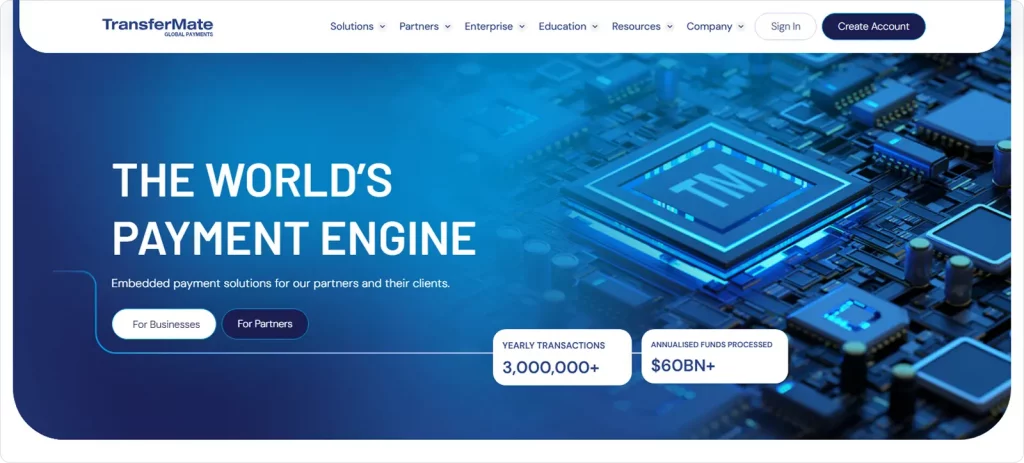
TransferMate is a global payments infrastructure provider offering international payables and receivables solutions for businesses and institutions. It operates through an extensive network of local clearing systems, enabling companies to send and receive payments in local currencies while reducing FX and transfer costs.
The platform can be used directly by businesses or embedded into other services such as ERPs and banking platforms. With its focus on scalability and local settlement, TransferMate is well suited for large organizations handling cross-border transactions at volume. It provides a robust backbone for companies that require efficient and compliant global payment operations.
Key Features
- Global network: Covers 200+ countries and 140+ currencies, supported by multiple payment licenses.
- Embedded and standalone: Can be white-labeled into other platforms or used directly via the TransferMate corporate portal.
- Receivables and payables: Invoice abroad and pay suppliers in their local currencies seamlessly.
- Local settlement: Reduces costs by using local bank accounts for cross-border transfers (e.g., GBP to INR).
Best For
Large enterprises and multinational companies managing cross-border payables and receivables at scale. Also suitable for banks and ERP providers integrating global payments.
Why It Stands Out
TransferMate enables efficient international transactions with local settlement options, reducing costs and simplifying large-scale global payments for enterprises.
Final Verdict
Choosing the right payment solution in 2026 is crucial for businesses with international operations, as it affects efficiency, cost management, and cash flow. Platforms like WorldFirst and Wise stand out for their multi-currency management and transparent, low-cost international transfers, while Revolut and Airwallex cater to companies needing modern fintech features and high-volume FX capabilities. PayPal and Payoneer provide quick, reliable global payments, ideal for marketplace sellers and freelancers, and Stripe excels in online payment processing and seamless platform integrations.
For businesses managing large vendor networks or recurring payments, Tipalti and GoCardless offer advanced automation, compliance, and batch payment capabilities, while TransferMate supports large-scale cross-border transactions for enterprises. Ultimately, the best solution depends on your business model, transaction volume, and global reach. Adopting a platform that streamlines payments, reduces fees, and integrates with your existing systems will deliver greater control, transparency, and scalability, helping your business grow efficiently in 2026 and beyond.
Frequently Asked Questions (FAQs)
What is a multi-currency account?
A multi-currency account allows businesses to hold, send, and receive funds in multiple currencies without needing separate bank accounts in each country.
How do I choose the right payment solution for my business?
Consider factors like transaction volume, frequency, cross-border payments, integration with accounting software, fees, and customer support.
Are these platforms secure for international payments?
Yes. All the listed providers follow strict security standards, including PCI compliance, fraud detection, and regulated banking or fintech licenses.
Can I automate payments using these solutions?
Many platforms, such as Tipalti, GoCardless, and Airwallex, offer automation features for recurring payments, batch transfers, and invoice processing.
Do these solutions support online marketplaces?
Yes. Platforms like WorldFirst, Payoneer, and PayPal provide marketplace collections and payout capabilities for Amazon, Etsy, Shopify, and other platforms.