


The best sponsored post networks in 2026 aren’t the ones with the biggest name. They’re the ones that actually approve real blogs and pay you on time. Names like Intellifluence, Adsy, Linqia, Acorn, and SHE Media consistently come out on top in this guide. Older names like IZEA are still worth knowing, but they’ve changed how they work over the years, so what worked five years ago isn’t always what you’ll find today.
Most “best sponsored post networks” lists repeat the same ten names with vague pay ranges pulled straight from a landing page. They don’t tell you which networks actually approve new blogs, how long payment really takes, or which platforms have quietly changed their rules. This guide ranks 15 real, currently working networks on pay, approval difficulty, payment reliability, and niche fit. Everything here is checked against each platform’s own current terms, not copied from older articles.
What Is a Sponsored Post Network?
A sponsored post network is a platform that connects bloggers with brands willing to pay for content on their site. The brand pays, the blogger writes or hosts the post, and both sides work through the network instead of negotiating directly.
Think of it as a matchmaking service. Brands post what they’re looking for (a review, a mention, a placed link) and bloggers apply or get matched based on their niche, traffic, and audience. The network usually handles payment, messaging, and sometimes contracts, so neither side has to chase the other.
It’s easy to confuse sponsored posts with a few other terms, so here’s the quick difference:
- Sponsored post: A brand pays you to write about their product or service on your blog.
- Guest post: You (or someone else) write content for another site, usually to earn a backlink, not direct payment from a brand.
- Affiliate link: You only get paid when someone actually buys through your link, not for the post itself.
- Display ad: A brand pays to show a banner or ad on your site. There’s no content written about them at all.
Sponsored posts sit in between these. You get paid upfront, or after publishing, you write about the brand directly, and unlike affiliate marketing, your payment doesn’t depend on whether your readers buy anything.
Types of Sponsored Post Networks
Not every network on this list works the same way. Broadly, sponsored post networks fall into four categories based on how they connect brands with bloggers and what bloggers actually get paid for.
| Type | How It Works | Example Networks |
| Blogger marketplaces | Bloggers list their site, browse open campaigns, and apply directly. Simple, self-serve, usually fast approval. | Adsy, Link-able, PayU2Blog |
| Brand-matching platforms | Brands search a database of creators and reach out directly, or an algorithm matches bloggers to relevant campaigns. | Intellifluence, IZEA, Markerly, Acorn |
| Niche-specific networks | Built around a specific audience or content category rather than open to all bloggers. | SHE Media, Real Clever |
| Social and UGC-driven platforms | Focused less on blog posts and more on social content, product seeding, and user-generated content tied to a campaign. | Social Native, Dealspotr, Activate by Impact |
Knowing which type fits a blog best saves time. If display or banner monetization is more your speed than written sponsored content, see our list of ad networks for bloggers instead.
What Makes a Sponsored Post Network Worth Joining
The highest pay rate isn’t the first thing to check. Fit, reliability, and terms matter more, in this order:
- Niche and audience fit. A network full of tech brands is not going to send relevant campaigns to a parenting blog. Check the brand list before applying, not after.
- Approval bar versus current blog stage. Some networks accept almost any live site. Others manually review content and reject anything that looks thin or unfinished. Applying too early wastes time.
- Payment structure. A flat fee per post, pay-per-click, or an ongoing brand retainer all suit different content types. A one-time promotional post earns more from a flat fee; older, still-ranking content earns more from a pay-per-click model.
- Content ownership and usage rights. Some networks keep full rights to the published content or reuse it elsewhere without extra pay. Worth checking before agreeing to anything.
- Payout speed and minimum threshold. A $10 minimum paid weekly beats a $100 minimum paid 60 days later, especially for anyone relying on this income regularly.
- Minimum traffic requirements. Some networks require 10,000+ monthly visitors. Others accept any live blog with real content, regardless of traffic size.
How Sponsored Post Networks Actually Work
Every network runs on the same core loop: get approved, get matched with a brand, publish, get paid. The differences show up in the details.
- Create a profile. This usually includes the blog URL, niche, traffic numbers, and social media accounts, if any exist.
- Get the blog reviewed. Some platforms approve almost any live site. Others manually check content, design, and traffic before granting access.
- Get matched with campaigns. Depending on the network, bloggers either browse open campaigns and apply, or brands find profiles and send pitches directly.
- Agree on the details. This includes what the post should cover, any required links or hashtags, and the payment amount.
- Write and publish the post. Some networks allow full creative control. Others require a close brief or brand-provided content.
- Send proof to the brand. Most platforms need confirmation the post is live, usually a URL.
- Receive payment. Timing depends on the network. Some pay within a week. Others hold payment for 30 to 60 days after the post goes live.
The main things that change from network to network are approval strictness, creative freedom, and how long payment takes to arrive.
What Are the Red Flags of a Sponsored Post Network?
Not every sponsored post network is worth joining, even if it looks legitimate on the surface. A few warning signs are worth checking before signing up.
- No verifiable payment history. If a quick search turns up no reviews, forum mentions, or Trustpilot presence, treat that as a caution sign, not neutral.
- Vague or shifting approval criteria. Legitimate networks explain what they’re looking for. Platforms that reject without explanation, or change requirements after the fact, waste time.
- Contracts claiming full content ownership. Some networks quietly require full copyright transfer instead of a simple usage license. Worth reading the fine print before agreeing to anything.
- No minimum payout or payment terms listed anywhere. A legitimate network states its payment structure clearly. If that information is missing or hidden behind a sign-up wall, that’s worth questioning.
- Pressure to publish before payment terms are confirmed. A platform pushing to get content live before settling on pay or timeline is not operating in good faith.
- There is no real contact information or support channel. A network with no way to reach a human, only an automated form, makes disputes harder to resolve later.
None of these automatically mean a network is a scam. But two or more of these showing up together is a reason to slow down before committing time to it.
What Is Our Rating Methodology?
Every network in this guide gets an overall rating out of 5, based on a weighted score across five factors.
| Factor | Weight | What Was Checked |
| Pay rate and structure | 30% | Whether pay is competitive for the network’s type, and whether the structure (flat, pay-per-click, retainer) is clearly explained upfront |
| Approval ease | 20% | What the application actually requires, from instant sign-up to manual content review |
| Payment reliability and speed | 20% | Minimum payout threshold, how long payment takes after publishing, and community-reported payment consistency |
| Brand and campaign quality | 15% | Recognizability and trustworthiness of the brands running campaigns on the platform |
| Niche and traffic flexibility | 15% | Whether the network works for smaller or newer blogs, or requires an established audience |
These ratings are directional, based on publicly available terms and user-reported experience as of 2026, not a scientific instrument. Terms, pay rates, and approval standards can change without much notice, so it’s worth confirming current details directly on each platform before applying.
The 15 Best Sponsored Post Networks in 2026
Each network below is ranked by real-world fit rather than name recognition alone, based on the pay, approval difficulty, and reliability factors covered earlier. Full details on pay structure, payment terms, and who should (or shouldn’t) apply follow in each network.
- Intellifluence
- Adsy
- Linqia
- Acorn
- SHE Media
- Markerly
- IZEA
- Social Native
- Dealspotr
- Real Clever
- Collaborator.pro
- Activate by Impact
- Link-able
- PayU2Blog
- Blog Meets Brand
1. Intellifluence
 Overall Rating: 4.6 / 5 ⭐⭐⭐⭐⭐
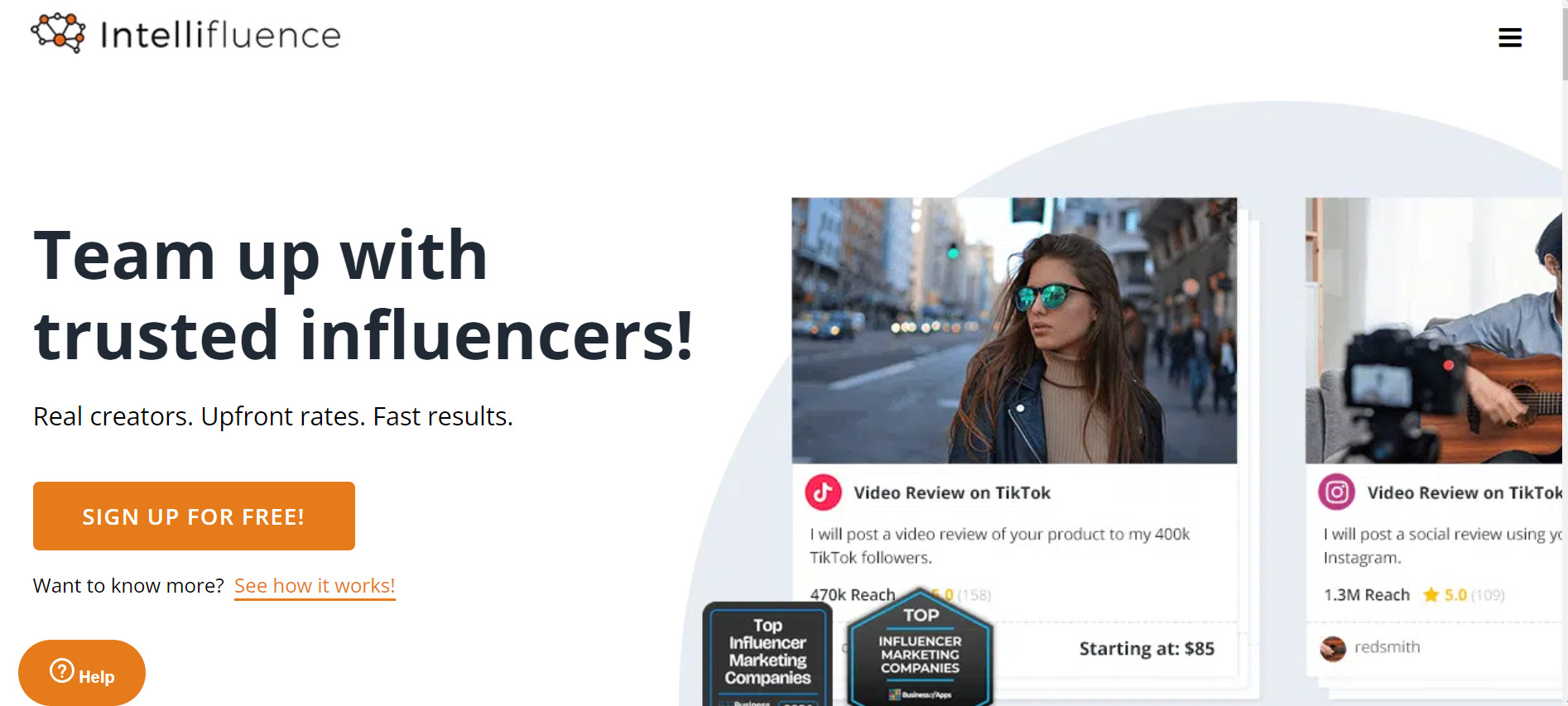
Intellifluence was founded in 2016 and is based in Arizona. The company grew out of a team with deep search engine optimization roots before pivoting into influencer marketing, and now bills itself as the largest warm-contact network, meaning every creator has voluntarily opted in to work with brands. The network spans 200,000+ registered creators across 58 categories, serving well over a hundred thousand brands.
| Field | Details |
| Founded | 2016 |
| Headquarters | Arizona, US |
| Best For | Beginners, bloggers with no traffic history yet |
| Commission Type | Set-your-own minimum offer per campaign |
| Payment Method | PayPal or Venmo |
| Payment Frequency | Within 15 days after a brand marks the task complete |
| Approval Process | Free profile, no follower or traffic minimum |
| Supported Countries | Worldwide |
| Product Categories | 58 categories |
| Pricing | Free to join |
Key Features
- Centralized dashboard with in-app messaging, campaign tools, payments, and discovery
- Funds held and secured through the “Intellifluence Promise” until work is completed
- Ability to set a personal minimum offer to filter out low-paying deals
- Clear campaign details shown upfront, including deliverables, deadlines, and compensation, before accepting
Pros
- No minimum follower or traffic requirement to join
- No hidden fees, and all communication stays within the platform
- Fast payment turnaround compared to most networks on this list
- Large enough brand pool for consistent opportunities across niches
Cons
- Some users report messaging bugs that push conversations back to third-party tools.
- Paid tiers cap team members, so agencies or multi-user accounts pay more to add users
- Per-campaign pay varies widely and isn’t always high for smaller blogs
Why Choose It: A blog is brand new or has no significant traffic history yet, and the priority is getting approved and landing a first paid campaign without a long waiting period.
Who Should Avoid It: Bloggers looking for consistently high per-post rates from day one. Since pay is often negotiated per campaign, income can be inconsistent until a track record is built on the platform.
2. Adsy
Overall Rating: 4.2 / 5 ⭐⭐⭐⭐
Adsy launched in 2017 as a guest-posting service and has since grown into a full SEO, PR distribution, and content placement marketplace. The platform now lists well over 90,000 publisher sites across 50+ categories, and bloggers keep full control over their own pricing rather than accepting a network-set rate. Adsy won Crozdesk’s Happiest Users award in 2025 for user satisfaction.
| Field | Details |
|---|---|
| Founded | 2017 |
| Headquarters | Not publicly disclosed |
| Best For | Bloggers with established traffic wanting self-serve link placements and sponsored content |
| Commission Type | Flat fee, set by the blogger |
| Payment Method | PayPal |
| Payment Frequency | Funds move to the withdrawable balance once the buyer approves the live post, or automatically after 14 days; payouts are then processed via PayPal |
| Approval Process | Add a website, get it manually reviewed, then list it in the catalog with a self-chosen price |
| Supported Countries | Worldwide, though PayPal availability varies by country |
| Product Categories | 50+ categories |
| Pricing | Free to join; a 7.9% combined commission (4% PayPal + 3.9% Adsy) applies at withdrawal |
Key Features
- Large, active marketplace of buyers searching for guest post and link placement opportunities
- Bloggers set and control their own per-post pricing; Adsy doesn’t dictate rates
- Built-in messaging with buyers, plus the ability to reject any placement that doesn’t fit the blog
- Publisher reliability metrics (completion rate, average link lifetime) are visible to buyers, which tends to reward consistent publishers with more orders
Pros
- Full control over pricing, with no algorithm setting a rate for the blogger
- Large, established base of active buyers looking for placements across most niches
- Straightforward self-serve listing process once a site is approved
- Funds become withdrawable quickly after buyer approval or the 14-day auto-approval window
Cons
- PayPal is effectively the only payout method, and it isn’t available in every country
- Combined 7.9% commission on withdrawal cuts into per-post earnings
- Leans toward SEO and backlink-style placements more than editorial-style brand features
- Requires actively listing and pricing a site rather than being matched automatically by the network
Why Choose It: A blog already has decent authority and traffic, and the priority is controlling per-post pricing while working with a large, ongoing pool of buyers rather than waiting on a slow, agency-managed process.
Who Should Avoid It: Bloggers outside PayPal-supported regions, or anyone who’d rather have a network match and pitch them to brands instead of self-listing a site in an open catalog.
3. Linqia
 Overall Rating: 4.4 / 5 ⭐⭐⭐⭐
Linqia was founded in 2012 and is headquartered in San Francisco, with additional offices in New York, Chicago, and Bentonville. The company works with over 650 leading national brands, including AB InBev, Clorox, Danone, McDonald’s, Nestlé, Unilever, and Walmart, and focuses primarily on micro-influencers with anywhere between 5,000 and 150,000 organic followers.
| Field | Details |
|---|---|
| Founded | 2012 |
| Headquarters | San Francisco, California, US |
| Best For | Parenting, lifestyle, and family-niche bloggers with engaged readers |
| Commission Type | Cost-per-click (CPC); brands pay only when a reader takes an action from the content |
| Payment Method | Check or direct deposit |
| Payment Frequency | Following campaign completion and results verification |
| Approval Process | Requires at least 2,500 social media followers across platforms and posting at least once a month |
| Supported Countries | Primarily US-based brands and campaigns |
| Product Categories | Food, family, lifestyle, retail, and more, depending on brand partners |
| Pricing | Free to join |
Key Features
- Compensation is tied to how well content performs, specifically clicks through a unique tracking link, not just content creation
- Referral program pays a $5 fee plus 15% commission on a referred blogger’s first campaign
- Uses a proprietary platform, Resonate, drawing on over 1.5 billion data points for influencer discovery and campaign tracking
- Average reported payout around $220 per campaign, according to blogger-reported figures
Pros
- Works with major, recognizable national brands
- “Guaranteed results” model means bloggers aren’t paid unless the brand’s goals are met, which also means Linqia has a direct incentive to send well-matched campaigns
- Referral program adds a passive income layer
- Evergreen content can keep earning clicks well after a campaign ends
Cons
- Pay-per-click model means earnings aren’t guaranteed just from publishing a post; a low-engagement audience will earn less regardless of traffic size
- Minimum follower requirement (2,500 across platforms) rules out brand-new bloggers with no social presence yet
- Payout timing depends on campaign length and results verification, so it’s slower than a flat per-post fee
Why Choose It: A blog has an engaged, click-happy audience, especially in parenting, lifestyle, or family niches, and the goal is working with recognizable national brands rather than smaller, lesser-known advertisers.
Who Should Avoid It: Bloggers with high pageviews but low engagement, or no social media following at all. Linqia’s CPC model rewards clicks, not traffic volume, so a large but passive audience won’t convert into strong earnings here.
4. Acorn
 Overall Rating: 4.2 / 5 ⭐⭐⭐⭐
Acorn Influence was founded in 2014 and is headquartered in Rogers/Bentonville, Arkansas. New Engen acquired the company in January 2022 and now operates as Acorn: The Influence Company, a New Engen solution. It has over 10 years of experience, a network of 29,000+ creators, and has executed 1,700+ campaigns connecting brands with target audiences. Clients include Johnson & Johnson, Nickelodeon, and Pampers.
| Field | Details |
|---|---|
| Founded | 2014 |
| Headquarters | Rogers/Bentonville, Arkansas, US (part of New Engen) |
| Best For | Established bloggers wanting access to major consumer brands |
| Commission Type | Varies by campaign, algorithm-matched |
| Payment Method | Direct deposit |
| Payment Frequency | Not publicly stated; varies by campaign terms |
| Approval Process | Curated marketplace; blogs vetted before matching |
| Supported Countries | Employees and operations across North America, Europe, and Africa; campaigns primarily US-focused |
| Product Categories | Consumer packaged goods, family, retail, and more |
| Pricing | Free to join |
Key Features
- Uses a proprietary algorithm to match bloggers and influencers to relevant brand campaigns after analyzing what each campaign needs
- Reports a roughly 90% opt-in rate on its pitches, meaning most bloggers approached actually accept the campaign
- Access to major, recognizable brand names not always available on smaller networks
- Backed by New Engen’s broader digital marketing and paid media infrastructure
Pros
- Works with genuinely major consumer brands (Johnson & Johnson, Nickelodeon, Pampers)
- Curated matching means campaigns are somewhat pre-vetted for fit rather than open to anyone who applies
- Established track record with over a decade in the space and a large completed-campaign history
Cons
- Payment terms and typical pay ranges aren’t clearly published, which makes it harder to plan around
- Approval and campaign flow tend to favor bloggers with existing traffic and content history over brand-new sites
- Now operates as part of a larger agency (New Engen) rather than an independent, blogger-first platform, which may mean less direct flexibility than smaller networks
Why Choose It: A blog has some established traffic and content history, and the goal is landing recognizable, high-profile brand campaigns rather than smaller or lesser-known advertisers.
Who Should Avoid It: Brand-new blogs with little to no published content yet. Since Acorn curates and matches based on existing site quality and audience fit, there’s not much here for someone starting from zero.
5. SHE Media
 Overall Rating: 4.5 / 5 ⭐⭐⭐⭐
SHE Media was founded in 1999 as SheKnows.com and rebranded to SHE Media in November 2018. The company was acquired by Penske Media Corporation in 2018 and now operates flagship brands including SheKnows, BlogHer, STYLECASTER, and Soaps, reaching over 88 million unique monthly readers across its owned properties. The SHE Media Collective (formerly the SHE Media Partner Network) supports thousands of independent publishers with monetization, editorial exposure, and sponsored content opportunities.
| Field | Details |
|---|---|
| Founded | 1999 (as SheKnows.com) |
| Headquarters | New York, New York, US |
| Best For | Female-audience blogs in lifestyle, parenting, health, food, and career niches |
| Commission Type | Individually negotiated per sponsored campaign |
| Payment Method | ACH/direct deposit for US-based publishers, PayPal for publishers outside the US |
| Payment Frequency | Per campaign terms; 1099 issued for US publishers earning $600+ in a calendar year |
| Approval Process | Application review against content quality and traffic standards |
| Supported Countries | US-based publishers prioritized; international publishers accepted with some program limitations |
| Product Categories | Lifestyle, parenting, health, food, career, entertainment |
| Pricing | Free to join |
Key Features
- Backed by Penske Media Corporation, one of the largest digital media and publishing companies in the US
- Editorial exposure opportunities across SheKnows, BlogHer, STYLECASTER, and Soaps for top-performing partners
- Meaningful Marketplace program directs ad spend specifically toward women and minority-owned publishers
- Referral program pays for successfully referring other qualifying publishers, with a minimum 20,000 monthly pageviews requirement for the referred site
Pros
- Strong brand trust and long operating history (over 20 years)
- Access to editorial features and live event opportunities beyond just sponsored posts
- Meaningful Marketplace initiative specifically supports diverse and women-owned publishers
- Clear payment structure with standard tax documentation for US publishers
Cons
- Not every interested blogger is guaranteed to be matched with a sponsored program; selection depends on sponsor criteria
- International publishers may be excluded from some traditional review programs due to shipping and legal constraints
- Referral program’s 20,000 monthly pageview minimum signals the kind of traffic level the network generally expects
Why Choose It: A blog targets a female audience in lifestyle, parenting, health, or related niches, and the goal is long-term brand credibility alongside sponsored content, not just one-off payouts.
Who Should Avoid It: Blogs outside the lifestyle/female-audience space, or international publishers who need guaranteed access to every sponsored program. Some campaigns are US-focused due to logistics and legal requirements.
6. Markerly
 Overall Rating: 4.0 / 5 ⭐⭐⭐⭐
Markerly was founded in 2012 in Austin, Texas, by Rahf Noor, Sarah Ware, and Justin Kline, making it one of the longest-running names in influencer marketing. Its core business is full-service campaign management: the Markerly team sources creators, handles outreach and contracts, manages content approvals, and reports on performance for the brand. Client list skews enterprise, including Coca-Cola, Dasani, Nike, Nordstrom, Levi’s, Lyft, Kraft, Beyond Meat, and the NFL.
| Field | Details |
|---|---|
| Founded | 2012 |
| Headquarters | Austin, Texas, US |
| Best For | Established influencers and bloggers with a real content and social history |
| Commission Type | Individually negotiated per campaign |
| Payment Method | Not publicly detailed |
| Payment Frequency | Varies by campaign |
| Approval Process | Selective, agency-vetted; not a simple self-serve sign-up |
| Supported Countries | Primarily US-based campaigns |
| Product Categories | Consumer brands, retail, food & beverage, fashion |
| Pricing | Free to create a profile |
Key Features
- Real-time dashboard tracking mentions, tags, and impressions across Instagram, YouTube, Facebook, Twitter, Pinterest, and blogs
- Full-service model means the brand’s campaign is managed end-to-end by Markerly’s team, not left to a self-serve dashboard
- Screens for authentic followers, checking for fake or purchased engagement before approving creators for campaigns
Pros
- Genuinely major, recognizable enterprise brand clients
- Vetting process filters out fake-follower accounts, which protects legitimate bloggers from being undercut
- Long operating history in the influencer marketing space
Cons
- Selection process is reported as time-consuming and selective, sometimes taking weeks
- Functions more as an agency choosing creators than an open marketplace bloggers can browse and apply to
- Pay ranges and payment terms are not clearly published anywhere publicly
Why Choose It: A blog or influencer profile already has an authentic, verifiable following and content history, and the goal is landing enterprise-level brand campaigns rather than smaller, self-serve opportunities.
Who Should Avoid It: Newer bloggers hoping to browse and apply to open campaigns actively. Markerly’s agency-led model means getting picked depends on being sourced, not applying directly.
7. IZEA
 Overall Rating: 3.8 / 5 ⭐⭐⭐⭐
IZEA was founded in 2006 under the name PayPerPost, focused on paying bloggers to write about brands so those mentions would surface in search results. As one of the first influencer marketing platforms on the internet, the company has long positioned itself as a powerhouse connecting brands with creators. In 2026, the picture looks different: IZEA has consolidated its various tools onto a single site, retired its old self-serve Shake product, and repositioned itself as an enterprise-focused creator economy agency powered by its proprietary AI platform, ZED.
| Field | Details |
|---|---|
| Founded | 2006 (as PayPerPost) |
| Headquarters | Orlando, Florida, US |
| Best For | Established creators with an existing following, less so brand-new bloggers |
| Commission Type | Individually negotiated, agency-managed |
| Payment Method | Direct deposit |
| Payment Frequency | Varies by campaign |
| Approval Process | No longer a simple self-serve sign-up; shifted toward agency-managed matching |
| Supported Countries | Primarily US-focused enterprise campaigns |
| Product Categories | Food, beverage, travel, beauty, fashion, lifestyle |
| Pricing | Free to create a profile |
Key Features
- One of the longest operating histories in the sponsored content space, dating back to 2006
- Proprietary AI platform (ZED) now powers brand-creator matching and campaign management
- Historically published influencer rate data through its annual State of Influencer Equality reports
Pros
- Long-standing brand trust and name recognition in the space
- Deep campaign history across multiple content categories
- AI-driven matching may improve campaign relevance for creators who do get in
Cons
- Self-serve access has narrowed significantly since the retirement of the Shake product
- Now functions more like an enterprise agency, making it a harder entry point for smaller or newer bloggers
- Some bloggers report fewer available campaigns in recent years compared to the platform’s earlier self-serve era
Why Choose It: A blog or creator profile already has an established following and content history, and the goal is enterprise-level brand campaigns through a long-trusted name in the space.
Who Should Avoid It: Brand-new bloggers expecting the open, self-serve sign-up IZEA was known for historically. That version of the platform no longer exists in the same form.
8. Social Native
 Overall Rating: 3.9 / 5 ⭐⭐⭐⭐
Social Native was founded in 2015 and is headquartered in Los Angeles (Beverly Hills), California, by David Shadpour and co-founders including Eytan Elbaz and Jeff Ragovin. The company has executed over 2,000 campaigns, paid more than $5 million to creators, and produced over 150,000 pieces of branded content, working with global brands including Adidas, Estée Lauder, and Airbnb. Social Native acquired Olapic in 2020 to expand its UGC and influencer content capabilities, and acquired creator assets from Influence.co in 2022 to further grow its creator network.
| Field | Details |
|---|---|
| Founded | 2015 |
| Headquarters | Los Angeles (Beverly Hills), California, US |
| Best For | Creators producing UGC-style video and photo content, more than blog-only writers |
| Commission Type | Per-content-piece, campaign-based |
| Payment Method | Direct deposit |
| Payment Frequency | Varies by campaign |
| Approval Process | Application-based; creators build a profile and get matched to relevant briefs |
| Supported Countries | Global; employees and creators across multiple continents |
| Product Categories | E-commerce, beauty, fashion, retail, lifestyle |
| Pricing | Free to join |
Key Features
- AI and machine-learning matching connects creators to relevant brand briefs based on content style and past performance
- Access to major global brands (Adidas, Estée Lauder, Airbnb, L’Oréal, Unilever, Nestlé, Sony) through both Social Native and its Olapic acquisition
- Content produced is used across e-commerce listings, paid social ads, and brand social channels, not just a single blog post
Pros
- Strong brand roster with genuinely global, recognizable names
- Doesn’t require a large blog following; content quality matters more than audience size
- Growing creator network backed by acquisitions (Olapic, Influence.co assets)
Cons
- Built primarily around UGC content (video, photo) rather than written blog posts, so it’s a weaker fit for text-first bloggers
- Payment terms and typical per-piece rates aren’t clearly published
- Content is often licensed for the brand’s own ads and channels, worth checking usage rights before accepting a brief
Why Choose It: A creator is comfortable producing short-form video or photo content in addition to, or instead of, blog posts, and wants access to major global e-commerce and lifestyle brands. Check our influencer tips for social media success before applying.
Who Should Avoid It: Bloggers focused purely on long-form written content with no interest in producing video or photo assets. Social Native’s model centers on UGC-style content, not traditional sponsored blog posts.
9. Dealspotr
 Overall Rating: 4.1 / 5 ⭐⭐⭐⭐
Dealspotr operates two connected but distinct products: a consumer-facing deal-sharing community where users earn small point-based rewards for sharing coupon codes, and a separate self-serve Marketplace where brands fund influencer campaigns directly. The Marketplace positions itself as a low-cost, purely self-serve alternative to expensive influencer platforms, more comparable to how Facebook Ads or Google Ads work than a managed agency. Brands create a campaign, set a budget, and influencers apply to work with them, with Dealspotr handling notifications, reminders, and payments.
| Field | Details |
|---|---|
| Founded | Not publicly disclosed |
| Headquarters | Not publicly disclosed |
| Best For | Influencers and bloggers wanting to browse and apply to funded campaigns directly |
| Commission Type | Campaign-funded, negotiated per influencer |
| Payment Method | Direct deposit |
| Payment Frequency | Per campaign terms |
| Approval Process | Free, self-serve application to individual campaigns |
| Supported Countries | Primarily US-based brand campaigns |
| Product Categories | Apparel, beauty, electronics, health, retail |
| Pricing | Free to join |
Key Features
- Fully self-serve Marketplace; brands fund their own campaign budget, and influencers apply directly
- Campaigns are typically funded starting around $100 for smaller influencers, up to $500 to $1,000+ for larger ones
- Also operates a separate social/deal-sharing side of the platform, worth not confusing with the paid Marketplace
- No subscription or upfront cost for brands to browse and connect with influencers
Pros
- Genuinely self-serve; no lengthy agency vetting process to start applying
- Free to join with no cost barrier for influencers
- Campaign budgets are visible upfront, so influencers know roughly what a brand is prepared to spend
Cons
- The platform’s dual nature (consumer deal-sharing vs. paid influencer Marketplace) can be confusing at first
- Campaign pay varies entirely by individual brand budget, so there’s no standard rate across the platform
- Payment terms and typical turnaround times aren’t clearly published
Why Choose It: A blogger or influencer wants to browse and apply to funded campaigns directly, without going through a lengthy agency-style vetting process first.
Who Should Avoid It: Anyone expecting Dealspotr’s consumer deal-sharing rewards program to be the same as its paid Marketplace; the two are different products with very different earning potential.
10. Real Clever
 Overall Rating: 4.0 / 5 ⭐⭐⭐⭐
Real Clever is an influencer marketing network covering a wide range of topics, including food, pets, causes and social good, technology, and healthcare. It provides a well-organized dashboard for bloggers to browse potential opportunities, along with step-by-step guidance for each campaign. The platform partners with recognizable brands including Clif, Lenovo, Kimberly-Clark, and California Closets.
| Field | Details |
|---|---|
| Founded | Not publicly disclosed |
| Headquarters | Not publicly disclosed |
| Best For | Beginners and bloggers across a wide range of niches |
| Commission Type | Campaign-based, calculator-assisted |
| Payment Method | Direct deposit |
| Payment Frequency | Reported by some bloggers as roughly 60 days after campaign completion |
| Approval Process | Open; no strict traffic or follower minimum currently required |
| Supported Countries | Primarily US-based campaigns |
| Product Categories | Food, pets, causes and social good, technology, healthcare, home |
| Pricing | Free to join |
Key Features
- No strict requirements for traffic or follower count, making it accessible to newer bloggers
- Sophisticated dashboard with step-by-step guidance for each campaign
- Original, high-quality content is required; copied or duplicated content is explicitly not allowed
Pros
- Low barrier to entry compared to several other networks on this list
- Clean, well-organized dashboard that’s easy to navigate for newer users
- Works with genuinely recognizable brand names across multiple niches
Cons
- Some bloggers report that the platform’s pay calculator tends to undervalue their work compared to what similar campaigns pay elsewhere
- Payout period has been reported as up to 60 days after a campaign wraps
- Typical pay ranges aren’t clearly published, so it’s hard to estimate earnings before applying
Why Choose It: A blog is newer or covers a broad topic area, and the priority is easy approval and a straightforward dashboard over the highest possible per-campaign rate.
Who Should Avoid It: Bloggers who want to negotiate pay directly or expect top-dollar rates from day one. Real Clever’s calculator-driven pricing has drawn some criticism for undervaluing campaigns.
11. Collaborator.pro
Overall Rating: 4.1 / 5 ⭐⭐⭐⭐
Collaborator.pro was founded in Kyiv, Ukraine, in 2017 by Ihor Rudnyk, and has grown into a digital PR and guest-posting marketplace connecting advertisers directly with website and Telegram-channel owners. The catalog spans more than 38,000 hand-vetted sites and 3,000+ Telegram channels across 150+ countries and 50+ languages, with SEO metrics pulled directly from Ahrefs, Majestic, Serpstat, and Google Analytics so bloggers and buyers can see real traffic data before agreeing to a placement.
| Field | Details |
|---|---|
| Founded | 2017 |
| Headquarters | Kyiv, Ukraine |
| Best For | Bloggers and site owners wanting genuinely global, self-serve sponsored placement income |
| Commission Type | Publisher sets the placement price, shown directly in the catalog |
| Payment Method | PayPal, Payoneer, bank cards, wire transfer, and USDT (TRC-20) |
| Payment Frequency | Task auto-accepts and funds become withdrawable 72 hours after publication if the buyer doesn’t respond; withdrawal requests are then processed within 3 business days |
| Approval Process | Add a website (or Telegram channel), get it vetted, then list it with a self-chosen price in the catalog |
| Supported Countries | 150+ countries, 50+ languages |
| Product Categories | Open to most niches, plus PR/press release distribution and Telegram channel placements |
| Pricing | Free to join; a 15% commission applies on withdrawals, plus standard payment-processor fees |
Key Features
- One of the largest genuinely global guest-post and PR marketplaces, with vetted sites in 150+ countries and 50+ languages
- Publisher-set pricing shown transparently alongside real traffic and domain metrics, so bloggers can see demand before listing
- Direct in-platform messaging with advertisers before accepting a placement
- Master Account system lets publishers with multiple sites manage everything, including sub-accounts, from one place
Pros
- Genuinely international reach, unlike several US-only networks on this list
- Strong data transparency, with real SEO and traffic metrics tied to each listing
- Fast turnaround, with most placements going live within 48 hours and a 72-hour auto-acceptance window protecting against buyers stalling
- Multiple payout options (PayPal, Payoneer, bank transfer, USDT) suit international publishers better than PayPal-only networks
Cons
- 15% withdrawal fee, plus whatever the chosen payment processor charges on top
- Self-serve model means bloggers have to actively list, price, and maintain their own site rather than being matched automatically
- Leans toward SEO/PR-style guest posts and press releases more than branded editorial features
- No placement guarantee currently offered for sites based in Russia or Belarus
Why Choose It: A blog, media site, or Telegram channel wants exposure to a genuinely global base of advertisers across many countries and languages, and payout flexibility beyond PayPal-only matters.
Who Should Avoid It: Bloggers who want a network to actively pitch and match them to brands rather than list and price themselves in a searchable catalog, or anyone who wants to avoid a 15% cut on withdrawals.
12. Activate by Impact
 Overall Rating: 4.2 / 5 ⭐⭐⭐⭐
Activate began in 2007 as Bloglovin’, an early blog discovery and content platform that grew to over 12 million registered users. The company introduced the Activate technology platform in 2014, fully rebranded from Bloglovin’ to Activate in 2018, and was acquired by Impact, a partnership automation company, in August 2020. It now operates as Activate by Impact and has activated over 75,000 influencers and creators, producing more than 6,500 pieces of collaborated content per month. It’s positioned as one of the largest global influencer marketplaces, with over 300,000 opt-in qualified and vetted influencers across Impact’s combined platforms.
| Field | Details |
|---|---|
| Founded | 2007 (as Bloglovin’) |
| Headquarters | Santa Barbara, California, US |
| Best For | Established bloggers and influencers wanting access to large, well-known brands |
| Commission Type | Per-campaign, varies by brand |
| Payment Method | Handled through Impact’s flexible payment processing |
| Payment Frequency | Per campaign terms, by whatever terms and currency the creator requires |
| Approval Process | Opt-in network with vetting; three access tiers (Network, Studio, Platform) |
| Supported Countries | Global |
| Product Categories | Wide range, spanning consumer brands, travel, lifestyle |
| Pricing | Free to join the influencer network |
Key Features
- Three ways to work with brands: the opt-in network, full white-glove Studio services, or direct self-serve access through the platform
- Backed by Impact’s automated contracting and flexible payment processing, built to ensure reliable payment regardless of currency or terms
- Deep roots in the original blogging community through its Bloglovin’ origins, dating back to 2007
- Works with over a thousand of the largest and fastest-growing global brands
Pros
- Genuinely large, vetted influencer network with a long operating history
- Impact’s payment infrastructure is built specifically to ensure reliable, flexible payouts
- Multiple ways to engage (self-serve, full-service, or network-based) depending on preference
Cons
- Specific pay ranges and typical per-post rates aren’t clearly published
- Access and vetting standards may favor influencers with an established following over brand-new bloggers
- Now operates under Impact’s broader partnership automation umbrella, which adds a layer of corporate structure compared to smaller, independent networks
Why Choose It: An established following exists, and the goal is landing campaigns with major global brands through a network with real payment reliability behind it.
Who Should Avoid It: Brand-new bloggers with no existing following. Activate’s vetting and brand partnerships tend to favor influencers who already have some traction.
13. Link-able
 Overall Rating: 4.0 / 5 ⭐⭐⭐⭐
Link-able matches subject matter experts with brands looking for sponsored posts and link placements, with a focus specifically on link building rather than general sponsored content. Unlike most networks on this list, bloggers on Link-able often need existing connections with other websites to place content, since the platform centers on where a link goes and how authoritative that placement is, not just on the blogger’s own site traffic.
| Field | Details |
|---|---|
| Founded | Not publicly disclosed |
| Headquarters | Not publicly disclosed |
| Best For | Subject matter experts and bloggers with existing site relationships or guest-posting connections |
| Commission Type | Per placement, reportedly high per-article |
| Payment Method | PayPal / bank transfer |
| Payment Frequency | Per placement terms |
| Approval Process | Expertise-based matching; not fully self-serve |
| Supported Countries | Not clearly published |
| Product Categories | Varies by advertiser and niche expertise |
| Pricing | Free to join |
Key Features
- Matches bloggers and subject matter experts to brands specifically seeking link placements, not just general sponsored content
- Reportedly high per-article payouts, with some content creators earning $1,000+ from a single article according to third-party reports
- Works best for bloggers who already have relationships with other sites for guest content, not just their own blog
Pros
- Reportedly among the highest per-article payouts on this list
- Good fit for genuine subject matter experts, not just general bloggers
- Focuses on link authority and placement quality over raw traffic numbers
Cons
- Requires connections to other sites for placement, which raises the barrier to entry compared to posting on one’s own blog
- Payment terms, approval process, and typical pay ranges aren’t clearly published on the platform itself
- The reported high per-article figure comes from third-party recap articles rather than the platform’s own published rate card, so it’s worth confirming directly before relying on it
Why Choose It: Genuine subject matter expertise exists, along with relationships or connections to other websites where sponsored content could be placed, not just a personal blog.
Who Should Avoid It: Bloggers looking to publish sponsored posts exclusively on their own site. Link-able’s model leans more toward link building across multiple sites than single-site sponsored content.
14. PayU2Blog
 Overall Rating: 3.6 / 5 ⭐⭐⭐
PayU2Blog accepts bloggers from a wide range of niches, with no strict requirements to join, making it a solid starting point for newer bloggers. The platform’s model is different from most networks on this list: instead of writing new sponsored content, bloggers are paid to place a link within their existing, already-published posts.
| Field | Details |
|---|---|
| Founded | Not publicly disclosed |
| Headquarters | Not publicly disclosed |
| Best For | Beginners wanting the simplest possible entry point into paid link placements |
| Commission Type | Per-link placement, lower entry-level pay |
| Payment Method | PayPal |
| Payment Frequency | Per campaign terms |
| Approval Process | Open, no strict niche or traffic requirements |
| Supported Countries | Primarily US and Canada-based brand campaigns |
| Product Categories | Open to bloggers across all niches |
| Pricing | Free to join |
Key Features
- Bloggers are paid to place a link inside existing content rather than write something new
- No strict traffic or follower requirements to apply
- Accepts bloggers from a wide range of niches, unlike more specialized networks
Pros
- One of the easiest networks on this list to get approved for
- Existing content can be monetized without writing anything new
- Simple, straightforward process suited to beginners
Cons
- Pay is on the lower end compared to most other networks in this guide
- Primarily limited to US and Canada-based brand campaigns
- Since links go into existing posts, older content needs to exist already and be a reasonable fit for placement
Why Choose It: A blog already has a backlog of published content, and the goal is turning that existing content into income without writing new sponsored posts.
Who Should Avoid It: Bloggers looking for higher per-post pay or working outside the US/Canada market. PayU2Blog is a solid starting point, not a long-term high-earning option.
15. Blog Meets Brand
 Overall Rating: 4.0 / 5 ⭐⭐⭐⭐
Blog Meets brand connects bloggers and social media influencers with brands across a wide range of niches, including food, fashion, beauty, travel, health, photography, pets, education, finance, and entertainment. The platform reports over 40,000 influencers using the network, and has worked with recognizable brands including Motorola, Dunkin’ Donuts, Neutrogena, Walmart, M&M’s, Groupon, and Hallmark.
| Field | Details |
|---|---|
| Founded | Not publicly disclosed |
| Headquarters | Not publicly disclosed |
| Best For | Bloggers with a well-defined niche and an active, engaged audience |
| Commission Type | Per-campaign, varies by brand |
| Payment Method | Not clearly published |
| Payment Frequency | Not clearly published |
| Approval Process | Simple sign-up (name, email, password), followed by standard profile creation |
| Supported Countries | Primarily US-based brand campaigns |
| Product Categories | Food, fashion, beauty, travel, health, photography, pets, education, finance, entertainment |
| Pricing | Free to join |
Key Features
- Quick, simple sign-up process requiring just a name, email, and password to get started
- Offers campaign tracking and geo-targeting technology to help brands and bloggers reach the right audience
- Support management team available to help select campaigns and develop promotional strategies
- Hyper-focuses on niche matching, so a well-defined blog niche tends to perform better here
Pros
- Very easy and fast sign-up process compared to more heavily vetted networks
- Large, active influencer base (40,000+) with a genuinely broad brand roster
- Open to publishers of all experience levels, not just established bloggers
- Advanced geo-targeting tools help match campaigns to the right audience
Cons
- Payment methods and typical turnaround times aren’t clearly published
- Best results reportedly depend on having a well-defined niche and engaged following, less ideal for general-interest blogs
- Since brands are selective about which bloggers represent them, easy sign-up doesn’t necessarily mean easy campaign approval
Why Choose It: A blog has a clearly defined niche and an active, engaged following, and the priority is quick sign-up with access to a wide range of consumer brand campaigns.
Who Should Avoid It: General-interest blogs without a specific niche focus. Blog Meets brand’s niche-matching approach tends to favor bloggers with a clearly defined content focus over broad, general-topic sites.
Which Sponsored Post Network Fits Your Blog?
The right network depends more on where a blog currently stands than on which platform pays the highest rate. The table below matches common blog situations to the networks most likely to be a good fit.
| Blog Situation | Best-Fit Networks | Why |
|---|---|---|
| Brand-new, little to no traffic yet | Intellifluence, PayU2Blog | No follower minimum, fast approval, quick payment turnaround |
| Female-focused lifestyle, parenting, or health niche | SHE Media | Editorial credibility plus long-term brand relationships |
| Food, pets, tech, or healthcare niche | Real Clever | No strict traffic requirements, wide brand roster |
| Tightly defined niche with an active audience | Blog Meets Brand | Niche-matching favors focused, engaged blogs |
| Chasing recognizable, major consumer brands | Acorn, Activate by Impact | Established brand partnerships (Walmart, J&J, Nickelodeon) |
| Established following, open to agency-managed campaigns | Markerly, IZEA | Long operating history, enterprise-level brand access |
| Comfortable producing video or photo content | Social Native | Built for UGC-style content, not just written posts |
| Wants a genuinely global, self-serve marketplace | Collaborator.pro | Vetted sites across 150+ countries and 50+ languages |
| Has subject-matter expertise and site relationships | Link-able | Higher per-placement pay for genuine expertise |
| Wants the simplest link-based income | PayU2Blog | Paid to place links in existing content |
| Has real traffic history, wants control over per-post pricing | Adsy | Blogger-set prices, large ongoing buyer pool, twice-approved fast payouts |
| Wants to browse and apply to campaigns directly | Dealspotr | Self-serve Marketplace, no agency vetting needed |
Most bloggers don’t stick to just one network. Pairing a beginner-friendly option with a more selective, higher-paying one usually covers more ground than betting everything on a single platform.
Common Mistakes Bloggers Make With Sponsored Post Networks
Most lost income in this space comes from avoidable mistakes, not bad networks. A few show up again and again.
- Chasing the highest pay instead of the best fit. A $500 campaign from a brand that has nothing to do with the blog’s audience won’t perform, and low performance hurts future opportunities on that network.
- Applying to selective networks too early. Platforms like Markerly and IZEA favor bloggers with an established following. Applying with a brand-new, thin blog usually wastes a shot that would’ve landed later.
- Skipping the fine print on content ownership. Some networks quietly claim full rights to published content instead of a simple usage license. Worth checking before agreeing to anything.
- Forgetting the FTC disclosure. Sponsored content legally requires clear disclosure. Skipping this could result in account suspension on the network and real legal exposure.
- Joining too many networks at once. Spreading thin across a dozen platforms usually means half-finished profiles and missed campaigns, rather than more income.
- Ignoring niche fit on niche-specific networks. Applying to SHE Media or Real Clever without content that actually fits their audience leads to predictable rejection.
- Not tracking which campaigns actually pay well. Without keeping records, it’s easy to keep chasing low-paying networks out of habit instead of doubling down on what’s actually working.
- Letting a blog go stale before applying. Networks with manual review, like FlyOut, reject thin or outdated content. A blog worth pitching should look like one worth sponsoring.
None of these mistakes are dealbreakers on their own. But stacking two or three of them together is usually why a blogger concludes a network “doesn’t pay,” when the real issue was fit or timing.
Future Trends in Sponsored Content Networks (2026 and Beyond)
Sponsored content isn’t going away, but the rules around it are tightening fast. Here’s what’s actually changing this year, and what it means for bloggers using these networks.
- FTC enforcement is getting sharper, not just stricter. Disclosures now have to be immediately obvious to an average viewer, not just technically present somewhere on the page. A disclosure buried at the bottom of a post is an increasing compliance risk, not just a missed best practice.
- AI-assisted content now needs its own disclosure. The FTC expects a kind of double disclosure for AI-involved sponsored content: the paid relationship and the fact that AI helped create it. This applies directly to bloggers using AI tools to draft sponsored posts, not just video creators.
- Automated tools are catching what used to slip through. Regulators increasingly use the same kind of social monitoring tools marketers do. A disclosure that was easy to miss two years ago is easy for an automated sweep to flag today.
- Disclosure is becoming built-in infrastructure, not an afterthought. Contracts increasingly include content ownership clauses, exclusivity windows, and clearly defined disclosure requirements. Expect more networks to build disclosure checks directly into their submission process.
- Vetting is expanding beyond fake followers. Networks are now screening for content authenticity, creator history, and transparency around AI usage, not just follower counts and engagement rates.
- Short-form and interactive content is gaining ground on static posts. Video and social-only formats, already supported by networks like Quotient Social and Social Native, are becoming a bigger part of how brands want sponsored content delivered.
- The market keeps growing. Influencer marketing was valued at roughly $32.55 billion in 2025, up from $24 billion in 2024, with 86% of US marketers reporting they worked with influencers that year. Demand isn’t slowing down, but the bar for compliant, transparent execution keeps rising with it.
Expert Opinion
The most underused move here isn’t finding a new network; it’s treating the blog itself as the pitch. Networks that manually review applicants are looking for evidence a blog is real and active, not a polished sign-up form. A few genuinely good, recent posts do more for approval odds than anything else.
Being specific about the blog’s actual audience also beats chasing the biggest name on the list. A well-matched campaign converts better and builds a track record faster than a mismatched shot at a major brand that never gets approved. Fit compounds over time.
Finally, don’t judge a network as “not worth it” after one slow month. Payment holding periods are normal here, not a sign something’s broken. The bloggers who do well usually stick with two or three well-matched networks long enough to build a real reputation on them.
Final Verdict
There’s no single best sponsored post network for every blogger. Total beginners do best starting with Intellifluence or PayU2Blog. Blogs with a defined niche fit well with SHE Media, Real Clever, or Blog Meets Brand.
Bloggers chasing big-name brands should aim for Acorn or Activate by Impact once traffic and content history are in place. Established creators open to agency-managed campaigns suit Markerly or IZEA, and anyone comfortable with video or photo content has more options through Social Native or Quotient Social.
For monetizing existing content instead of writing something new, Link-able, PayU2Blog, and FlyOut work well, and Dealspotr suits anyone who’d rather browse and apply directly. The strongest long-term approach is pairing a beginner-friendly network with a more selective, higher-paying one, and letting the track record on both open doors over time.
Key Takeaways
A few things stand out across all 15 networks, worth keeping in mind before applying anywhere.
- Fit matters more than pay. A high-paying campaign that doesn’t match the blog’s niche performs poorly and rarely leads to repeat work, while a smaller, well-matched campaign builds a track record that opens better opportunities later.
- Approval standards vary widely. Some networks accept almost any live blog, while others manually review content and reject anything that looks thin or unfinished. Applying too early wastes a shot that could’ve landed with more content behind it.
- Payment timing is the real bottleneck, not approval speed. Most networks hold payment for weeks after a post goes live, so cash flow expectations should account for that delay from the start.
- Disclosure isn’t optional, and FTC enforcement is getting sharper. Clear, immediate disclosure protects both a blogger’s standing with a network and their legal standing, especially as AI-assisted content adds new disclosure requirements.
- Diversifying across two or three networks beats betting on one. Pairing a beginner-friendly network with a more selective, higher-paying one covers more ground than committing to a single platform.
- Older, well-known names have changed how they operate. Networks like IZEA no longer work the way older blogger reviews describe them. It’s worth checking a network’s current model before assuming it still functions the way it used to.
Conclusion
Sponsored post networks work because brands will always need real voices to reach engaged audiences, but picking the right one matters more than picking the highest-paying one. Match the network to where the blog actually stands right now, not where it might be in a year.
Brand-new blogs do best starting with Intellifluence or PayU2Blog. Niche-focused blogs with an engaged audience fit well with SHE Media, Real Clever, or Blog Meets Brand. Established blogs chasing recognizable brands should look at Acorn, Activate by Impact, Markerly, or IZEA.
Don’t lock into one network. Pair a beginner-friendly option with a more selective one, keep disclosure practices clean from the first post, and revisit pay rates and terms regularly since they shift more often than most bloggers expect. That combination, more than any single “best” network, is what actually turns sponsored posts into consistent income.
Frequently Asked Questions
What is a sponsored post network?
A sponsored post network is a platform that connects bloggers with brands willing to pay for content on their site. The network usually handles matching, messaging, and payment, so neither side has to negotiate directly.
How do sponsored post networks pay bloggers?
Most networks pay a flat fee per post, though some use pay-per-click models like Linqia, or pay for link placements in existing content like PayU2Blog and Link-able. Payment timing varies widely, from about a week to 60 days or more after a post goes live.
What is the best sponsored post network for beginners?
Intellifluence and PayU2Blog are the easiest starting points. Neither requires an established following or minimum traffic, and Intellifluence’s payment turnaround is faster than most networks on this list.
Do I need a website to join a sponsored post network?
Most networks require an active blog, but some, like Quotient Social, also accept social-only creators without a dedicated website for certain campaign types.
Which sponsored post network pays the highest?
Link-able reportedly pays well per article for genuine subject-matter placements, and Acorn and Activate by Impact connect bloggers to major consumer brands with higher campaign budgets. Actual pay varies by campaign, niche, and blogger traffic.
How long does it take to get paid after a sponsored post?
This varies by network. Intellifluence pays within about 15 days after a brand marks a task complete, while FlyOut uses NET45 terms, meaning payment comes roughly 45 days after the relevant month closes.
Is it better to join one sponsored post network or several?
Joining several is generally more effective. Most experienced bloggers pair a beginner-friendly network with a more selective, higher-paying one, rather than relying on a single platform for all income.
Do sponsored post networks require an FTC disclosure?
Yes, and enforcement has gotten stricter. Disclosure must be clear and immediately visible to an average reader, not buried at the end of a post, and this applies to AI-assisted content as well.
Why did my sponsored post application get rejected?
Common reasons include a thin or newly created blog, missing an About or Contact page, applying to a niche-specific network without a matching audience, or applying to a manually reviewed network like FlyOut before the blog has enough published content.
Can beginners get approved for selective networks like Markerly or IZEA?
It’s difficult without an existing following or content history. Both networks lean toward established creators or agency-managed matching, so beginners typically have better luck starting elsewhere first.
What’s the difference between a sponsored post and a guest post?
A sponsored post is content a brand pays for directly on someone’s own blog. A guest post is usually written for someone else’s site, typically in exchange for a backlink rather than direct payment from a brand.
Which sponsored post networks don’t require a minimum traffic level?
Intellifluence, Real Clever, and PayU2Blog don’t publish strict traffic requirements, making them accessible to newer blogs. FlyOut, by contrast, requires at least 10,000 monthly visitors.
Are sponsored post networks still profitable in 2026?
Demand for sponsored content remains strong, with the influencer marketing market valued at roughly $32.55 billion in 2025. Success increasingly depends on niche fit and clean disclosure practices rather than just raw traffic.
How much can a blogger realistically earn from a sponsored post?
Earnings vary widely by network, niche, and traffic. Reported figures range from around $15 to $100 per post on entry-level networks up to $1,000 or more per placement on higher-paying networks like Link-able.
Can international bloggers join US-based sponsored post networks?
Some can. Quotient Social and SHE Media actively work with international creators, while others, like FlyOut and Acorn, focus primarily on US-based campaigns. Hence, it’s worth checking each network’s supported countries before applying.