
Caught in the Scroll? Here’s the Truth!!
Have you ever opened an app for “just five minutes,” only to look up and realize an hour has disappeared? You’re not alone. Social media is designed to be addictive. From endless feeds to dopamine hits from likes and notifications, it’s a cycle that drains your energy, focus, and even happiness.
But here’s the good news: you don’t have to give it all up to reclaim your time. There are powerful, practical ways to stop social media from draining your life while still staying connected.
How Social Media Drains Your Life (And Your Battery)
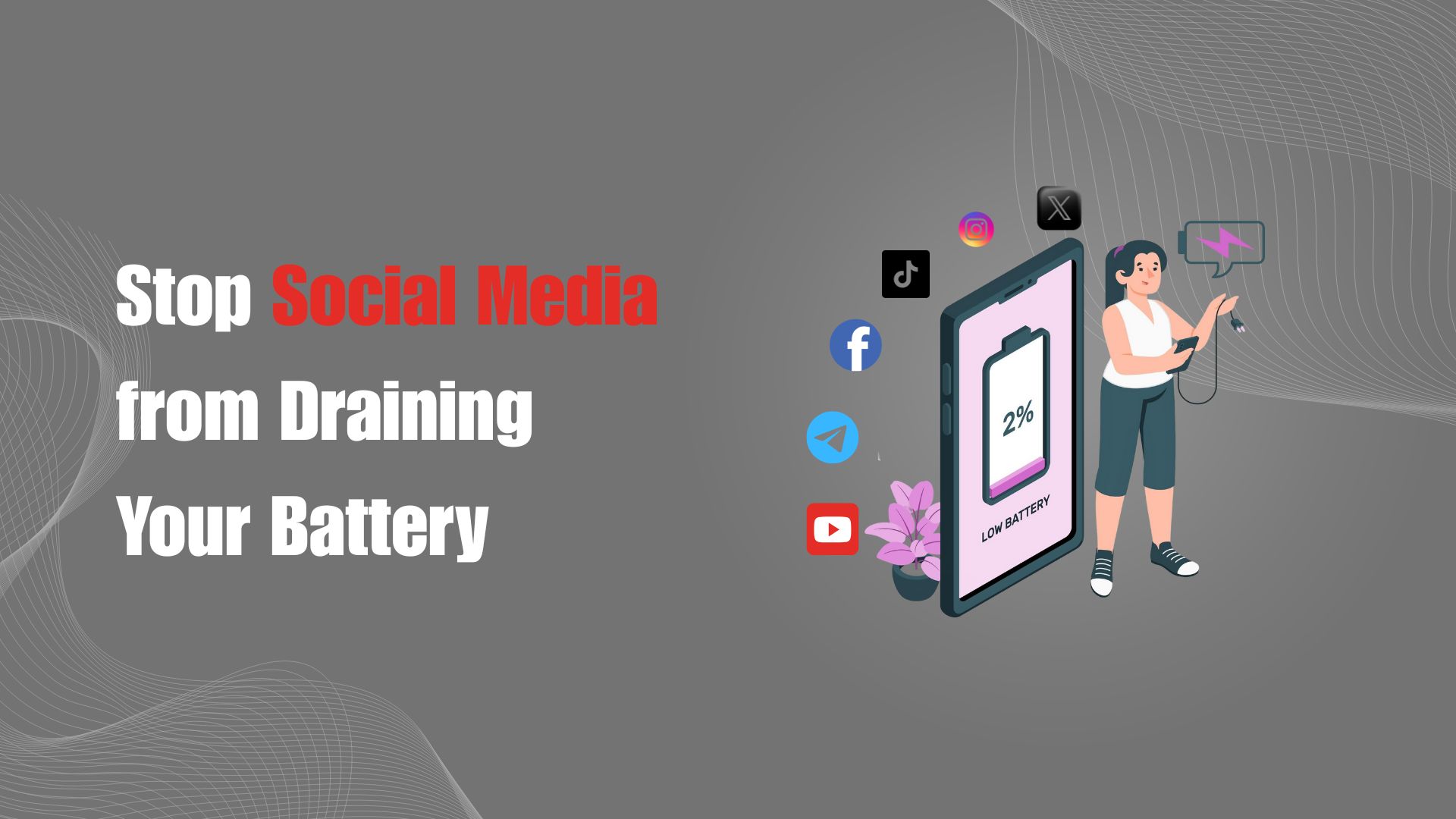
The phrase “draining your battery” applies to social media in two very real ways: it drains your physical device’s battery through continuous background processing, and more critically, it drains your human biological battery.
+-----------------------------------------------------------------------------------+
|                        The Human Energy Drain Engine                              |
+-----------------------------------------------------------------------------------+
                                          |
        +---------------------------------+---------------------------------+
        |                                 |                                 |
        v                                 v                                 v
+-----------------------+     +-----------------------+     +-----------------------+
|    COGNITIVE OVERLOAD |     |  EMOTIONAL COMPARISON |     |  ATTENTION FRAGMENTATION|
|                       |     |                       |     |                       |
| • Infinite feeds bomb-|     | • Highlight reels fuel|     | • Constant alerts push|
|   ard brain with micro|       feelings of inadequacy|       brain into perpetual  |
|   information bites   |     |   and digital FOMO    |       high-stress alertness |
+-----------------------+     +-----------------------+     +-----------------------+
The Real Cost of Unchecked Scrolling
- Mental Overload: Scrolling through hundreds of short-form videos, opinions, news updates, and ads bombards your brain with more information in ten minutes than your ancestors processed in a month. This causes decision fatigue and cognitive exhaustion.
- Emotional Comparison & FOMO: Constantly viewing curated “highlight reels” of other people’s vacations, achievements, and polished lives triggers subconscious social comparison, leading to anxiety, jealousy, and low self-esteem.
- Attention Fragmentation: Frequent notifications pull you out of deep focus. Research shows that every time your focus is interrupted by a notification ping, it takes an average of 23 minutes to regain full cognitive immersion in your primary task.
- Circadian Rhythm Disruption: Late-night exposure to screen blue light suppresses melatonin production, while high-dopamine content keeps your central nervous system stimulated when it should be winding down, ruining your sleep quality.
Why You Need to Set Digital Boundaries Now
Waiting until you experience full-blown burnout before taking action is a recipe for chronic stress. Setting proactive boundaries around your social media usage protects your mental space, restores your daily productivity, and restores weight to your real-world relationships and goals.
+-----------------------------------------------------------------------------------+
|                         Core Benefits of Digital Boundaries                       |
+-----------------------------------------------------------------------------------+
|                                                                                   |
|  [ Reclaimed Time ] ---------> Rechannels 2-4 daily hours back into real goals    |
|                                                                                   |
|  [ Enhanced Mental Peace ] --> Reduces baseline anxiety and impulse reactive habits|
|                                                                                   |
|  [ Deeper Sleep Quality ] ---> Restores natural circadian rhythms and melatonin   |
|                                                                                   |
|  [ Improved Concentration ] -> Rebuilds capacity for deep, uninterrupted work     |
|                                                                                   |
+-----------------------------------------------------------------------------------+
What Healthy Limits Achieve
- Restores Real-Life Priorities: Gives you the mental bandwidth and physical time needed to pursue creative hobbies, exercise, side projects, or quality time with family.
- Reduces Anxiety & Impulse Reactivity: Breaking the impulse loop of constantly checking your phone reduces baseline cortisol levels and calms an overstimulated nervous system.
- Improves Mental Presence: Allows you to be fully engaged in conversations, meetings, and personal moments without feeling the itch to check your screen every few minutes.
Technical & Physical Battery Optimization
While working on your human energy levels, resolving the literal battery drain on your smartphone is an immediate win that also prevents constant phone usage. Social media apps are notorious power hogs because they continuously track location data, pre-load video content, and run background refresh processes.
+-----------------------------------------------------------------------------------+
|                       App Power & Attention Drain Matrix                          |
+-----------------------------------------------------------------------------------+
| Resource Drained  | Social Media Culprit Features   | System Fix Action           |
+-------------------+---------------------------------+-----------------------------+
| System Battery    | Background App Refresh & GPS    | Disable background refresh  |
| Mental Focus      | Push Notifications & Badges     | Turn off non-person alerts  |
| Sleep Quality     | Blue light & late-night feeds   | Set automatic Night Shift   |
| Visual Stimulation| Vibrant high-contrast UI design | Enable System Greyscale Mode|
+-------------------+---------------------------------+-----------------------------+
1. Kill Background App Refresh
Social apps like Facebook, Instagram, and TikTok constantly communicate with servers in the background to pre-fetch videos and stories even when the app is closed.
- How to Fix: Go to your device settings (Settings > General > Background App Refresh) and toggle it OFF for all social media applications.
- Restrict Location Tracking Permissions Many social platforms run background location services to serve localized ads and geotags, which drains your device battery rapidly.
- How to Fix: Set location access for social apps to “Never” or “While Using the App” in your phone’s privacy settings.
Practical Tactics to Stop the Energy Drain
Taking control of your digital life does not mean going cold turkey or deleting your accounts. It is about implementing friction so you use social media intentionally rather than compulsively.
+-----------------------------------------------------------------------------------+
|                        Practical Boundary Implementation                          |
+-----------------------------------------------------------------------------------+
|                                                                                   |
|  [ Native App Timers ] ----> Enforce strict 15-30 minute daily limits per platform|
|                                                                                   |
|  [ Selective Muting ] -----> Disable all push notifications except direct DMs    |
|                                                                                   |
|  [ Greyscale Activation ] -> Strip color from screen to diminish dopamine hits     |
|                                                                                   |
|  [ Scheduled Check-Ins ] -> Scroll only during fixed blocks (e.g., 12:30 & 18:00)|
|                                                                                   |
+-----------------------------------------------------------------------------------+
1. Use Built-In App Timers and Screen Time Limits
Both iOS (Screen Time) and Android (Digital Wellbeing) allow you to set hard daily time limits on specific apps. Once your allocated time expires (e.g., 30 minutes for Instagram), the app locks for the day.
2. Disable Non-Essential Push Notifications
Every push notification is an invitation for an app to steal your focus. Turn off all likes, comments, retweets, and trending video alerts. Keep notifications enabled only for direct, one-on-one messages from real people.
3. Switch Your Phone to Greyscale Mode
Social media apps use bright, vibrant color palettes designed to trigger dopamine spikes. Switching your smartphone display to black-and-white (greyscale) instantly removes the visual stimulation, making endless scrolling significantly less appealing.
-
Pro Tip: Set accessibility shortcuts on your phone so a triple-click of your power button toggles greyscale mode on and off instantly.
How to Reclaim Your Energy and Focus
Rebuilding your mental stamina and focus requires intentionality. Breaking a digital habit is rarely successful if you simply try to exert willpower without providing a healthier substitute. By swapping mindless doomscrolling for nourishing real-world habits, you can restore your energy reserves and regain ownership over your day.
+-----------------------------------------------------------------------------------+
|                        Habit Replacement Blueprint                                |
+-----------------------------------------------------------------------------------+
|                                                                                   |
|  [ Morning Phone-Free Zone ] ----> First 60 mins dedicated to mind & body grounding|
|                                                                                   |
|  [ Friction-Based Detoxes ] -----> Weekly 24-hour offline resets (Saturdays/Sundays)|
|                                                                                   |
|  [ Physical Analogs ] -----------> Swap screen scrolling for books, journaling,   |
|                                    or outdoor walks                               |
|                                                                                   |
+-----------------------------------------------------------------------------------+
1. Establish a Phone-Free Morning Routine
Reaching for your phone the second you wake up immediately places your brain into a reactive state, flooding your system with stress hormones before your feet even touch the floor.
-
The Rule: Keep your phone out of the bedroom overnight (use a classic standalone alarm clock) and avoid checking social media for the first 30 to 60 minutes of your day. Use this time to hydrate, move, journal, or enjoy a quiet breakfast.
2. Practice Weekly Digital Detoxes
Give your nervous system a chance to recalibrate by scheduling a regular 24-hour break from all social platforms.
-
Weekend Reset: Pick a weekend day (e.g., Saturday morning to Sunday morning) to log out of your social media accounts or place your phone in a dedicated drawer. Notice how much physical time expands when you aren’t periodically reaching for a screen.
3. Replace Idle Scroll Time with High-Yield Offline Hobbies
Digital compulsion thrives in moments of boredom or transition—waiting in line, commuting, or sitting on the couch after dinner.
-
Prepare Real-World Substitutes: Keep a physical book in your bag, carry a pocket journal, or pick up a hands-on hobby (such as sketching, instrument practice, or woodworking). Having an inviting alternative ready makes it far easier to bypass the urge to scroll.
Here are two expanded, high-value $\text{H2}$ sections designed to be inserted right before the Final Insight section to give your guide extra depth, practical structure, and actionable steps.
The Hidden Psychological Traps of Social Media Algorithms
To break free from social media exhaustion, it helps to understand why these platforms are so difficult to put down in the first place. Modern social networks are not neutral notice boards; they are sophisticated psychological engines engineered around advanced behavioral economics and neurological reward systems.
+-----------------------------------------------------------------------------------+
|                     The Feedback Loop of Digital Addiction                        |
+-----------------------------------------------------------------------------------+
                                          |
        +---------------------------------+---------------------------------+
        |                                 |                                 |
        v                                 v                                 v
+-----------------------+     +-----------------------+     +-----------------------+
|  VARIABLE REWARDS     |     |   FOMO & ANXIETY      |     |  DOPAMINE HIT LOOPS   |
|                       |     |                       |     |                       |
| • Pull-to-refresh UI  |     | • Fear of missing out |     | • Likes, comments, &  |
|   mimics slot machines|       drives compulsive     |       shares create spikes  |
| • Unpredictable wins  |       checking behavior     |       followed by crashes   |
+-----------------------+     +-----------------------+     +-----------------------+
1. The Slot Machine Effect (Variable Rewards)
Every time you swipe down on your screen to refresh a feed, you are operating a digital slot machine. Psychologists call this a Variable Ratio Schedule of Reinforcement. Sometimes you pull to refresh and find nothing interesting (a “loss”), but occasionally you discover a viral video, an exciting notification, or a fascinating piece of news (a “win”). Because your brain cannot predict when the win will happen, it releases a continuous trickle of dopamine, forcing you to keep pulling the lever.
2. Algorithmic Polarization & Doomscrolling
Engagement algorithms are trained to show you content that keeps you on the platform longest—and biologically, humans pay closer attention to perceived threats, outrage, and controversy. This “negativity bias” means your feed naturally skews toward dramatic headlines, heated political debates, and anxiety-inducing updates. Consuming this content continuously places your central nervous system in a subtle, prolonged “fight-or-flight” state that burns through your physical and mental stamina.
5 Emergency Interventions for Instant Digital Relief
When you feel an acute wave of digital overwhelm, decision fatigue, or screen-induced brain fog, long-term boundary planning is not enough you need immediate, actionable steps to break the cycle right away.
+-----------------------------------------------------------------------------------+
|                        5-Minute Emergency Relief Protocol                         |
+-----------------------------------------------------------------------------------+
|                                                                                   |
|  [ 1. The Physical Separation ] -> Move device to another room for 30 minutes     |
|                                                                                   |
|  [ 2. The App-Swap Reset ] ------> Replace social apps with offline utilities     |
|                                                                                   |
|  [ 3. The Feed Purge ] ----------> Mute or unfollow 5 outrage-inducing accounts  |
|                                                                                   |
|  [ 4. The Sensory Grounding ] ---> Perform the 5-4-3-2-1 sensory awareness drill  |
|                                                                                   |
|  [ 5. The Haptic Silencing ] ----> Disable all vibration and sound notifications  |
|                                                                                   |
+-----------------------------------------------------------------------------------+
Step 1: Execute a Physical Separation Rule
Physical distance beats willpower every time. When you feel trapped in a scroll loop, do not just lock your phone and keep it in your hand or pocket. Stand up, place your phone inside a drawer or on a counter in a completely different room, and set a timer for 30 minutes. The physical barrier breaks the automatic muscle memory of reaching for the screen.
Step 2: Delete “Trigger Apps” for 48 Hours
If a specific social platform is causing you acute stress, uninstall the app from your phone for two full days. Deleting the application does not delete your account or lose your data, but it completely removes the friction-free shortcut from your home screen. Accessing the platform through a mobile browser requires manual logins, creating enough friction to curb mindless usage.
Step 3: Perform an Immediate 5-Account Unfollow Purge
Open your most-used social media app right now, go to your feed, and identify the first five accounts that trigger feelings of inadequacy, jealousy, anger, or fatigue. Unfollow or mute them immediately. Curating your feed by removing high-stress inputs creates an instant improvement in your daily digital environment.
Step 4: Engage the 5-4-3-2-1 Grounding Technique
To pull your brain out of digital hyper-stimulation and back into physical reality, practice sensory grounding. Put your device face down and name out loud:
- 5 things you can see around you
- 4 things you can physically touch
- 3 things you can hear in your environment
- 2 things you can smell
- 1 thing you can taste
This simple physiological reset forces your brain to shift focus from virtual visual processing back to physical environmental awareness.
Step 5: Disable Haptic & Audio Feedback Entirely
Sound pings and phone vibrations act as behavioral triggers that train your nervous system to react instantly. Go into your device settings and turn off all haptic vibration feedback and notification sounds for social apps. When your phone no longer buzzes or chimes, you regain control over when you choose to engage with it.
Final Insight
Social media is a powerful tool for connection, but unguarded use can easily turn it into an exhausting drain on your life. If you find yourself constantly tired, anxious, or unfocused, taking a step back to reset your relationship with technology is one of the most effective actions you can take for your well-being.
Social media should serve your life not consume it. When you reclaim control over your time and attention, you rediscover the freedom to be fully present, creative, and emotionally balanced. It is not about abandoning the digital world entirely; it is about designing a relationship with technology that protects your peace rather than poisoning it. Remember: your personal energy is limited. Do not waste it feeding a feed.
Frequently Asked Questions (FAQs)
How do I know if social media is draining my energy?
If you frequently experience mental brain fog, heightened anxiety, emotional irritability, a drop in real-world productivity, or sleep difficulties right after using your phone, your social media habits are negatively impacting your energy levels.
Should I completely delete my social media accounts?
Not necessarily. For most people, total deletion is unnecessary and hard to maintain long-term. Focusing on mindful usage such as setting strict daily time limits, muting non-essential notifications, and aggressively unfollowing accounts that trigger comparison allows you to enjoy the benefits of staying connected without feeling drained.
How can I stop checking my phone compulsively out of habit?
Build physical friction between yourself and your device. Keep your phone in another room while working, turn your display to greyscale mode to lower dopamine triggers, and use native app limits to lock social media platforms once your daily time allotment is reached.
What is a digital detox, and how long should it last?
A digital detox is an intentional, pre-planned break from social media or screen usage. It can last anywhere from a few hours, a full 24-hour day over the weekend, or an extended week-long period depending on your burnout levels and personal goals.
Can reducing my social media screen time improve my sleep quality?
Yes, dramatically. Cutting off social media usage 60 to 90 minutes before bed eliminates blue light exposure that suppresses melatonin, while preventing emotional stimulation that keeps your brain alert when it should be preparing for sleep.