
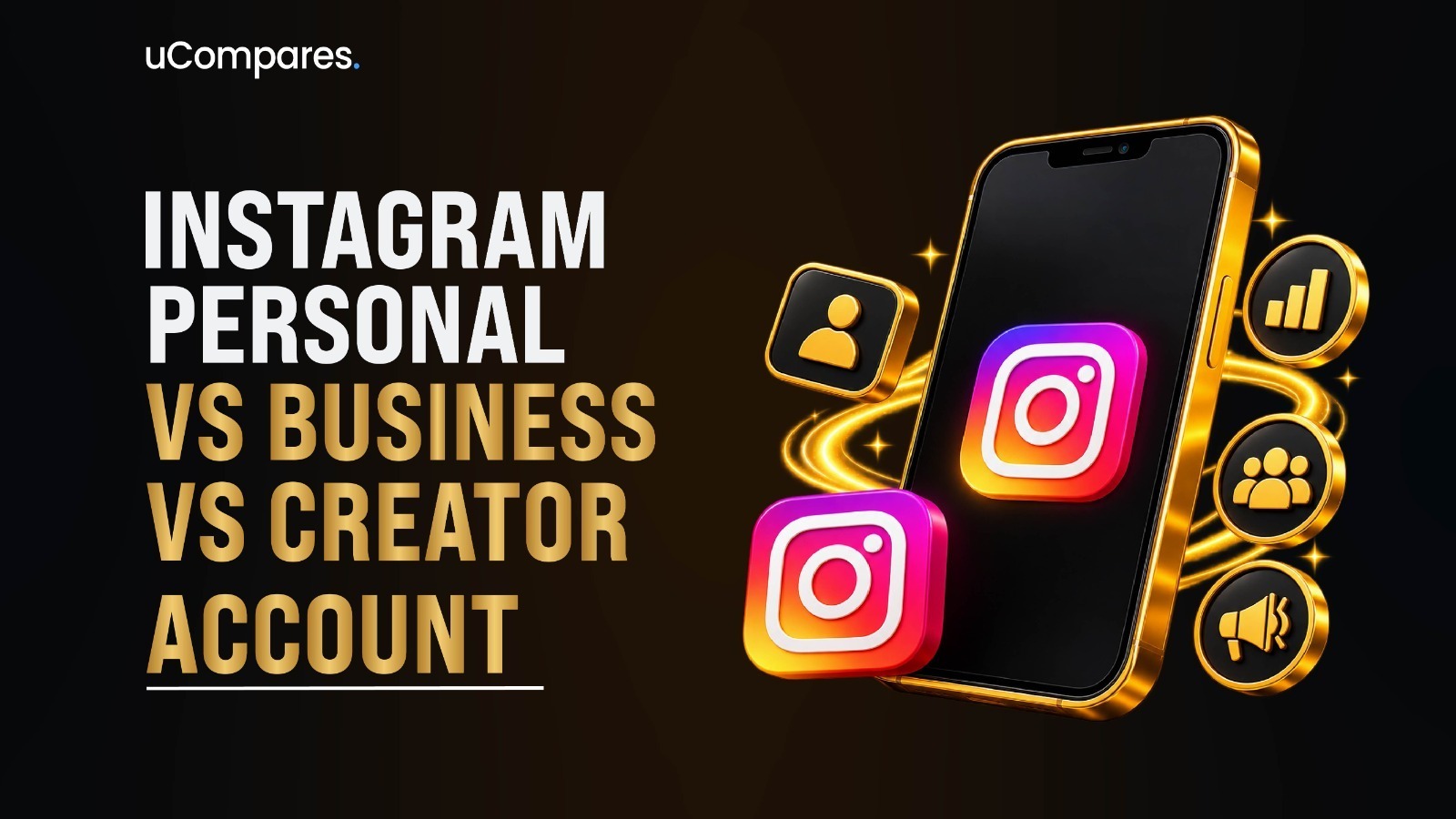
Instagram has three main account types: Personal, Creator, and Business. Personal accounts are generally suited to people using Instagram socially and are the account type to use if maintaining a private profile is important. Creator and Business accounts are professional accounts that provide professional tools such as analytics and professional-dashboard features; Creator is designed around individual public-facing creators, while Business is designed around commercial organizations, brands, retailers, and service providers. About Facebook
There is no universally correct account type. Choose Personal when privacy and personal sharing are your priorities, Creator when you are building an audience around yourself and your content, and Business when the profile represents a company, product, shop, organization, or service.
This guide explains the differences without treating one account type as universally superior. It also covers privacy, analytics, monetization, advertising, switching accounts, common mistakes, and practical examples so you can make the decision based on how you actually use Instagram.
What Are Instagram Personal, Creator, and Business Accounts?
Instagram account types describe how your profile is intended to be used and which professional tools are available to you.
Personal Instagram Account
A Personal account is the standard Instagram account type intended for individuals who primarily use Instagram for personal sharing, following other accounts, communicating with friends, and consuming content.
A major advantage is flexibility around privacy. Personal accounts can be set to private, allowing you to approve people before they can follow you and view your private content.
A Personal account can therefore make sense when your Instagram profile is primarily a personal space rather than a public-facing professional presence.
For example, someone who uses Instagram to share family photos, travel memories, personal interests, or everyday updates may not need professional analytics or business-management tools.
Creator Instagram Account
A Creator account is a professional account intended for people who build a public presence around themselves and their content.
Typical examples include:
- Influencers
- Artists
- Writers
- Photographers
- Musicians
- Educators
- Public figures
- Video creators
- Bloggers
- Personal brands
Meta has developed professional tools specifically to help creators understand performance, improve content, find educational guidance, and pursue monetization opportunities. Instagram’s Professional Dashboard, for example, includes resources covering creation, engagement, reach, monetization, and guidelines. About Facebook
A Creator account is therefore particularly relevant when the person is the brand.
Business Instagram Account
A Business account is a professional account designed for organizations and commercial activity.
It can make sense for:
- Ecommerce stores
- Retailers
- Local businesses
- Restaurants
- Agencies
- Service providers
- Companies
- Organizations
- Product brands
A Business account is especially useful when Instagram is part of a broader customer-acquisition or customer-service workflow.
For example, a local photography studio may use Instagram to display its work, receive inquiries, direct customers to its website, promote services, and measure content performance.
Why Do Instagram Account Types Matter?
The account type matters because it determines the overall toolkit available to your profile.
A personal user may care primarily about privacy and normal social interaction. A creator may care about audience growth, content performance, partnerships, and monetization. A business may care about customer discovery, advertising, product promotion, inquiries, and business management.
Meta has continued expanding professional tools for creators and businesses. For example, Instagram’s Professional Dashboard includes educational and performance resources, while Creator Marketplace helps eligible creators and brands discover and collaborate with one another. About Facebook
The practical question is therefore not:
“Which Instagram account is best?”
Instead ask:
“What job do I need my Instagram account to perform?”
That question usually makes the decision much easier.
Instagram Personal vs Creator vs Business: Quick Comparison
| Feature | Personal | Creator | Business |
|---|---|---|---|
| Designed primarily for | Personal/social use | Individual public-facing creators | Companies and commercial organizations |
| Professional account | No | Yes | Yes |
| Professional Dashboard | No | Yes | Yes |
| Instagram Insights | Professional analytics are not the focus | Available through professional tools | Available through professional tools |
| Private account option | Yes | No | No |
| Advertising tools | More limited than professional setup | Professional advertising capabilities | Professional advertising capabilities |
| Creator-focused tools | Limited | Yes | Not primarily designed for creators |
| Business-focused tools | Limited | Some professional tools | Yes |
| Best fit | Friends, family, personal use | Creator/personal brand | Company, shop, service, organization |
| Public professional presence | Not required | Yes | Yes |
Professional accounts are the Creator and Business categories. Meta describes its creator tools around audience development, content, monetization, and partnerships, while business tools are built around commercial activity and customer relationships.
Feature availability can change over time and may depend on location, eligibility, account status, and Instagram’s current product rollout.
What Is the Difference Between a Personal and Professional Instagram Account?
The biggest difference is that a Personal account is designed primarily for individual social use, whereas Creator and Business accounts provide a professional toolset.
Personal Account
A Personal account is appropriate when:
- You primarily post for friends or family.
- You do not need detailed content analytics.
- You want the option to make the account private.
- You are not building a public creator or commercial identity.
- You want a straightforward Instagram experience.
Professional Account
A professional account is appropriate when:
- You want performance insights.
- You are building an audience.
- You promote products or services.
- You collaborate with brands.
- You want professional account tools.
- You may use advertising or monetization features.
- Instagram is part of your work or business strategy.
The trade-off is that professional accounts are built for public-facing activity. Instagram’s current professional-account guidance states that professional accounts cannot be private.
What Is the Difference Between Creator and Business Instagram Accounts?
Creator and Business accounts have substantial overlap because both are professional account types.
The more useful distinction is who the account represents.
Creator Account
Choose Creator when:
- Your identity is central to the profile.
- You publish original content.
- You work with brands as an individual.
- You are building a personal brand.
- You are an influencer, artist, educator, or public figure.
- Audience and content performance are major priorities.
Meta’s Creator Marketplace is one example of the creator-focused ecosystem. Eligible creators can join through their professional dashboard, indicate relevant brands and interests, and create portfolios for potential partnerships.
Business Account
Choose Business when:
- The account represents a company.
- You sell products.
- You operate a store.
- You provide services.
- Customers need to contact the organization.
- Multiple business workflows are involved.
- Instagram is part of a wider marketing operation.
A Business account is therefore generally more natural when visitors should think “this is the company” rather than “this is the person behind the content.”
How Does Instagram Professional Dashboard Fit Into the Choice?
The Professional Dashboard is an important difference between ordinary Personal use and professional Instagram use.
Instagram introduced Best Practices within the professional dashboard to provide creators with guidance covering creation, engagement, reach, monetization, and platform guidelines. It also includes personalized information intended to help creators understand how their accounts are performing.
For a creator, this can make the professional account useful beyond simply displaying a profile category.
The dashboard can become a central place for:
- Performance information
- Content guidance
- Audience-related information
- Monetization resources
- Professional tools
- Educational material
- Account recommendations
However, the existence of the dashboard does not mean every professional account will see identical features.
Instagram regularly tests and rolls out features, so your dashboard should be treated as the final source for what is currently available to your specific account.
Does Instagram Personal vs Business vs Creator Affect Privacy?
Yes. Privacy is one of the clearest differences.
Personal Accounts Can Be Private
A Personal account can be configured as private. This means you can control who follows you and who can view content restricted to approved followers.
This makes Personal accounts particularly relevant to users who want Instagram to function primarily as a private social network.
Professional Accounts Cannot Be Private
Creator and Business accounts are professional accounts, and professional accounts cannot be set to private. If you want to use a private account, you need to use the Personal account type. Indian Kanoon
This is an important consideration before switching.
If you currently have a private Personal account, do not switch to a professional account without first considering whether you are comfortable making the profile public.
What Happens When You Switch a Private Personal Account to Professional?
This is one of the most important things to understand before changing account type.
A professional account is public-facing. Current guidance indicates that when a private Personal account is changed to a professional account, the account becomes public, and pending follow requests can be affected because they may be accepted when the account goes public. Indian Kanoon
Before Switching
Review:
- Pending follow requests
- Existing followers
- Old posts
- Tagged content
- Bio information
- Contact information
- Location information
- Public-facing username
- Personal content you may not want publicly accessible
This is particularly important if you created your account years ago as a private personal profile and are now considering using the same account for professional work.
Which Instagram Account Is Best for Influencers?
A Creator account is generally aligned with the way an influencer operates because the account represents an individual building an audience around content and personality.
For example, imagine a fashion creator who:
- Posts outfit videos.
- Reviews products.
- Builds a personal audience.
- Receives brand collaboration opportunities.
- Tracks content performance.
- Wants access to creator-oriented resources.
The Creator account matches that operating model because the person is the central identity.
Meta’s Creator Marketplace also supports brand-creator collaboration, allowing eligible creators to create portfolios and receive partnership opportunities within Instagram’s professional ecosystem. About Facebook
That does not mean every influencer must use Creator forever. Account needs can change as a creator builds a formal company, launches a store, or develops a larger commercial operation.
Which Instagram Account Is Best for Small Businesses?
A Business account is generally appropriate when the Instagram profile represents the business rather than an individual creator.
Consider a local salon.
The account may need to:
- Display services.
- Show completed work.
- Help customers discover the business.
- Receive inquiries.
- Promote offers.
- Direct customers toward booking.
- Track content performance.
- Support broader marketing activity.
In that scenario, a Business account fits the organizational role of the profile.
The same principle applies to ecommerce brands, restaurants, agencies, consultants, local stores, and other service businesses.
Which Instagram Account Is Best for Personal Brands?
This depends on what “personal brand” means in practice. If you are the product, Creator is usually the more natural professional category.
For example:
- SEO consultant
- Fitness educator
- Photographer
- Career coach
- YouTuber
- Writer
- Designer
- Speaker
If the account has evolved into a formal company with employees, products, services, or a recognizable business entity, Business may make more sense.
The important distinction is not simply whether you earn money. It is whether the Instagram profile primarily represents an individual creator or an organization.
Which Instagram Account Is Best for Privacy?
If privacy is the priority, a Personal account is the relevant choice. Creator and Business accounts are professional accounts and cannot be private.
This creates a straightforward decision:
| Your Priority | Relevant Account Type |
|---|---|
| Private personal sharing | Personal |
| Public creator identity | Creator |
| Public commercial identity | Business |
Do not switch to a professional account simply because it appears more advanced if your primary requirement is keeping your profile private.
Which Account Gives Instagram Insights?
Professional accounts provide access to professional analytics and performance tools, including Instagram’s professional dashboard.
Meta’s creator resources specifically describe the professional dashboard as a place where creators can access information and guidance related to content creation, engagement, reach, monetization, and guidelines. About Facebook
Personal accounts are not designed around this professional analytics workflow.
If measuring your content is important—for example, understanding how Reels perform, how audiences interact with content, or which content approaches are producing better results—a professional account is more appropriate.
Does a Creator Account Make More Money Than a Business Account?
Not automatically.
Changing your account type does not guarantee income.
Instagram monetization depends on factors such as:
- Eligibility
- Country or region
- Account status
- Content
- Audience
- Available monetization products
- Compliance with applicable policies
- Invitations or enrollment requirements
Meta has introduced multiple creator monetization features over time. For example, Instagram has supported tools such as Gifts for eligible creators, and Meta has continued expanding creator opportunities and professional resources.
Therefore, avoid choosing Creator simply because you assume it guarantees better earnings.
The account type should match your role first. Monetization eligibility should then be evaluated separately inside your professional tools.
Can Business Accounts Monetize on Instagram?
Businesses can use Instagram for commercial activity, advertising, product promotion, customer acquisition, and other business purposes.
However, monetization should not be understood as a single feature that automatically becomes available after switching to Business. Different tools have different eligibility requirements.
A business may generate value from Instagram through:
- Product sales
- Leads
- Customer inquiries
- Website traffic
- Advertising
- Brand awareness
- Partnerships
- Services
- Direct customer relationships
The best account type therefore depends on the business model, not simply whether an account generates revenue.
How Do Instagram Ads Relate to Personal, Creator, and Business Accounts?
Advertising is one of the reasons people move toward professional accounts.
Meta’s professional ecosystem supports advertising and business-management tools, while Meta Business Suite provides ways to manage Facebook and Instagram activity, messages, notifications, and insights in a centralized environment.
If you are operating a serious commercial campaign, the account type should be considered alongside:
- Meta Business Suite
- Ads Manager
- Facebook assets
- Instagram content
- Tracking
- Audience strategy
- Conversion goals
A Creator account does not automatically become a Business account simply because the creator runs paid promotions.
Likewise, having a Business account does not guarantee better advertising results.
How Do Creator Accounts Work With Brand Collaborations?
Creator accounts can be useful for individuals who collaborate with businesses.
Meta’s Creator Marketplace allows eligible creators to join from the Instagram professional dashboard, indicate brands and interests, build portfolios, and receive partnership opportunities. Brands can search for creators and collaborate through Meta’s ecosystem.
A typical workflow may look like this:
Creator account → Build audience → Publish content → Develop portfolio → Discover partnership opportunities → Collaborate with brand → Publish approved content
The availability of Creator Marketplace and specific partnership features can vary by market and eligibility, so creators should check the tools available within their own Professional Dashboard.
Can You Switch Between Personal, Creator, and Business Accounts?
Yes. Instagram allows users to change account types, although the exact menu wording and available options can vary with app updates.
A typical current workflow is:
Step 1 — Open Your Instagram Profile
Open Instagram and go to the profile you want to change.
Step 2 — Open the Menu
Tap the menu icon in the upper-right area of your profile.
Step 3 — Find Account-Type Controls
Look for an option such as Account type and tools, Business tools and controls, or Creator tools and controls.
Instagram’s interface can change, so the exact label may differ from the wording shown in older guides.
Step 4 — Select the Account-Type Option
Choose the option to switch account type.
Step 5 — Select the New Account Type
Depending on your current account, Instagram may provide options such as:
- Switch to Personal account
- Switch to Creator account
- Switch to Business account
Step 6 — Review the Changes
Before confirming, review any warnings Instagram displays regarding professional tools, privacy, analytics, or account functionality.
Step 7 — Confirm
Complete the switch and return to your profile.
The safest approach is to follow the options currently displayed by Instagram rather than relying on a screenshot from an older article.
What Should You Check Before Switching Account Types?
Switching is easy; understanding the consequences is more important.
Privacy
If switching from Personal to professional, confirm that you are comfortable with the account being public.
Content
Review older content that may have been appropriate for friends but not for a professional audience.
Contact Information
Check whether you want your professional profile to display business contact details.
Category
Select a category that accurately communicates what you do.
Connected Tools
If your account is connected to other services, check whether the new account type supports the workflow.
Facebook Connection
If you use Facebook alongside Instagram, review your connected Facebook assets and sharing setup.
Analytics
If you currently rely on Personal Instagram only, understand that professional analytics are designed for professional accounts.
How Should You Choose Between Creator and Business?
Use this simple decision framework.
Choose Creator If:
- Your name or personality is central to the account.
- You produce original content.
- You are an influencer.
- You are a public figure.
- You are an artist.
- You are an educator.
- You work with brands.
- You are building a personal brand.
Choose Business If:
- The account represents a company.
- You sell products.
- You run a store.
- You provide services.
- You represent an organization.
- Customers need to contact the business.
- Instagram is part of your broader marketing operation.
Choose Personal If:
- You primarily use Instagram socially.
- You do not need professional analytics.
- You want the option to keep your account private.
- You do not need professional business or creator tools.
Common Mistakes When Choosing an Instagram Account Type
Choosing Business Just Because It Sounds More Professional
A Business account is not automatically better simply because it has the word “Business” attached to it.
If you are an individual creator, Creator may better describe your profile.
Switching Without Considering Privacy
This is one of the biggest mistakes.
Professional accounts cannot be private. If you currently have a private Personal account, understand the visibility consequences before switching.
Assuming Creator Means Guaranteed Monetization
A Creator account does not guarantee access to every monetization feature.
Eligibility and availability can vary.
Assuming Business Means Better Reach
Changing from Personal to Business does not automatically guarantee more organic reach.
Content quality, audience relevance, engagement, distribution, and many other factors influence performance.
Choosing an Account Type Based Only on One Feature
Instagram regularly changes its tools. A feature available today may be redesigned, expanded, restricted, or replaced later.
Choose based on your overall use case rather than a single feature.
Ignoring Old Personal Content
If you turn a private personal profile into a public professional account, review old content first.
A profile that was appropriate for friends and family may not be appropriate for customers or professional contacts.
What Should You Do If You Cannot Find the Account-Type Setting?
Instagram’s interface changes frequently, so the menu path may not exactly match an older tutorial.
Try the following:
Check Your Profile Menu
Open your profile and look for account or professional tools.
Search Settings
Instagram’s settings interface may expose account-type controls under professional or account settings.
Check Whether You Are Already Professional
If you see a Professional Dashboard, Insights, Business tools, or Creator tools, you may already be using a professional account.
Update Instagram
An outdated app can display a different interface from current documentation.
Try the Current App Interface
Do not rely entirely on screenshots from previous versions of Instagram.
Check Eligibility
Some features may not be available to every account, country, or user.
Troubleshooting Instagram Account-Type Problems
| Problem | Possible Cause | Solution |
|---|---|---|
| Private option disappeared | Account is professional | Switch back to Personal if privacy is required |
| Professional Dashboard is missing | Account may still be Personal | Check your current account type |
| Creator tools are unavailable | Account may be Business or Personal | Review account-type settings |
| Business tools are missing | Account may be Creator or Personal | Check the professional setup |
| Monetization option is missing | Eligibility or regional limitation | Check Professional Dashboard |
| Creator Marketplace is unavailable | Market/account eligibility | Check the Professional Dashboard |
| Menu wording differs | Instagram UI update | Look for account-type or professional-tool settings |
| Analytics are unavailable | Personal account or feature limitation | Verify whether the account is professional |
The important troubleshooting principle is to distinguish account-type limitations from feature eligibility. A feature being absent does not necessarily mean the account type is wrong.
Does Changing Account Type Delete Followers or Posts?
Changing account type is not the same as creating a new Instagram profile.
Your account remains the same profile, but the tools and settings associated with it can change.
Nevertheless, you should read Instagram’s confirmation screen before completing a switch because professional features, privacy settings, and connected tools can be affected.
The most important practical issue is not losing the account itself; it is understanding what happens to privacy, professional tools, analytics, connected assets, and third-party workflows.
What Happens If You Switch Back to Personal?
Switching back to Personal can restore access to personal-account functionality, including the ability to use a private profile.
However, you should not treat switching as a completely consequence-free toggle.
Professional tools may no longer be available in the same way, and workflows depending on professional functionality may need to be reviewed.
If Instagram is connected to external services, advertising systems, business assets, or creator tools, check those connections after changing account type.
Personal vs Creator vs Business for Different Users
| User Type | Practical Starting Point | Main Reason |
|---|---|---|
| Private individual | Personal | Privacy and social use |
| Student sharing with friends | Personal | Personal communication |
| Photographer building an audience | Creator | Individual creator identity |
| Influencer | Creator | Content and personal brand |
| YouTuber promoting content | Creator | Audience-focused identity |
| Artist | Creator | Individual creative identity |
| Coach building a personal brand | Creator | Expertise tied to individual |
| Ecommerce store | Business | Product and commercial identity |
| Restaurant | Business | Local commercial presence |
| Marketing agency | Business | Organization-focused identity |
| Local service provider | Business | Customer acquisition |
| Software company | Business | Company-focused profile |
| Retail brand | Business | Commercial identity |
These are practical examples rather than mandatory classifications. A real account can evolve from one role to another.
Instagram Account-Type Checklist
Before Switching
- Decide whether the account represents a person or organization.
- Decide whether privacy is important.
- Review old posts.
- Review tagged content.
- Review pending follow requests.
- Check connected Facebook assets.
- Review third-party integrations.
- Decide whether professional analytics are needed.
After Switching to Professional
- Open Professional Dashboard.
- Review Insights.
- Confirm your category.
- Review contact information.
- Check public profile appearance.
- Review professional tools.
- Check available monetization options.
- Review advertising capabilities if relevant.
- Confirm connected business assets.
After Switching Back to Personal
- Confirm privacy settings.
- Check profile visibility.
- Review connected services.
- Confirm that important professional tools are no longer required.
- Recheck your content and audience settings.
Frequently Asked Questions
Is a Creator account better than a Business account on Instagram?
Neither is universally better. Creator is designed around individual public-facing creators, while Business is designed around organizations, brands, retailers, and service providers. The appropriate choice depends on who the profile represents and which professional workflows you need.
What is the main difference between Instagram Personal and Creator?
The Personal account is designed primarily for ordinary individual use and can be private. Creator is a professional account designed for public-facing creators and provides access to professional tools and analytics. Professional accounts cannot be private.
Can an Instagram Creator account be private?
No. Creator accounts are professional accounts, and Instagram’s professional-account rules do not allow professional accounts to be private. If privacy is required, you need a Personal account.
Can an Instagram Business account be private?
No. Business accounts are also professional accounts and cannot be set to private. A user who needs a private profile must use a Personal account.
Do Creator and Busiess accounts have Insights?
Professional accounts have access to professional analytics and dashboard tools, although the exact features available can vary by account, region, eligibility, and Instagram’s current rollout. Meta describes the Professional Dashboard as a central location for creator performance information and professional resources.
Can I switch from Creator to Business?
Instagram supports switching between account types, although the exact settings path can change as the app interface changes. Check your current account-type or professional-tool settings for the available options.
Can I switch from Business back to Personal?
Yes, Instagram supports switching account types. Before doing so, review which professional tools, analytics, advertising connections, and other workflows you rely on.
Will switching to a professional account automatically make me successful?
No. An account type provides tools; it does not guarantee audience growth, reach, monetization, sales, or engagement.
Does a Creator account automatically qualify me for monetization?
No. Monetization features have separate eligibility requirements, and availability can vary by country, account, product, and other conditions. Meta has provided tools such as Gifts for eligible creators, but the presence of a Creator account alone does not guarantee access.
Should a freelancer use Creator or Business?
Either can be appropriate depending on how the profile is positioned. If the freelancer’s personal expertise and identity are the main brand, Creator may fit naturally. If the profile represents a formal agency or service company, Business may make more sense.
Can I use Instagram professionally without being a company?
Yes. A professional Instagram account does not mean you must be a corporation. Individual creators, artists, educators, influencers, consultants, and other public-facing professionals can use professional tools.
Read More:
Instagram Blend Feature: What It Is, How It Works & How to Use It
How to Change Background Color on Instagram Stories (2026 Guide)
Final Takeaway
There is no single Instagram account type that fits everyone.
If you primarily use Instagram to stay connected with people you know and want the option of a private profile, Personal is the logical fit.
If Instagram represents you as a creator, such as an influencer, artist, educator, photographer, writer, or public-facing professional, Creator is generally aligned with that role.
If Instagram represents a company, shop, organization, brand, or service, Business is generally the more natural structure.
The most important point is to choose based on your identity, privacy requirements, audience strategy, and business purpose rather than switching simply because another account type appears more professional.