
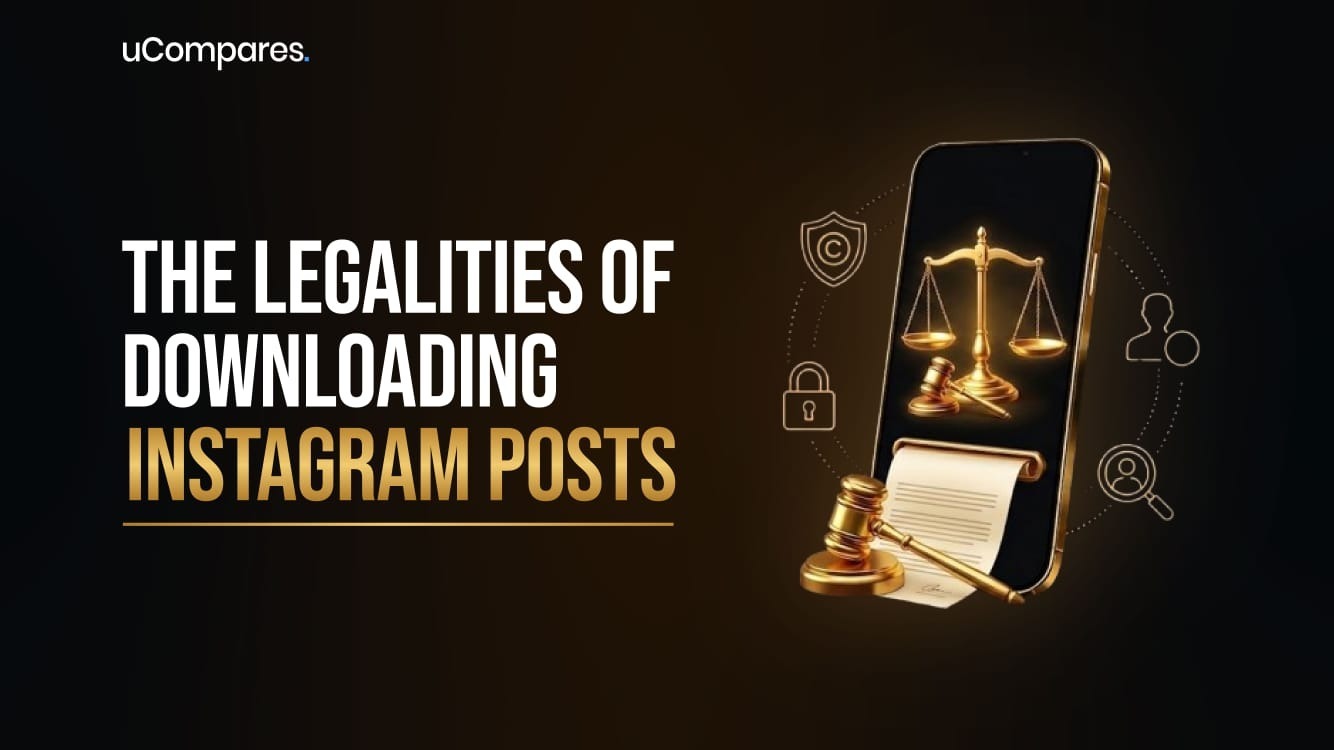
Downloading an Instagram post is not automatically legal or automatically illegal in every situation. The legal risk depends on factors such as who owns the underlying work, whether you have permission or a license, why you are downloading it, what you do with the copy, and which country’s law applies. Meta specifically warns that finding content on the internet, giving credit, modifying it, or downloading it does not by itself give you permission to repost or use someone else’s copyrighted material.
For the safest approach, download content that you own, have permission to use, are licensed to use, or can clearly rely on a legal exception for your particular use. Keeping a copy for reference is a different situation from uploading the same work to your website, using it in an advertisement, selling it, or presenting it as your own.
This guide therefore separates downloading from using downloaded content. That distinction is essential because the risk often increases when a saved copy is subsequently reproduced, published, distributed, commercially exploited, or incorporated into another work.
What Does Downloading an Instagram Post Mean?
Downloading an Instagram post means creating or obtaining a copy of content that has been published on Instagram.
That might involve:
- Saving a photograph to a device.
- Downloading a video or Reel.
- Capturing an image through a screenshot.
- Recording content displayed on a screen.
- Using a third-party downloader.
- Exporting content that you own.
- Obtaining a copy for research, reference, editing, or another purpose.
From a legal perspective, the method used to obtain the copy is not necessarily the most important question. The more important questions are who owns the work, what rights exist, why the copy was made, and what happens to that copy afterward.
For example, downloading your own photograph for backup is fundamentally different from downloading a photographer’s image and placing it on a company’s homepage.
The same distinction applies to video. A creator may own the video while separate rights can exist in music, performances, photographs, trademarks, or other material incorporated into that video.
Is Downloading Instagram Posts Legal?
There is no single worldwide yes-or-no answer.
In many situations, making a copy of a copyrighted work can implicate copyright law. But copyright systems also contain exceptions and limitations. In the United States, fair use can permit some unauthorized uses depending on the circumstances. The U.S. Copyright Office explains that fair use requires consideration of factors including purpose and character, nature of the work, amount used, and the effect on the potential market. Courts assess these questions case by case.
The United Kingdom uses a different framework known as fair dealing for specific purposes and provides other statutory exceptions. UK government guidance states that copyright material generally cannot be copied or used without permission unless a license has been obtained or a relevant exception applies.
This means that statements such as “Instagram posts are public, so anyone can download them” or “Downloading is always illegal” are both too broad.
A more accurate rule is:
The fact that content is publicly visible on Instagram does not by itself establish that you have permission to reproduce or reuse it.
Meta’s copyright guidance specifically says that simply finding content on the internet, giving credit, or downloading it does not automatically eliminate copyright concerns.
Why Are Instagram Posts Protected by Copyright?
Many Instagram posts contain creative works that can qualify for copyright protection.
Examples include:
- Original photographs.
- Illustrations.
- Digital artwork.
- Original written material.
- Graphics and designs.
- Videos and films.
- Original animations.
- Music and sound recordings.
- Other creative audiovisual material.
In the United Kingdom, copyright protection arises automatically for qualifying original works; registration is not required. UK government guidance specifically identifies original photography, writing, software, web content, sound recordings, films, and other creative works among material that copyright can protect.
The same general principle exists in many other jurisdictions, although the exact requirements and scope of protection differ.
A public Instagram post therefore should not automatically be treated as public-domain content.
Publicly Available Does Not Mean Public Domain
Publicly available means people can access the content under the circumstances established by the platform and account holder.
Public domain means copyright protection does not apply to the work or has expired or otherwise ceased to apply.
These are completely different concepts.
A photographer can publish an image publicly on Instagram while continuing to own copyright in that image. Meta’s Community Guidelines expressly state that people own the content they post on Instagram and instruct users not to post material copied from the internet without the right to do so.
Does Instagram Give Users Permission to Download Other People’s Posts?
No general rule should be inferred that Instagram’s platform access gives every user a copyright license to reuse every post.
Instagram provides a platform for people to publish and interact with content, but the copyright in an individual work can remain with its creator or another rights holder.
Meta’s own copyright guidance recommends asking whether you created the content, have permission to use it, or can rely on a copyright exception before posting someone else’s material.
This distinction is important:
| Situation | General legal consideration |
|---|---|
| Downloading your own post | Usually much simpler because you control or have rights in the content |
| Downloading someone else’s post for reference | Legal treatment depends on jurisdiction and purpose |
| Downloading and reposting it | May require permission or another legal basis |
| Downloading it for commercial advertising | Higher copyright and licensing risk |
| Downloading and modifying it | Modification does not automatically remove copyright |
| Downloading and selling copies | Usually requires appropriate rights or a legal exception |
| Downloading content you have licensed | Follow the license terms carefully |
| Downloading public-domain material | Copyright restrictions may be different, but other rights can still matter |
The table is a general framework, not a legal determination for a particular case.
When Is Downloading Your Own Instagram Content Generally Safe?
Downloading your own Instagram posts is usually the simplest situation because you are generally dealing with content that you created or otherwise have rights to use.
However, ownership of an Instagram post can be more complicated than ownership of the account.
For example, imagine a business hires a professional photographer to create campaign images. The business may have permission to publish the photographs on Instagram without necessarily owning every copyright interest in the underlying photographs.
Likewise, a video creator may upload a Reel containing music or stock footage under a limited license. That license might not authorize every possible reuse of the final video outside Instagram.
Before treating downloaded content as completely unrestricted, ask:
- Did I create the underlying work?
- Did someone else create part of it?
- Did I receive a license?
- What does that license permit?
- Does the license cover commercial use?
- Does it cover editing?
- Does it cover redistribution?
- Are there geographic or time restrictions?
The important principle is rights follow the underlying content, not simply the account that uploaded it.
When Can Permission Make Downloading and Reuse Safer?
Permission or a license can significantly reduce copyright uncertainty because it establishes an authorization from the relevant rights holder.
A permission request should be specific enough to explain what you want to do.
For example:
“May I download your Instagram photograph and reproduce it in a non-commercial article on our website, with credit to you?”
For commercial use, be more specific:
“May we use this photograph in our paid social-media advertising campaign, website, and email marketing for six months in the United States and Canada?”
The second request identifies the channels, purpose, territory, and duration.
Written permission is preferable when the use has commercial value or the rights are important. Meta itself recommends obtaining written permission from the author when using someone else’s copyrighted content, while recognizing that licenses and applicable copyright exceptions can also provide lawful routes.
What Should a Permission Record Include?
Where practical, retain:
- The creator’s name or rights-holder identity.
- The original Instagram URL.
- The date permission was granted.
- The exact content covered.
- Permitted platforms.
- Commercial or non-commercial status.
- Geographic scope.
- Duration.
- Editing rights.
- Attribution requirements.
- Any restrictions.
- The written confirmation itself.
This creates a useful evidence trail if questions arise later.
Does Giving Credit Make Downloading or Reposting Legal?
Credit is valuable, but credit alone does not normally create copyright permission.
Meta explicitly warns that someone can still infringe copyright even after giving credit to the copyright owner.
Attribution and permission are therefore separate concepts.
For example:
“Photo by Jane Smith”
may correctly identify the creator, but it does not necessarily mean:
“Jane Smith authorized me to reproduce this photograph commercially.”
A license may require attribution, but attribution is not automatically a substitute for a license.
Credit can also be required by certain legal exceptions, licenses, or contractual arrangements. In the UK, for example, certain fair-dealing provisions require sufficient acknowledgement unless an exception to that requirement applies.
Does Fair Use Allow You to Download Instagram Posts?
In the United States, fair use may apply in some circumstances, but it is not a blanket permission to download and reuse Instagram posts.
The U.S. Copyright Office identifies four statutory factors:
- The purpose and character of the use.
- The nature of the copyrighted work.
- The amount and substantiality of the portion used.
- The effect on the potential market for the original work.
The first factor can consider commercial versus nonprofit educational use and whether the new use is transformative. However, non-commercial use does not automatically qualify as fair use.
Similarly, using only a small portion does not automatically make a use fair. The Copyright Office notes that even a small portion can matter if it represents an important part of the work.
Example: Commentary About an Instagram Photograph
Suppose a media-literacy article discusses how professional photographers use composition on social media.
Using a limited portion of an image as part of genuine criticism, commentary, or analysis could raise a different fair-use question from simply downloading the photograph and publishing it as decorative website imagery.
The purpose, amount, context, and market effect matter.
That is why there is no reliable “10% rule,” “five-second rule,” or universal percentage that automatically makes Instagram use legal.
The U.S. Copyright Office specifically explains that fair-use decisions are fact-specific and that there is no predetermined amount or percentage that guarantees fair use.
How Does Fair Dealing Differ From Fair Use?
Fair dealing is the terminology used in several jurisdictions, including the United Kingdom, but it is not simply another name for the U.S. fair-use doctrine.
UK law provides specific exceptions for activities such as non-commercial research and private study, criticism or review, and certain forms of reporting and education, subject to statutory conditions.
UK government guidance also emphasizes that fair dealing is assessed according to the circumstances and that factors such as the amount taken and the effect on the copyright owner’s market can matter.
Therefore, someone in the UK should not automatically assume that a use is lawful simply because an American article describes it as fair use.
The same caution applies in the opposite direction.
Are Instagram Downloads Legal for Private or Personal Use?
This is one of the areas where jurisdiction matters most.
In some legal systems, limited copying for private study, research, or other defined purposes may fall within an exception. UK legislation, for example, provides fair-dealing provisions for certain non-commercial research and private study.
But this should not be expanded into the statement that “anything downloaded for personal use is legal.”
Personal use can describe many different activities. Saving an image to remember a recipe is not the same as building a private archive of a photographer’s portfolio, distributing copies to friends, or using the images to create merchandise.
The safest approach is to distinguish between:
- Personal reference: lower-risk context in many situations, but jurisdiction-specific.
- Redistribution: substantially more significant copyright question.
- Commercial exploitation: generally requires especially careful rights analysis.
What About Downloading Instagram Posts for Commercial Use?
Commercial use deserves additional caution because businesses frequently need rights beyond simply viewing content.
Examples include downloading a creator’s Instagram image and:
- Adding it to a company website.
- Using it in paid advertising.
- Including it in an email campaign.
- Printing it on merchandise.
- Adding it to a brochure.
- Using it as a product image.
- Incorporating it into a presentation.
- Publishing it in a blog article.
- Using it as social-media advertising creative.
A commercial purpose does not automatically make a use unlawful in every jurisdiction, and U.S. fair use analysis explicitly considers more than commercial status alone. However, commercial exploitation can be an important part of the overall analysis.
For businesses, obtaining a written license is usually much easier to defend than relying on an uncertain assumption that a public Instagram post is free to reuse.
What About Screenshots?
A screenshot is not a copyright loophole.
A screenshot can create a copy of a photograph, graphic, written work, or other protected material. The fact that the copying method is technically different from using a download button does not automatically change the underlying copyright question.
Meta similarly notes that recording content onto your own device does not necessarily eliminate copyright concerns.
A screenshot can nevertheless be relevant to legitimate activities such as documenting a post for criticism, reporting, research, or evidence, depending on the applicable law and circumstances.
The important point is to assess the purpose and subsequent use, rather than assuming screenshots are automatically exempt.
Can You Download Instagram Posts and Edit Them?
Editing someone else’s content does not automatically transfer copyright to you.
Possible modifications include:
- Cropping.
- Adding text.
- Changing colors.
- Adding filters.
- Combining several images.
- Adding music.
- Turning a photograph into a meme.
- Using an image as part of a larger design.
Meta specifically warns that modifying a work or adding original material does not necessarily eliminate copyright infringement.
Whether a modified work can legally be used depends on applicable copyright rules and, where relevant, exceptions such as fair use.
A useful rule is:
Adding something to someone else’s work does not automatically give you unrestricted rights in the underlying work.
What Other Rights Should You Consider Besides Copyright?
Copyright is important, but it is not the only legal issue.
Privacy and Personal Rights
An Instagram photograph can depict identifiable people, private circumstances, locations, or sensitive information. Copyright permission does not necessarily answer every privacy-related question.
For example, a photographer might authorize use of a photograph while separate issues concerning the person depicted remain relevant.
Trademark
A post may contain a company name, logo, product branding, or other trademark.
Using a downloaded post in a way that creates confusion about sponsorship, endorsement, affiliation, or origin can raise trademark concerns even if the image itself is otherwise available for some use.
Publicity or Personality Rights
Some jurisdictions recognize rights relating to commercial exploitation of a person’s identity, name, image, or likeness.
These rules are particularly important for businesses using photographs of influencers, celebrities, models, or other identifiable individuals in advertising.
Contract and License Restrictions
A creator may have licensed content from another party under specific terms. A post can therefore contain multiple layers of rights.
The safest analysis considers the entire content package, not merely the Instagram account that published it.
How Does the Law Differ by Country?
There is no single international Instagram-download law.
United States
U.S. copyright law includes the fair-use doctrine. The U.S. Copyright Office describes fair use as a fact-specific analysis involving the purpose and character of the use, nature of the work, amount used, and market effect.
United Kingdom
UK copyright law contains defined exceptions and fair-dealing provisions. Government guidance states that copyrighted material generally requires permission unless a license, exception, or other applicable legal basis permits the use.
European Union
EU copyright law operates through EU-level rules combined with national implementation. The European Commission explains that EU copyright reforms include rules concerning online platforms and users while protecting intellectual property and freedom of expression.
Other Countries
Canada, Australia, India, Japan, Singapore, South Africa, and other jurisdictions have their own copyright frameworks and exceptions.
Do not assume that an American or British explanation automatically applies in another country.
If your intended use is commercial or disputed, check the law where the relevant rights and activity are situated and obtain professional advice when necessary.
A Simple Decision Framework Before Downloading an Instagram Post
Use this five-question test before saving or reusing someone else’s content.
Step 1 — Do You Own the Content?
If you created the work yourself and control the relevant rights, the copyright question is usually much simpler.
Step 2 — If Not, Do You Have Permission?
Look for a license, written permission, contractual authorization, or another clear legal basis.
Step 3 — What Exactly Are You Doing With It?
Separate:
- Viewing.
- Saving.
- Researching.
- Reposting.
- Publishing.
- Editing.
- Advertising.
- Selling.
- Distributing.
Different uses can create different legal consequences.
Step 4 — Does a Legal Exception Clearly Apply?
If relying on fair use, fair dealing, private study, criticism, research, education, or another exception, identify the actual legal rule that applies in your jurisdiction.
Do not rely on internet folklore.
Step 5 — Could Someone Reasonably Claim Their Rights Were Harmed?
Consider whether your use substitutes for the original, exploits the creator’s work commercially, removes important attribution, or creates an unauthorized new distribution channel.
If the answer is unclear, seek permission rather than assuming.
How to Download Instagram Posts More Responsibly
When you have a legitimate reason to keep a copy, follow a rights-first workflow.
Step 1 — Identify the Original Creator
Record the Instagram username and original post URL.
Step 2 — Determine Who Owns the Relevant Rights
The account holder may be the creator, but not necessarily. A post can contain licensed photographs, music, artwork, or other third-party material.
Step 3 — Check for an Explicit License
Look for terms explaining reuse, licensing, Creative Commons status, or other permissions.
Do not assume that the absence of a copyright notice means unrestricted use.
Step 4 — Ask for Permission When Needed
Contact the creator or rights holder and explain exactly what you want to do.
For commercial use, describe the intended channel, duration, territory, audience, and whether you intend to modify the work.
Step 5 — Save the Permission
Keep the written authorization with the downloaded file.
Step 6 — Follow the Conditions
If the creator allows website use but not advertising, do not use the content in an advertisement.
If attribution is required, provide it as requested.
Step 7 — Keep the Original Source
Retain the original Instagram URL and creator information.
This makes later rights verification considerably easier.
What Should You Do If You Are Unsure Whether a Download Is Legal?
Do not guess.
Instead, classify the situation.
| Situation | Practical approach |
|---|---|
| You created the content | Keep your own backup and confirm third-party elements are licensed |
| Creator explicitly granted permission | Follow the permission terms |
| Content has a clear reuse license | Follow the license exactly |
| Public-domain work | Verify that the work actually qualifies as public domain |
| Educational or research use | Check the specific statutory exception in your country |
| Criticism or review | Check whether your use satisfies the relevant exception |
| Commercial reuse without permission | Obtain a license before publishing if possible |
| Unclear ownership | Investigate ownership before reuse |
| Content contains music or third-party material | Check additional rights |
| Image contains identifiable people | Consider privacy/publicity issues |
| Legal dispute already exists | Obtain professional legal advice |
This framework does not replace jurisdiction-specific legal analysis, but it prevents one of the most common mistakes: treating every downloadable post as if it carried the same rights.
What If You Accidentally Downloaded Someone Else’s Instagram Post?
Downloading something accidentally does not automatically answer every legal question about what happened, but you should avoid escalating the situation unnecessarily.
If you do not have permission and do not need the copy:
- Do not publish it.
- Do not distribute it.
- Do not use it commercially.
- Consider deleting the copy if it is unnecessary.
- If you already published it, review the rights position promptly.
- If you receive a copyright complaint, preserve relevant records and seek appropriate advice.
If a creator contacts you, avoid making broad legal admissions before understanding the situation.
If a formal legal notice, platform complaint, or dispute has already arisen, professional legal advice is more appropriate than relying on a general online article.
What If Someone Downloads Your Instagram Posts?
If you are a creator and discover that someone has copied your work, start by identifying exactly what was copied and how it is being used.
Meta provides intellectual-property reporting mechanisms and has systems designed to help rights holders manage and report potentially infringing content. Meta has also described tools such as Rights Manager for eligible creators and publishers.
Your options may include:
- Contacting the person directly.
- Asking them to remove the material.
- Requesting proper licensing.
- Reporting potentially infringing content through the platform.
- Seeking legal advice for significant commercial or repeated infringement.
Instagram’s Community Guidelines also explain that users can attempt to resolve some disputes directly and can file copyright reports where appropriate.
How to Verify That Your Use Is Properly Authorized
Before publishing downloaded Instagram content, perform a final rights check.
Rights Verification Checklist
- Creator identified: Do you know who created the work?
- Copyright status checked: Is the material protected?
- Permission obtained: Do you have written authorization where needed?
- License scope checked: Does it cover your exact use?
- Commercial rights checked: If money is involved, does the license permit it?
- Editing rights checked: Can you modify the content?
- Attribution checked: Does the creator require credit?
- Territory checked: Does the permission cover your target countries?
- Duration checked: Does permission expire?
- Third-party rights checked: Does the content include music, people, artwork, logos, or other protected elements?
- Platform terms checked: Are you complying with Instagram and any relevant service rules?
If every relevant question has a clear answer, your rights position is much easier to document.
Alternative Ways to Use Instagram Content Without Downloading It
Downloading is not always necessary.
Share the Original Post Through Platform Features
Where Instagram provides an appropriate sharing mechanism, using the platform’s native functionality can avoid creating an unnecessary independent copy.
Link to the Original Content
For articles and informational resources, linking readers to the original post can be preferable to copying the image or video.
Use an Authorized Embed
Where an appropriate official embedding mechanism is available and suitable for the content, embedding can sometimes preserve the connection to the original platform rather than creating a separate hosted copy.
However, embedding does not automatically resolve every copyright, privacy, trademark, or platform-terms issue.
Request a Licensed Copy
For professional publishing, asking the creator for an authorized high-resolution file and written usage rights is often the cleanest workflow.
Use Licensed Stock or Public-Domain Material
If you need visual content for repeated commercial use, a properly licensed image library can provide clearer rights documentation than downloading random social-media posts.
Expert Insights for Creators, Publishers, and Businesses
The most important practical insight is to stop thinking about “Can I download this?” as the only question.
A stronger rights-management question is:
“What rights do I need for what I intend to do with this copy?”
That changes the workflow from a simple download decision into a rights decision.
For example, a blogger might need permission to reproduce an entire photograph but could have a different legal analysis when using a limited portion as part of genuine criticism or review. A retailer using an influencer’s photograph in advertising has a different risk profile from an individual saving the same photograph for personal reference.
This is also why attribution should be treated as a rights condition, not a substitute for rights.
Frequently Asked Questions
Is it illegal to download pictures from Instagram?
Not automatically in every jurisdiction or circumstance. The legal position depends on copyright ownership, the purpose of copying, applicable exceptions, permission, and what you do with the downloaded image. Public availability on Instagram does not by itself mean the image is copyright-free.
Can I download an Instagram post for personal use?
The answer depends on the applicable country’s law and the exact circumstances. Some jurisdictions recognize limited exceptions for activities such as private study or research, but that does not create a universal right to copy any Instagram post for any personal purpose.
Can I repost a downloaded Instagram photo if I credit the creator?
Credit alone does not necessarily provide permission. Meta specifically states that giving credit does not automatically eliminate copyright concerns. Obtain permission or identify a valid legal exception before reposting.
Is downloading an Instagram Reel different from downloading a photo?
The underlying legal principles are similar, but a Reel may contain multiple rights-protected elements, including video, music, performances, graphics, and photographs. You may therefore need to consider more than one rights holder.
Does fair use make downloading Instagram posts legal?
Not automatically. In the United States, fair use is a fact-specific doctrine that considers several factors, including purpose, nature of the work, amount used, and market effect.
Is it legal to screenshot an Instagram post?
A screenshot can still create a copy of protected content. Changing the copying method from downloading to screenshotting does not automatically create a copyright exception. The intended purpose and subsequent use remain important.
Can businesses use Instagram photos in advertisements?
Businesses should obtain appropriate rights before using another person’s Instagram content in advertising. Commercial use can involve copyright, licensing, publicity, privacy, trademark, and contractual considerations.
Is an Instagram post public domain because anyone can see it?
No. Public visibility does not equal public-domain status. Copyright can continue to protect an original photograph, artwork, video, or other qualifying work even when it is publicly accessible online.
What should I do if I cannot determine who owns the content?
Avoid assuming that the content is free to use. Investigate the original creator and rights holder, look for licensing information, contact the account owner, or obtain professional legal advice for important uses.
Does deleting a downloaded copy remove all legal risk?
Deletion can prevent further use of the copy, but it does not necessarily resolve an existing dispute or undo an earlier publication or distribution. If the material has already been used commercially or a rights holder has contacted you, obtain appropriate advice.
Read More:
Best Time to Post on Instagram in 2026 for Higher Engagement
Instagram Blend Feature: What It Is, How It Works & How to Use It
Final Takeaway
Downloading Instagram posts is not automatically illegal, but the legality of what you do with downloaded content depends on copyright ownership, the creator’s rights, the purpose of the download, and how the content is used afterward. Saving a post for personal reference is different from re-uploading it, using it commercially, removing attribution, or distributing it without permission.
The safest approach is to download and use content only when you have the necessary rights or permission. If you plan to reuse someone else’s Instagram post publicly or commercially, check the applicable copyright rules in your country and obtain permission from the rights holder when required. Also remember that Instagram’s platform rules and a creator’s privacy or publicity rights may apply separately from copyright law.
Because copyright exceptions vary significantly between countries and individual circumstances, this guide should be treated as general information rather than legal advice. For commercial projects, large-scale reuse, or disputed content, consult a qualified legal professional in the relevant jurisdiction.