
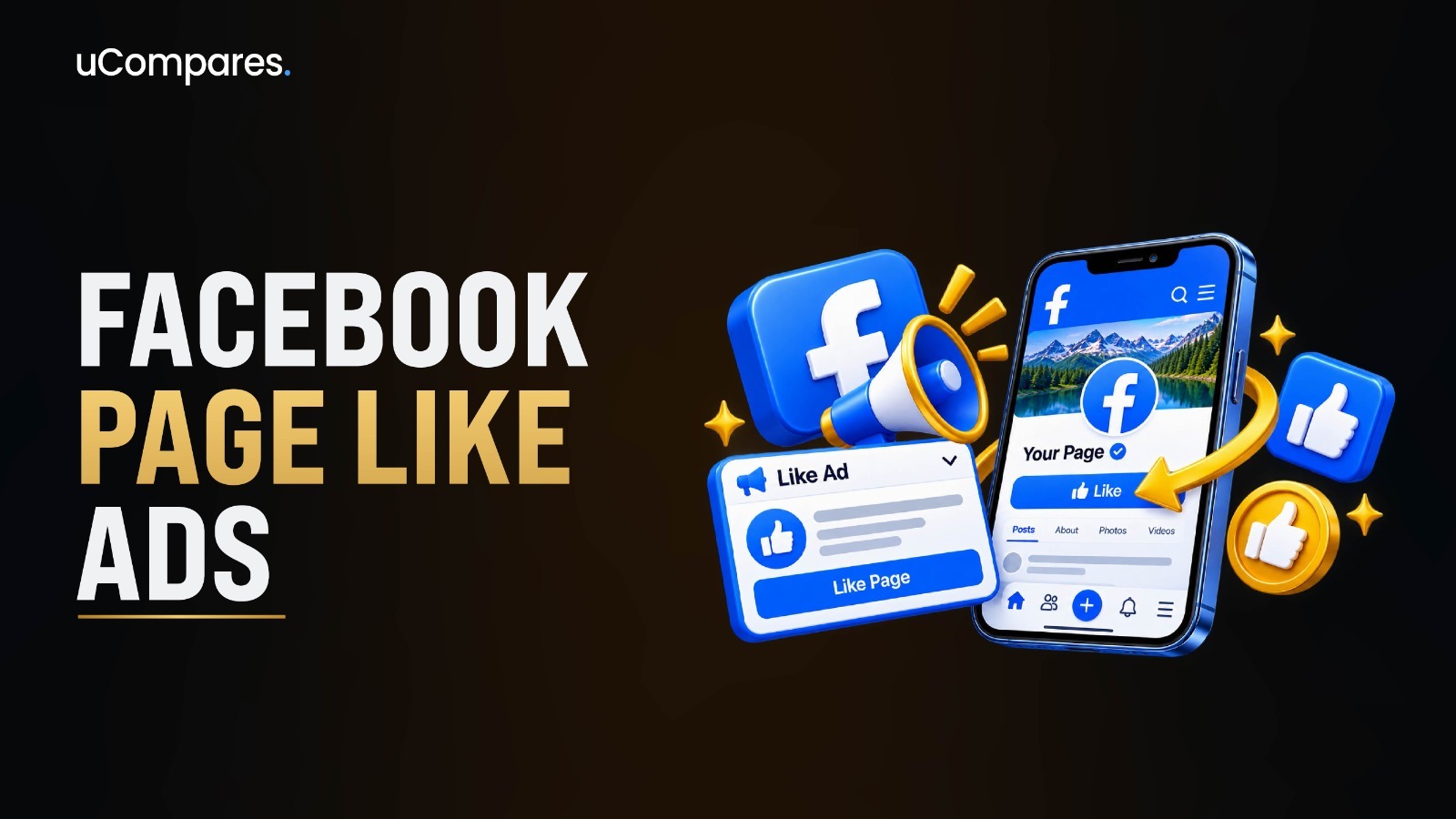
Facebook Page Like ads can still be useful in 2026, but the goal should not be to collect the cheapest possible Likes. The stronger strategy is to attract people who are genuinely interested in the Page’s topic, content, products, or community and then give those followers a reason to remain engaged.
For most advertisers, the best approach is to combine relevant audience targeting, useful short-form creative, warm-audience retargeting, controlled testing, consistent Page content, and measurement beyond cost per Like. Meta’s advertising ecosystem also supports tools such as Custom Audiences and Lookalike Audiences, which can help advertisers reach people based on existing audience signals.
What Are Facebook Page Like Ads?
Facebook Page Like ads are paid advertisements designed to help a Facebook Page attract new people who may choose to Like or Follow the Page.
The important point for advertisers in 2026 is that the campaign interface is not identical to the older Facebook advertising system. Meta has moved Page-growth functionality into its broader advertising framework, and the exact optimization options displayed in Ads Manager can vary.
Older articles often describe a standalone “Page Likes” campaign objective. Current guides increasingly describe Page Like optimization within the Engagement objective. Some advertisers have also reported differences in the availability of the Page Like performance goal across accounts, which means the safest practice is to follow the options currently presented in your own Meta Ads Manager rather than relying on an outdated screenshot or tutorial.
A Page Like campaign is therefore best understood as a paid audience-acquisition campaign, not simply a way to make the number on a Facebook Page larger.
The real business value comes from what happens after someone becomes a follower.
For example:
Ad → Page Like → Relevant content → Engagement → Retargeting → Website visit → Lead or purchase
That is a much stronger growth model than:
Ad → Like → Nothing else
Facebook Likes vs. Facebook Followers
Facebook has increasingly emphasized the concept of followers because following determines whether people continue receiving content from a Page.
A person may Like a Page and effectively become part of its follower audience, but the practical marketing value comes from whether that person continues to interact with the Page.
Therefore, when evaluating Page Like advertising, do not ask only:
“How many Likes did I get?”
Also ask:
- Are new followers relevant to my niche?
- Do they engage with subsequent posts?
- Do they watch my videos?
- Do they visit my website?
- Do they respond to offers?
- Do they become leads or customers?
- Are they useful as a future remarketing or audience-building signal?
That broader perspective is what separates sustainable Page growth from vanity-metric growth.
Why Are Facebook Page Like Ads Important?
Page Likes are not automatically valuable simply because they increase a visible number. Their value depends on the quality of the audience acquired and how the Page uses that audience afterward.
Social Proof
A Facebook Page with a meaningful number of relevant followers can appear more established than a completely new Page.
This can matter when people discover the business through: Google Search, Facebook Search, Facebook recommendations, Paid advertisements, Shared posts, Website links, Email campaigns, Other social networks.
Social proof should be treated as a secondary benefit rather than the entire reason for running Page Like ads.
Audience Development
A relevant follower base gives a brand an audience that can continue to interact with future content.
This becomes particularly useful for publishers, creators, community-based businesses, and brands that regularly produce educational or entertaining content.
Retargeting Opportunities
Meta’s advertising ecosystem includes Custom Audiences and other audience-building tools that can be used to reconnect with people who have previously interacted with a business or its digital properties.
This means Page growth can form one part of a larger paid-social funnel.
Better Content Distribution Opportunities
A larger relevant audience can give future content more opportunities to generate reactions, comments, shares, and other engagement.
However, never assume that every follower will automatically see every post. Organic distribution depends on Facebook’s ranking and delivery systems, user behavior, content quality, and other factors.
Stronger Audience Signals
If the people following a Page are genuinely interested in the subject, their interactions can provide useful signals for future marketing decisions.
The important word is genuinely.
Ten thousand irrelevant followers may be less useful than 1,000 people who consistently interact with content related to the business.
How Do Facebook Page Like Ads Work for Publishers?
A typical Page-growth campaign involves several components:
- Campaign objective
- Performance goal or optimization setting
- Audience
- Placements
- Creative
- Budget
- Delivery
- Measurement
- Post-Like engagement
Meta’s advertising system uses the selected campaign objective and optimization settings to determine which people are most likely to take the desired action.
That makes objective selection important.
If the real goal is Page growth, optimizing entirely for website traffic may produce many clicks without necessarily producing the desired number of Page Likes.
Likewise, optimizing for impressions may generate exposure without producing meaningful audience growth.
The Basic Growth Loop
A useful way to think about Page Like advertising is:
- Reach relevant people
- Give them a reason to care
- Make the Page-following action easy
- Deliver valuable content after they follow
- Measure follower quality
- Improve targeting and creative
- Scale what works
This loop is more sustainable than simply increasing the advertising budget.
Before You Start a Facebook Page Like Campaign
Before spending money, make sure the Page itself is ready to receive new visitors.
Optimize the Facebook Page
Check:
- Page name
- Profile image
- Cover image
- Bio or About information
- Website link
- Contact details
- Category
- Recent posts
- Featured content
- Branding consistency
- Mobile appearance
A person who clicks an advertisement may inspect the Page before deciding whether to follow it.
If the Page looks abandoned, has no recent content, or does not clearly explain what it offers, advertising can amplify the problem rather than solve it.
Define the Reason to Follow
The strongest Page Like campaigns answer a simple question:
“Why should I follow this Page?”
Weak answer:
“Like our Page for updates.”
Better:
“Follow for daily Facebook advertising tips.”
Even better:
“Follow for practical Meta Ads tutorials, campaign examples, and weekly optimization tips.”
The benefit should match what the Page actually publishes.
Do not promise exclusive content, discounts, tutorials, or updates if the Page will not consistently deliver them.
Prepare Content Before Advertising
Ideally, have several recent pieces of useful content available before launching the campaign.
New followers should immediately see evidence that the Page is worth following.
A simple starting content mix could include:
- Educational posts
- Short videos
- Industry tips
- Product demonstrations
- FAQs
- Customer questions
- Behind-the-scenes content
- Original insights
- Relevant offers
How to Create Facebook Page Like Ads in 2026
The exact labels and interface can change, so use the options currently displayed in your Meta Ads Manager account.
Step 1 — Open Meta Ads Manager
Log into your Meta advertising account and open Ads Manager.
Make sure you are working from the correct business portfolio, ad account, and Facebook Page.
This is especially important for agencies or businesses managing multiple Pages.
Step 2 — Create a New Campaign
Select the option to create a new campaign.
Choose the campaign objective associated with Engagement when the available setup is intended for Page growth.
Do not assume that an older tutorial showing a separate “Page Likes” campaign objective reflects the interface you will see today.
Step 3 — Select the Appropriate Page-Growth Goal
At the ad set or performance-goal stage, review the available optimization options.
If your account provides Page Likes or an equivalent Page-growth performance goal, select it when your primary objective is acquiring new Page followers.
If the option is unavailable, do not force the campaign into an unrelated optimization goal simply because an old tutorial says it should exist.
Instead, review the current account options and consider whether another Meta-supported engagement or audience-growth route better matches your actual goal.
Step 4 — Choose the Audience
Audience quality is one of the most important parts of the campaign.
Depending on your business, consider: Location, Age, Relevant interests, Existing customer data, Website visitors, Video viewers, Previous engagers, Lookalike audiences, Broad audiences where sufficient conversion signals exist.
Meta’s audience tools include Custom Audiences and Lookalike Audiences, allowing advertisers to build targeting strategies from existing audience information and engagement signals.
Step 5 — Exclude Existing Followers Where Appropriate
If the objective is to acquire new Page followers:
- avoid wasting budget repeatedly
- stop repeatedly showing a Page-growth message to people who already follow the Page.
- Where your campaign setup allows it, use appropriate exclusions.
The exact available audience controls can vary, so confirm the current options in Ads Manager.
Step 6 — Select Placements
Meta may offer automatic placements or manual placement controls depending on the campaign.
Automatic placements can be a useful starting point because the system can distribute ads across eligible inventory.
However, creative should match the placements being used.
For example:
- Feed → horizontal or square creative can work well
- Stories → vertical creative is usually more natural
- Reels → vertical, fast-moving video is generally more suitable
Do not simply upload one poorly cropped asset and expect every placement to perform equally well.
Step 7 — Set the Budget
Start with a budget that allows meaningful testing without putting the overall marketing plan at risk.
For example, a small business could begin with a modest daily test budget rather than immediately committing a large monthly amount.
The right budget depends on:
- Market
- Audience size
- Competition
- Business value per follower
- Creative quality
- Campaign history
- Geographic targeting
- Seasonality
There is no universal “correct” cost per Like.
Step 8 — Create the Ad
Use creative that demonstrates the value of following the Page.
A useful structure is:
Hook → Value → Reason to Follow → CTA
Example:
Hook: “Want better Facebook Ads?”
Value: “Here are three targeting mistakes that waste ad budget.”
Reason to Follow: “Follow the Page for more practical Meta Ads tips.”
CTA: “Like/Follow the Page.”
This approach gives users a reason to follow instead of simply asking them to do it.
Step 9 — Review Everything Before Publishing
Check:
- Correct Page
- Correct destination
- Correct audience
- Location
- Age range
- Exclusions
- Budget
- Creative
- Copy
- CTA
- Placement previews
- Tracking
- Billing
- Policy compliance
Then publish the campaign.
Step 10 — Allow Enough Time for Evaluation
Avoid making major decisions immediately after launch.
Early campaign data can fluctuate because the system is still collecting information about delivery and audience response.
Rather than asking whether the campaign produced the cheapest Like in its first few hours, evaluate performance after collecting enough meaningful data to identify a trend.
Best Facebook Page Like Ad Strategies for 2026
Strategy 1 — Optimize for Audience Quality, Not the Cheapest Like
This is the most important strategy.
A low cost per Like is not automatically a successful campaign.
Imagine two campaigns:
| Campaign | Cost per Like | Post Engagement | Website Visits |
|---|---|---|---|
| Campaign A | $0.08 | Very Low | Very Low |
| Campaign B | $0.45 | High | High |
Campaign A looks better if you measure only cost per Like.
Campaign B may be far more valuable to the business.
The correct question is:
“What does each acquired follower do after following the Page?”
Strategy 2 — Use Short-Form Video
Short-form video is particularly useful for Page-growth campaigns because the content can demonstrate the value of following before asking for the follow.
A simple 10-second concept:
- 0–2 seconds: Strong hook
- 2–7 seconds: One useful tip
- 7–10 seconds: “Follow for more.”
The video does not need cinematic production.
Clarity and relevance matter more than unnecessary visual complexity.
Recent 2026 industry analysis also highlights short-form video, specific content promises, and niche-focused creative as common approaches for Page-growth advertising.
Strategy 3 — Promote Proven Organic Content
Do not always create an advertisement from scratch.
Look at existing posts and identify content that already generates:
- Comments
- Shares
- Reactions
- Watch time
- Profile visits
- Saves where available
If a post already demonstrates that the audience cares about the subject, it can provide a strong foundation for paid promotion.
This creates a simple principle:
Test organically → identify winners → promote winners.
Strategy 4 — Build Lookalike Audiences From Valuable Sources
Once enough relevant first-party audience data exists, consider Lookalike Audiences.
Potential source audiences can include:
- Existing customers
- Website visitors
- Video viewers
- Engaged users
- High-value users
- Other legitimate audience sources
The quality of the source matters.
A Lookalike Audience built from your most valuable customers can be strategically more useful than one built from a large but poorly engaged audience.
Meta describes Lookalike Audiences as a way of reaching new people who are similar to an existing audience.
Strategy 5 — Retarget Warm Audiences
Warm users already know something about your brand.
Examples include people who:
- Visited your website
- Watched your videos
- Engaged with your Facebook content
- Interacted with your Instagram content
- Previously interacted with your business
A warm-audience Page-growth campaign can be positioned differently from a cold campaign.
Cold audience:
“Follow us for useful Facebook marketing tips.”
Warm audience:
“You’ve already seen our Facebook advertising tips. Follow the Page for the next strategy.”
The second message assumes familiarity and therefore does not need to spend as much space introducing the brand.
Strategy 6 — Match Targeting to Your Actual Customer
Strategy sixth is to match targeting to your actual customer.
- Avoid targeting an audience simply because it is large.
- For a local restaurant, location may be more important than dozens of interests.
- For a B2B software company, professional relevance may matter more than generic demographic targeting.
- For a creator, content interests may matter more than geographic precision.
- For an ecommerce brand, customer and website signals can become increasingly important as first-party data accumulates.
Strategy 7 — Give People a Specific Reason to Follow
Use a recurring content promise.
Examples:
- “Daily marketing tips”
- “Weekly home workout ideas”
- “New product announcements”
- “Local events every Friday”
- “Simple SEO tutorials”
- “Daily finance explainers”
- “New recipes every week”
The promise should be specific enough for someone to understand what they will receive.
Strategy 8 — Use Social Proof Carefully
Social proof can strengthen creative when it is genuine.
Examples include:
- Customer feedback
- Community activity
- Product usage
- Existing audience milestones
- Recognized achievements
Do not invent reviews, numbers, endorsements, or customer results.
Strategy 9 — Test Multiple Creative Angles
Instead of creating ten almost identical ads, test genuinely different ideas.
For example:
Creative A: Educational tip
Creative B: Product demonstration
Creative C: Customer problem
Creative D: Short tutorial
Creative E: Community-focused message
This helps identify the underlying reason people choose to follow.
Strategy 10 — Build the Post-Like Experience
This is where many Page Like campaigns fail.
If someone follows today, what happens tomorrow?
Create a simple content journey:
- Day 0: Follow
- Day 1–3: Useful educational content
- Day 4–7: Community or engagement content
- Following weeks: Consistent value
- Later: Relevant product, service, or conversion opportunity
The follower should not feel that the advertisement was simply a trick to collect a Like.
How Much Should You Spend on Facebook Page Like Ads?
There is no universal cost-per-Like benchmark that applies to every advertiser.
Costs can vary considerably based on:
- Country
- Audience
- Competition
- Industry
- Creative
- Placement
- Season
- Account history
- Audience quality
- Campaign optimization
- Ad relevance
Some current industry guides publish broad cost-per-Like ranges, but these should be treated as directional rather than guaranteed benchmarks.
A Better Budgeting Method
Instead of asking:
“How much does one Like cost?”
calculate:
Cost per valuable follower = Total spend ÷ Number of followers who meet your quality criteria
Your quality criteria could include:
- Engaged with another post
- Watched a video
- Visited the website
- Clicked a product
- Became a lead
- Purchased something
This produces a much more useful measurement framework.
Start Small and Scale Gradually
A sensible test might begin with a manageable daily budget.
For example:
Test → Measure → Improve → Scale
Do not immediately multiply spending because one ad generated an unusually cheap Like.
First confirm that the audience quality remains acceptable as spend increases.
How to Measure Facebook Page Like Ad Performance
Cost per Like
This tells you how efficiently the campaign is generating the immediate action.
It is useful, but incomplete.
New Followers
Track the actual growth of the Page rather than relying solely on ad-platform reporting.
Engagement After Following
Ask whether new followers actually interact with later content.
This is one of the strongest ways to identify low-quality acquisition.
Website Activity
If the Page supports a business website, monitor whether newly acquired audiences eventually visit it.
Leads and Sales
For commercial businesses, these metrics usually matter more than Page Likes.
A Page Like campaign that produces fewer followers but contributes to more qualified leads may be more valuable than one that generates thousands of passive followers.
Audience Quality
Look for: Relevant locations, Relevant demographics, Relevant interests, Meaningful engagement, Repeat interactions, Website behavior & Conversion behavior.
A Simple Measurement Framework
| Metric | What It Tells You | Priority |
|---|---|---|
| Cost per Like | Acquisition efficiency | Medium |
| New followers | Audience growth | High |
| Post engagement | Audience quality | High |
| Website visits | Commercial interest | High |
| Leads | Business impact | Very High |
| Sales | Revenue impact | Very High |
The exact priority depends on the Page’s purpose.
How to Choose Between Cold, Warm, and Lookalike Audiences
Use Cold Audiences When
- Your Page is new
- You have little historical data
- You need to discover new audience segments
- Your niche has clear interest categories
Use Warm Audiences When
- You already have website traffic
- People watch your videos
- People regularly engage with your content
- Your brand has an existing audience
Use Lookalike Audiences When
- You have a sufficiently useful source audience
- Your source represents the people you actually want
- You want to expand beyond your existing audience
Decision Framework
Do you already have quality audience data?
No → Start with relevant cold targeting and strong creative.
Yes → Test warm audiences and Lookalikes alongside cold acquisition.
Do your new followers engage?
No → Reconsider audience quality and creative.
Yes → Gradually scale and test additional audience sources.
What Are the Best Creative Formats for Page Like Ads?
Short Video
Best when the Page’s value can be demonstrated quickly.
Use:
- Strong opening
- Captions
- One main idea
- Fast pacing
- Clear follow message
Static Image
Useful when the proposition is simple.
For example:
“Follow for 3-minute SEO tips every day.”
The viewer should understand the offer immediately.
Carousel
Useful when you need several pieces of information to explain why the Page is worth following.
For example:
Slide 1: What you will learn
Slide 2: Example tip
Slide 3: Another benefit
Slide 4: Follow CTA
Existing Content
High-performing organic content can also become a useful source for paid promotion.
The best format depends on what the audience actually responds to rather than what looks impressive to the advertiser.
What Makes a Good Facebook Page Like Ad?
A strong Page-growth advertisement normally has four components:
1. A Relevant Hook
Get attention around a problem or interest.
2. Immediate Value
Show what the user can expect.
3. Clear Follow Benefit
Explain why following is worthwhile.
4. Simple CTA
Make the desired action obvious.
Example:
Struggling with Facebook Ads?
Learn one practical Meta Ads strategy every day.
Follow the Page for weekly campaign tips, targeting ideas, and optimization techniques.
This is stronger than:
“Please Like our Page!”
Common Facebook Page Like Ad Mistakes
Mistake 1 — Chasing the Cheapest Like
Why it happens: Advertisers want the lowest visible acquisition cost.
Why it matters: Cheap followers can be poorly matched to the Page.
Correct approach: Measure engagement and downstream value.
Mistake 2 — Targeting Everyone
Why it happens: Broad targeting appears to provide more potential reach.
Why it matters: A large audience does not necessarily mean a relevant audience.
Correct approach: Begin with an audience that logically matches your Page.
Mistake 3 — Running Ads to an Empty Page
Why it happens: Advertisers focus on acquisition before preparing the destination.
Why it matters: New visitors may see little reason to follow.
Correct approach: Publish useful content before scaling paid growth.
Mistake 4 — Using the Same Creative Forever
Why it happens: A winning ad feels safe.
Why it matters: Repeated exposure can reduce attention and eventually weaken performance.
Correct approach: Keep testing new hooks, formats, and messages.
Mistake 5 — Ignoring Existing Followers
Why it happens: Audience exclusions are overlooked.
Why it matters: You may spend money showing acquisition messages to people who already follow the Page.
Correct approach: Use appropriate exclusions when the campaign is specifically intended for new followers.
Mistake 6 — Judging Only Cost per Like
Why it happens: It is the easiest number to understand.
Why it matters: It does not reveal whether the acquired audience is useful.
Correct approach: Track what followers do after acquisition.
Mistake 7 — Expecting Immediate Sales
Why it happens: Advertisers assume every new follower is a buyer.
Why it matters: Following a Page is usually a much softer action than purchasing.
Correct approach: Build a content and retargeting funnel after acquisition.
Troubleshooting Facebook Page Like Ads
| Problem | Possible Cause | Solution |
|---|---|---|
| Page Like option is unavailable | Account/interface variation | Check the current Engagement campaign options and Meta documentation |
| Cost per Like is high | Weak creative or narrow audience | Test new creative and review audience size |
| Many Likes but little engagement | Poor audience quality | Tighten relevance and evaluate follower behavior |
| Ads get impressions but few Likes | Weak value proposition | Give users a specific reason to follow |
| Existing followers receive ads | Missing audience exclusions | Exclude existing followers where appropriate |
| Performance drops after initial success | Creative fatigue or audience saturation | Introduce new creative and review frequency |
| Page visitors do not follow | Weak Page positioning | Improve bio, content, branding, and follow proposition |
| Followers are from unwanted locations | Targeting too broad | Review geographic settings and audience controls |
| Ads work but business results do not improve | Wrong KPI | Connect Page growth to engagement, traffic, leads, or sales |
| Campaign suddenly changes performance | Auction, audience, creative, or platform changes | Compare recent performance with historical data before making major changes |
If Your Cost per Like Is Too High
Check the following in order:
- Is the audience relevant?
- Is the creative strong?
- Is the reason to follow obvious?
- Is the Page itself credible?
- Are you using appropriate placements?
- Is the audience too narrow?
- Is the creative becoming repetitive?
- Are you comparing results across similar markets?
Do not immediately increase the budget.
If You Get Cheap Likes but No Engagement
This is a more serious warning.
Your campaign may be optimizing efficiently for the immediate action while acquiring people who have little interest in your ongoing content.
Test:
- More specific targeting
- Higher-quality source audiences
- Stronger content promises
- Different creative
- Warm audiences
- Better geographic alignment
Your goal should be relevant audience growth, not maximum numerical growth.
How to Verify That a Page Like Campaign Is Working
A campaign should pass several checkpoints.
Checkpoint 1 — Acquisition
Are people actually following or Liking the Page?
Checkpoint 2 — Relevance
Are new followers located in the markets you care about?
Checkpoint 3 — Engagement
Do those followers interact with subsequent content?
Checkpoint 4 — Content Consumption
Do they watch your videos or consume your posts?
Checkpoint 5 — Commercial Value
Do they eventually visit your website, generate leads, or purchase? If the campaign passes all five stages, you are building a meaningful audience.
Alternative Ways to Grow a Facebook Page
Page Like advertising is not the only growth method.
Organic Short-Form Video
Publish useful Reels and short videos designed for discovery.
Cross-Promotion
Work with complementary creators, businesses, or Pages that already reach your target audience.
Website Promotion
Add Facebook follow opportunities to relevant website pages.
Email Promotion
Invite existing subscribers to follow your Facebook Page when Facebook content provides additional value.
Community Participation
Participate genuinely in relevant communities and discussions rather than using repetitive promotional comments.
Content Series
Create recurring formats that give people a reason to return.
For example: Monday marketing tips, Wednesday tutorials, Friday industry news & Weekly Q&A.
A repeatable content structure can make Page growth more sustainable because new followers immediately understand what the Page provides.
Advanced Expert Insights
The Real KPI Is Follower Quality
A useful strategic framework is:
Acquisition → Activation → Engagement → Conversion
- A follower is acquired when they Like or Follow.
- They are activated when they consume another piece of content.
- They are engaged when they interact repeatedly.
- They become commercially valuable when they contribute to leads, sales, subscriptions, or another meaningful business outcome.
This means Page Like advertising should ideally be evaluated as the first stage of an audience funnel, not the final stage.
Build Around Content Demand
Before advertising, identify which topics your target audience already wants.
For example, a digital marketing Page might discover that:
- Facebook Ads tutorials receive strong engagement
- General motivational quotes receive weak engagement
- Detailed case explanations receive strong comments
- Promotional posts receive weak organic response
The Page-growth campaign should then advertise the content proposition that users actually value.
Use a Quality Scorecard
You can create a simple internal score:
| Factor | Question |
|---|---|
| Relevance | Is this follower in the intended market? |
| Engagement | Did they interact after following? |
| Content interest | Did they consume additional content? |
| Traffic | Did they visit the website? |
| Conversion | Did they become a lead/customer? |
This helps prevent the team from celebrating a low cost per Like that produces no business value.
Do Not Confuse Scale With Success
A campaign that spends $100 and produces 2,000 low-value Likes is not necessarily better than a campaign that spends $100 and produces 300 highly relevant followers.
The second campaign may create:
- More engagement
- Better content distribution
- Better retargeting opportunities
- Better website traffic
- Better conversion potential
The correct scaling decision should therefore consider quality-adjusted growth.
Facebook Page Like Ads Checklist
Before Starting
- Define the purpose of Page growth.
- Optimize the Facebook Page.
- Publish useful recent content.
- Identify the ideal audience.
- Decide what followers should receive after following.
- Set a realistic test budget.
- Prepare multiple creative concepts.
During Campaign Setup
- Select the appropriate current Meta campaign objective.
- Confirm the available Page-growth performance goal.
- Choose relevant targeting.
- Review locations.
- Exclude existing followers where appropriate.
- Select suitable placements.
- Prepare mobile-friendly creative.
- Write a clear reason-to-follow message.
- Check the correct Facebook Page identity.
After Launch
- Monitor cost per Like.
- Monitor new follower volume.
- Check audience relevance.
- Measure post-follow engagement.
- Compare creative variations.
- Watch for performance changes.
- Avoid premature conclusions from very small data sets.
Before Scaling
- Confirm follower quality.
- Identify the strongest creative.
- Identify the strongest audience.
- Check downstream engagement.
- Confirm the Page is consistently publishing content.
- Increase spending gradually rather than blindly.
Frequently Asked Questions
Are Facebook Page Like Ads Still Worth It in 2026?
Yes, in the right situation. They are most useful when Page growth supports a broader content, audience, retargeting, community, or brand strategy. They are less attractive when the only objective is to make the Page’s follower number larger.
How Much Do Facebook Page Like Ads Cost?
There is no fixed price. Costs vary according to market, competition, audience, creative, placements, seasonality, and campaign setup. Published industry estimates differ substantially, so use your own account data as the primary benchmark rather than treating a universal cost-per-Like figure as guaranteed.
What Is the Best Audience for Facebook Page Like Ads?
The best audience is the group most likely to value the Page’s content. Depending on the account, this could be relevant cold interests, warm website or engagement audiences, or Lookalike Audiences based on valuable existing users.
Should I Target a Broad Audience?
Broad targeting can work in some Meta campaigns, but it should not be used simply because it creates a larger potential audience. For Page-growth campaigns, relevance should remain a central consideration.
Are Cheap Facebook Likes Good?
Not necessarily. A cheap Like is useful only if the person is relevant and has a reasonable probability of engaging with the Page or contributing to a later business objective.
Should I Use Facebook Reels for Page Growth?
Short-form video can be a strong format because it lets the advertiser demonstrate content value quickly. The creative should be designed for vertical viewing where appropriate and should communicate the reason to follow clearly.
Should I Exclude Existing Followers?
If the campaign is specifically designed to acquire new followers, excluding people who already follow the Page can help prevent budget from being spent on people who have already completed the desired action, provided the necessary audience controls are available.
Can I Use Website Visitors for Page Growth?
Warm website visitors can be useful because they already know the business. Meta’s advertising ecosystem provides Custom Audience functionality for audience targeting, subject to applicable terms and requirements.
Are Lookalike Audiences Good for Facebook Page Growth?
They can be useful when the source audience is high quality. A Lookalike built from valuable customers or highly engaged users can be strategically more useful than one built from an irrelevant or poorly qualified audience.
Should I Run Page Like Ads or Sales Ads?
Choose according to the business objective. If the immediate goal is purchases or leads, a conversion-oriented campaign may be more appropriate. If the objective is building a relevant Facebook audience for ongoing content and community development, Page-growth advertising may make more sense.
How Long Should I Run a Page Like Campaign?
There is no universal duration. Run an initial test long enough to collect meaningful data, then evaluate audience quality, creative performance, and downstream engagement before deciding whether to continue or scale.
Read More:
Final Takeaway
Facebook Page Like ads can still have a role in a 2026 growth strategy, but the old mindset of “get as many Likes as possible for the lowest price” is no longer a strong way to evaluate performance.
The better approach is to build a relevant audience around a clear content promise.
Start by optimizing the Page, define why someone should follow it, select an audience that genuinely matches the business, create useful and platform-appropriate creative, and use the current Meta Ads Manager options available to your account.
Then measure more than the initial Like.
The strongest campaign is the one that produces followers who continue to engage, consume content, visit the website, join the community, become leads, or eventually become customers.
In simple terms:
Relevant audience + useful content + strong creative + appropriate optimization + consistent measurement = sustainable Page growth.
Treat Page Likes as the beginning of the customer relationship rather than the final result.